
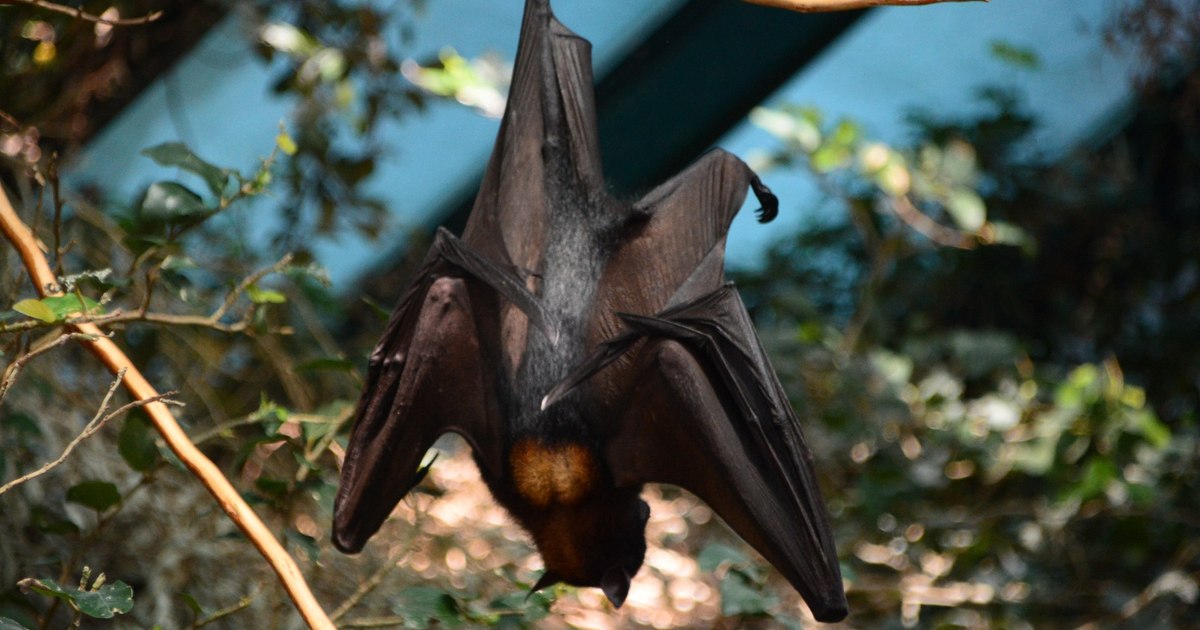
Romania is home to over 30 species of bats, and some live in colonies of thousands of bats in the caves of the Carpathians. With the approach of summer, bats increasingly make their presence felt in urban areas, and encounters with people can create unpleasant moments.
Bats are increasingly making their presence felt in quiet urban areas. After dusk, they can be seen flying over residential buildings, through parks, among trees or, above all, near water, where they find food in abundance, insects being their favorite.
Bat season
The presence of bats, although sometimes feared, is normal at this time of year, and experts say they do not usually pose a danger to humans. Bats accidentally enter people’s homes through open windows or doors and, in most cases, manage to leave the premises.
“If it goes in, the bat will come out, because inside it can’t find water, inside it can’t find insects. The best thing would be to leave the window or door open so that it can get out by itself, and if it can’t get out, let’s wait for it to land somewhere, on the curtain or on other things in the house. People can take a thick glove or a towel, with which they can catch the bat, which they will then put on the balcony, for example, where he will be able to fly. Bats should never be grabbed with bare hands, because they have very good teeth, and like any wild animal, they will defend themselves. The bat is no more aggressive than any wild animal that wants to defend itself, so there is nothing special about bats that makes them more savage.”Bücs Szilárd-Lehel, specialist of the Center for Research and Conservation of Bats, said for Adevărul.
Those who have such encounters with bats need not panic, as the bats will not latch onto their hair, attack them, feed on the food on the table, or build a nest. People have to keep in mind that at those times, the bats are probably more scared than they are, because they have arrived in an unknown space, far from their colony and with the fear of remaining captive. At the same time, they should not try to chase away or hit the bats with the broom, because they can break their wings.
Why bats end up in cities
In Romania, 32 species of bats have been identified, many spread in areas less traveled by people, in the vast forests and in the numerous caves included in national parks and nature reserves. But urbanization has brought humans closer to the bats’ usual environment.
The bridges of houses, but also many old churches, have become shelters for bat colonies, some numbering up to several hundred specimens. “These colonies usually only stay there in the summer, for example from May to August. Church bridges, especially in rural areas, are quiet, spacious places where no one walks”, says Bücs Szilárd-Lehel.
Some species of bats also feel good in cities, as they also find places to rest and food sources here. These include the dusky bat, pygmy bat, water bat, and sometimes the brick bat, large horseshoe bat, or lesser horseshoe bat. During the summer, when bats are busy with maternity, migration or mating, they can be seen most often.
In the green spaces of the cities, in the forests and plains of the surroundings, but also in the light of the lampposts, which attract a great diversity of insects, they find their favorite food. Here too, the bridges and towers of churches and other buildings provide a suitable, high temperature for harboring brood colonies in summer, and basements and tunnels are good hibernation sites in winter.
“However, their original environment remains caves and gnarled trees, old trees”says the specialist.
The bats found shelter at the Corvinor Castle
The Center for Bat Research and Conservation shows that the presence of bats in cities is not the result of an elaborate invasion plan, but, on the contrary, is due to the fact that humans are increasingly modifying the environment.
“Forested areas disappear in a matter of days, rivers are blocked between the concrete walls of hydroelectric plants or dams, and caves become heavily and often irresponsibly frequented tourist attractions. In other words, bats are forced to leave the places where, in fact, they would feel most comfortable. The high degree of adaptability of bats, however, leads them not to give up, but to look for alternative shelters and alternative feeding areas. And they do not stay too much thinking: if in that place they can rest and have something to eat, the place is a suitable one”the center’s specialists note, on the lilieci.ro page.
In the past, the bridges of the Corvinilor Castle in Hunedoara housed one of the large colonies of “vampire bats”. The works to replace the old roofs of the castle, the growing number of tourists, but also the presence of falcons in the bridges led to the migration of most bats to the neighboring forests and caves, on Sânpetru Hill.
Although they were considered harmless, the creatures of the castle became part of local legends, reminiscent of Dracula, the vampire prince who could take the form of a bat and bite the neck of his victims to suck their blood. Other accounts of the bats at the castle mentioned them as being aggressive and used to get caught in tourists’ hair.
In reality, bats are harmless and show their usefulness by the extremely high number of insects they consume.
“The easiest thing anyone can do is not to believe these legends, which are just legends, with hair, with blood, eating bacon and other things that are scary, but not true. Bats do not get into our hair and do not want our blood. Bats in Europe are insectivorous, so they eat only insects. A bat can eat 3,000 mosquitoes a night, and from this point of view, bats are beneficial and we must protect them“, says Bücs Szilárd-Lehel.
Large deposits of guano brought fame to a village in Romania. What fate had the place in the Șureanu mountains
To be protected, bats must not be disturbed or hit in the first place, he adds. Also, protecting caves, forests, waters and nature in general contributes directly to the preservation of the habitats where these animals live and feed.
Large bat colonies
Romania includes over 12,000 caves, and many of these have become, over time, ideal shelters for bats. At least 100 caves in Romania host bat colonies, with several hundred, thousands or even tens of thousands of bats.
The Huda lui Papară cave in Apuseni is the largest winter shelter for bats in Europe, with multiannual fluctuations between 60,000 and 170,000 individuals, Professor Ioan Coroiu said in 1998, who had observed the huge colonies of bats during the winter. It is also a summer shelter for several species.
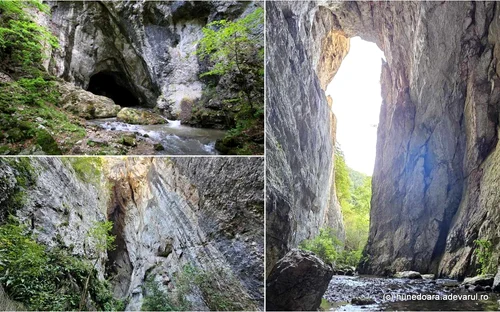
“The Huda lui Papară cave must also be considered as a mirror of the degree of environmental health and biodiversity in the area, due to the fact that most of the bats that take shelter in it are sedentary species, so they come from a radius of 100-200 kilometers”he notes.
Located in the Șureanu Mountains, the Șura Mare cave in Hunedoara (video) is another important roost for bat colonies. In the 1960s and 1970s, one of the largest hibernating colonies in Europe was observed here, totaling over 100,000 individuals of Pipistrellus pipistrellus and Miniopterus schreibersii. Recent observations in this cave have highlighted the continued presence of a large population of bats, about 40,000 individuals.
“The long-winged bat (Miniopterus schreibersii) forms many of the largest bat colonies in Europe in Romanian caves, for example in Huda lui Papară, with over 34,000 hibernating specimens, Șura Mare, with over 25,000 hibernating specimens, or Avenul de la Betfia, with over 7,000 specimens in the natal colony”, informs the Center for Research and Conservation of Bats (CCCL), on its page Lilieci.ro.
Bat dung, extracted from Cioclovina Cave
The Cioclovina cave in Hunedoara, located in the Șureanu Mountains, a few kilometers from Șura Mare, also became known because of the bats. A century ago, the galleries of the Ponorici and Cioclovina caves, connected underground, formed the core of a mining center around which a real industry had developed.
The exploitation of guano (bat dung) was discovered in 1912, and Cioclovina occupied, according to specialists, the second place in the world in terms of guano-phosphate reserves.
The forbidden cave in the Șureanu Mountains, 12 kilometers deep. Tens of thousands of bats live here
From the galleries of the dry Cioclovina (video), the locals were extracting the “dung” of bats mixed with sediments and the remains of countless cave bears, to use it as fertilizer in agriculture.
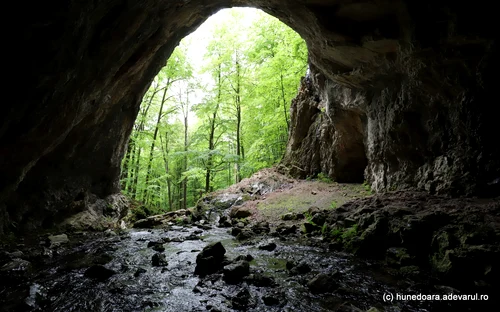
The tons of guano were loaded into wagons on an industrial railway that bypassed the mountain and then carried by funiculars over the hills, until near the Pui station. Here, the fertilizer was loaded into wagons and often made its way to the cities of the Austro-Hungarian Empire, where it was used. In the first decades of the 20th century, over 30,000 cubic meters of guano-phosphate were extracted from the galleries of the caves in the Şureanu Mountains.
“During the communist era, the guano mining was reopened, the fertilizer being taken to Ceauşescu’s greenhouses. After 1990, the mining was closed to protect the Cioclovina cave from guano seekers”, informs Speotimiş Speleological Association.
The mining gallery that leads into the depths of the cave was closed, and since the 2000s, access to the Dry Cioclovina Cave, the main mining entrance, has been closed.
And in Huda lui Papară Cave, the presence of bats led to the accumulation of impressive amounts of guano, estimated at around 60 wagons.
