
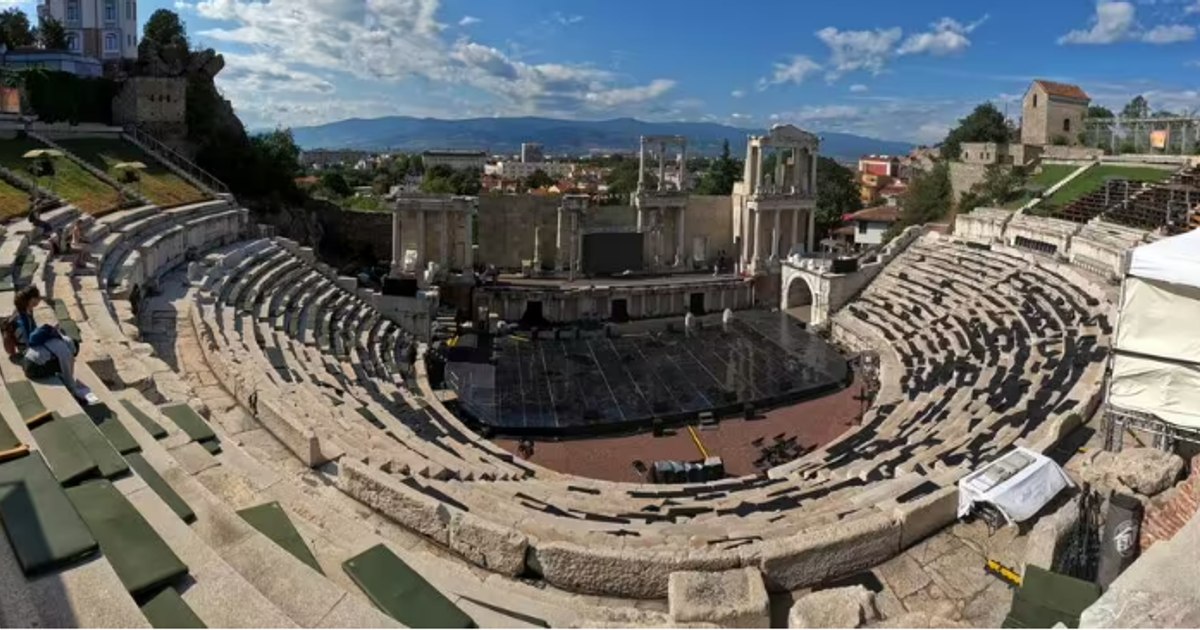
Plovdiv, one of the oldest inhabited cities with an estimated history of more than 8,000 years, is presented by more and more tourism publications as a quieter and much cheaper alternative to Rome, but with a comparable historical heritage.
Plovdiv is the second largest city in Bulgaria, after Sofia, and is known as the cultural capital of this country. Although the exact age of the city is not known, archaeological findings confirm an impressive continuity of habitation.
In 1975, the remains of a religious building belonging to the Cretan-Mycenaean culture, dated around 1750 BC, were identified, according to Plovdiv.bg. However, there is evidence that the area has been inhabited since the 7th millennium BC, during the Neolithic period, which would make the city even older than Athens or Rome.
The city is considered older than Rome
An important moment in its history was in 342 BC, when Philip II of Macedon conquered the settlement, renaming it Philippopolis, meaning “Philip’s city”. During that period, the town expanded and became a strategic point for the colonization of the region, according to express.
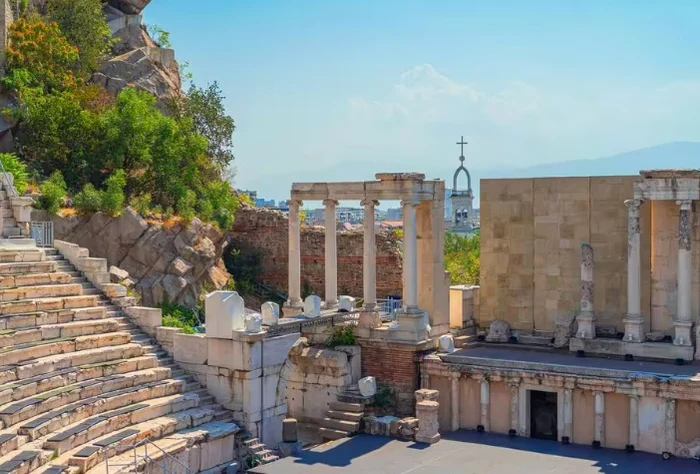
Later, under Roman rule beginning in 72 BC, Plovdiv became an important commercial and military hub, located on the Via Militaris – the main strategic route of the Roman Empire in the Balkans. During this period, many monumental edifices were built, many of which are still preserved today.
Among the most important attractions is the Ancient Roman Theater, located between the hills of Taksim Tepe and Dzhambaz Tepe, accessible by a short climb from the central pedestrian area, near the Dzhumaya Mosque. The theater is still operational and hosts performances, concerts and festivals.
The city impresses with its archaeological heritage
Also under the town’s main street are the remains of the ancient Roman stadium, where sporting competitions and chariot races took place, with a capacity of thousands of spectators in its heyday. Visitors can also admire the Ancient Forum, the former administrative center of the city, very well preserved.
Plovdiv also impresses with its old center, with cobbled streets and historic houses painted in pastel colors, considered one of the best-preserved architectural ensembles in Bulgaria.
Nearby is Kapana, the city’s creative quarter, famous for its art galleries, artisan workshops, trendy cafes, restaurants and active nightlife.
The city is also appreciated for its vibrant cultural scene, but also for its gastronomy influenced by Turkish, Mediterranean and Balkan cuisine. Local dishes include banitsa (traditional pie), kavarma (slow-cooked stew) and kebapche (grilled meatballs).
Another major advantage, mentioned by tourism sources, is the low cost of living: a pint of beer can cost around 1.30 euros.
For tourists from Romania, the city is relatively close: it is about 300–350 kilometers from Bucharest, a distance that can be covered by car in about 5–6 hours, depending on the route and the border crossing point.
