
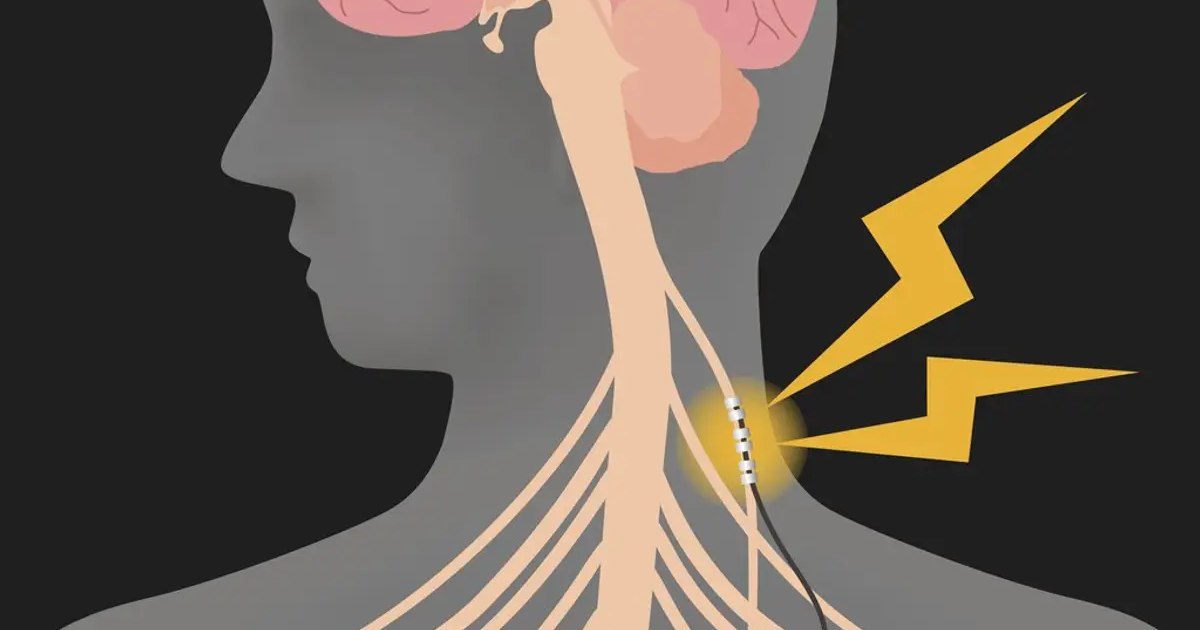
40 years ago, a resident neurosurgeon lived through an experience that gave him countless nightmares: an 11-month-old girl died in his arms. Since then, the race to research inflammatory processes in the body has also started, which led, in 2025, to the approval of a revolutionary device that calms the inflammation in rheumatoid arthritis.
A device “the size of a jelly bean or a multivitamin” that is surgically implanted in the neck, on the vagus nerve, with the goal of calming inflammation from rheumatoid arthritis, was approved last year by the FDA (Food and Drug Administration) in the United States of America, according to cnn.com. It took 40 years for the device to be approved, all starting with a tragic event that Dr. Kevin J. Tracey experienced.
“The fact that he died was tragic and disturbing and the source of many nightmares”
In 1985, Kevin J. Tracey was a resident neurosurgeon and admitted to the ward an 11-month-old baby who had suffered severe burns in a domestic accident: the grandmother had tripped in the kitchen and dropped a pot of hot water that badly injured Janice. The early-career neurosurgeon cared for Janice, the girl who had not yet turned a year old, for a month. At first the treatment seemed to work. Then, without warning, CNN Health notes, her little one’s health deteriorated. “Nothing in medical school prepared Tracey for that moment: holding a fragile, beautiful baby as she took her last breath”the publication shows.
“The fact that he died was tragic and disturbing and the source of many nightmares”said Tracey, currently president and chief executive officer of the Feinstein Institutes for Medical Research/Northwell Health, according to the source cited. “It was also the source of tremendous frustration because there was no way we could understand or explain to her mother and grandmother why she died.”Tracey added.
That tragedy would change the career path of Dr. Kevin J. Tracey, who dedicated his life to studying the role of inflammation in the body and discovering the best way to treat it. Since then, he has become one of the world’s leading neurosurgeons, pioneering an entirely new field of care: bioelectronic medicine.
“Some people think science is all about honor societies and awards”
For 40 years, Dr. Tracey’s philosophy has been to ask questions that can be scientifically studied to find the way to new therapies. Tracey’s enthusiasm is contagious, and when she talks about how patients benefit from scientific discoveries she lights up, notes cnn.com.
“Some people think science is all about honor societies and awards, others think it’s all about the money. I think it’s about the patients. When you meet people who benefit from the work done by your lab, there is no better feeling in the world.” the scientist told the journalists.
And the culmination of his 40-year research was last year, when he and his team turned decades of laboratory science into a device approved by the US Food and Drug Administration (FDA). The device uses electrical signals to stop harmful inflammation in rheumatoid arthritis patients, an achievement that landed Dr. Tracey on TIME’s Top 100 Health Innovators list.
How the SetPoint system works, started from a sketch drawn on a napkin
The challenge now is to adapt the device, which works to calm inflammation in patients with rheumatoid arthritis, to patients suffering from other inflammatory diseases.
What does the SetPoint system do? It stimulates the vagus nerve to activate the body’s “inflammatory reflex,” signaling the brain to reduce immune activity and production of inflammatory proteins. This little device – “the size of a jelly bean or a multivitamin”, says Tracey, according to the source cited — it’s surgically implanted in the neck, on the vagus nerve, and provides daily, one-minute stimulation to the vagus nerve with the goal of calming patients’ inflammation.
10 symptoms of rheumatoid arthritis. More and more young people are diagnosed with autoimmune disease in recent years
“Imagine if we could stop inflammation operationally or prevent it from ever contributing to cancer or heart disease. What would that do to the lifespan of people on planet Earth?”“, said Dr. Tracey, quoted by edition.cnn.com.
The device has a special story. Its creation began with an accidental discovery in the lab and a sketch drawn on a napkin, instead taking more than 25 years from the first sketch to FDA approval.
“I never imagined in 1998 that it would take until 2025 for the drug to be approved by the FDA”Tracey told CNN.
The concept of the new device implanted today in patients with rheumatoid arthritis first appeared in the 90s, “accidentally”, in the laboratory. Researchers were studying the brains of mice with stroke when a lab technician injected an anti-inflammatory drug into a mouse’s brain, and the effect was to stop inflammation in the mouse’s body. The intention in that experiment was nowhere near to look at inflammation in the mouse body.
But it was a moment of revelation, the researcher realizing that the vagus nerve was a key to controlling inflammation. At a dinner party, he drew a sketch on a napkin for the then-chairman of the board, Dr. Tracey telling him that “that means the nerve is acting as an anti-inflammatory signal.”
In 2025, Dr. Kevin Tracey released the book The Great Nerve, detailing why he believes the vagus nerve is essential to health and vitality. Tracey’s message – “We’re about to usher in an era where science will become very, very useful. That means people will feel better – and that makes me very happy.” – is one full of optimism for inventors, scientists and patients.
1.5 million Americans live with rheumatoid arthritis
About 1.5 million American adults live with rheumatoid arthritis (RA), cnn.com notes, a chronic disease that causes the immune system to mistakenly attack the lining of the joints. This results in painful swelling, stiffness and chronic fatigue. An estimated 18 million more live with the condition worldwide, according to a 2019 report by the World Health Organization.
Women are about three times more likely than men to develop the disease. Worryingly, the inflammation characteristic of the disease can spread beyond the joints to the heart, lungs, skin, eyes and blood vessels. It is also difficult to diagnose because the symptoms come and go, and when they flare up they cause extreme pain. Medicines with an anti-inflammatory effect can relieve these symptoms, but in the long term the disease can no longer be controlled. Patients using corticosteroids or more advanced biologics also complain of mental fog and dizziness, and the drugs can weaken the immune system.
About the inexplicable symptoms that can announce an autoimmune disease, on Adevărul Live from 2 p.m.
The SetPoint System implant provides precise electrical stimulation for one minute a day without the need for a continuous connection to an external device, the device helping to control the immune system better than drugs.
The FDA approved the device in July 2025 after a randomized, double-blind, 242-patient study demonstrated that the SetPoint system is safe and effective as an alternative for rheumatoid arthritis patients who have virtually no traditional treatment options.
The testimony of Jessica Hancock, diagnosed with debilitating rheumatoid arthritis, a condition she has lived with for more than twelve years since the age of 35, is telling.
“It’s frustrating when you’re so young and you wonder, ‘Why do I feel like I’m 90?'”the patient says, per the quoted source, explaining that the pain was all over her body even performing simple tasks, such as getting out of bed. He tried several types of medication, including three biologics and chemotherapy, but the pain kept coming back. When she learned of Northwell’s device she immediately agreed to be included in the program. The device was implanted in October, and by January he no longer needed any medication.
“I felt fantastic with the stimulation. I had more energy. I wasn’t in pain. I wasn’t wobbly. I wasn’t bloated.” said Hancock, now 49.
Patients going through what Jessica Hancock went through, some of them, instead face the challenge of getting their insurance company to accept settlement for the device, because there are reports from hospitals that health insurance companies are consistently refusing to provide coverage on the grounds that the device is too new. For insurers, Dr Tracey has a clear message – “Join!” -, assuring that he will continue to advocate for patients and pressure insurance companies so that patients are assured access to the device.
