
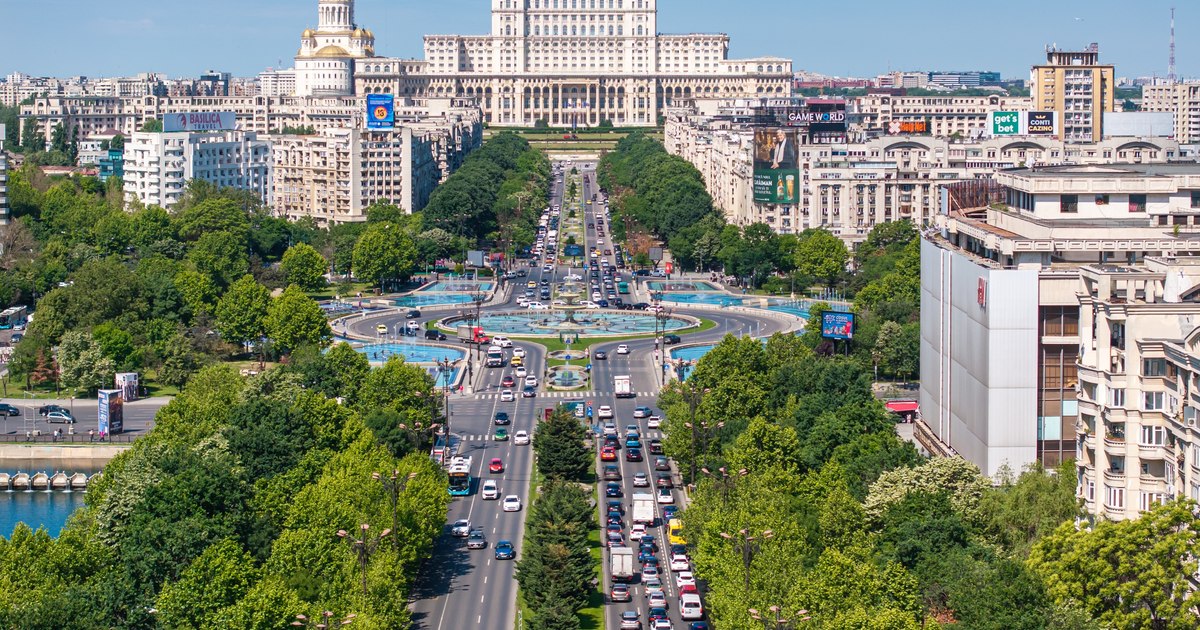
Bucharest ranks one of the weakest in the 2026 edition of the Happy City Index, one of the largest international studies dedicated to the quality of urban life. The capital of Romania ranks 248 out of 251 cities analyzed, being the fourth lowest ranked city in the world.
The results of the sixth edition of the Happy City Index were officially announced at the UK Parliament in London at an event marking the completion of the largest community study of urban development globally.
The organizers specified that the research does not aim to designate “che best city in the world”but to identify the communities that manage to provide a balance between economic development, sustainability, health, mobility and well-being of the inhabitants..
Bucharest, among the last cities of the world
According to the ranking published for the year 2026, Bucharest has accumulated 4,994 points and ranks 248 out of 251. Only Guadalajara (Mexico), Nashville (USA) and Dallas (USA) are ranked lower.
The first ten cities at the bottom of the ranking are:
- Guadalajara (Mexico) – 251st place
- Nashville (USA) – 250th place
- Dallas (USA) – 249th place
- Bucharest (Romania) – 248th place
- Indianapolis (USA)
- Tucson (USA)
- Aguascalientes (Mexico)
- Chicago (USA)
- Kuching (Malaysia)
- Rabat (Morocco)
Bucharest is the only capital from the European Union present in this area of the ranking and one of the very few European capitals located so low in the world hierarchy.
The result represents a new alarm signal for local and central administration, given that major European capitals are constantly investing in infrastructure, public transport, digitization, energy efficiency and the expansion of green spaces.
What is Happy City Index?
The Happy City Index is produced annually based on a complex methodology that analyzes the performance of cities in six major areas: Citizens, Governance, Environment, Economy, Health and Mobility.
The 2026 edition of the Happy City Index analyzed 251 cities around the world, based on a survey of 466 specialists. Over 150,000 data and records were collected and validated in the study, and cities were assessed using 64 indicators that measure performance in areas such as governance, economy, environment, health, mobility and citizen engagement.
The research process took place over five months. From an initial base of more than 3,400 cities worldwide, approximately 1,000 were selected for in-depth analysis, and 251 were included in the final ranking.
The organizers emphasize that the index does not measure happiness in an emotional sense, but the conditions that allow residents to have a better and more balanced life. Aspects such as public administration efficiency, access to medical services, transport infrastructure, economic opportunities, environmental protection and civic engagement are taken into account.
The problems that drag Bucharest down
Although the report does not explicitly indicate the exact reasons for the positioning of each city, experts believe that Bucharest’s result reflects problems known for years.
Romanian cities in the list of the most expensive in the world in 2026: Where are Bucharest, Cluj-Napoca and Iași
Extremely congested traffic, pollution, insufficiently modernized urban infrastructure, lack of green spaces in certain areas, uneven urban development and the pressure exerted on public services by a population of over two million inhabitants are just some of the challenges facing the Capital.
While many European cities are accelerating investments in clean public transport, digitization and urban regeneration, Bucharest continues to face delays in the implementation of major infrastructure and mobility projects.
Northern Europe dominates the world ranking
At the opposite pole are the cities that have achieved the best results in terms of quality of life, sustainability and efficiency of public services.
The first ten positions of the Happy City Index 2026 are occupied by:
- Copenhagen
- Helsinki
- Geneva
- Uppsala
- Tokyo
- Trondheim
- BERN
- Malmö
- Munich
- Aarhus
Nine of the top ten cities are European and six come from the Nordic region of the continent, confirming the Nordic states’ consistent performance in areas such as urban mobility, public administration, health and environmental protection.
Top of the most colorful cities in the world. The European country that surprises with two appearances in the first three places
This year’s edition also marked the launch of the Happy City Alliance, a new international platform for collaboration between high-performing cities in the field of urban development.
According to the organizers, the alliance will function as a framework for dialogue and exchange of best practices between local administrations, tracking the progress of cities and promoting public policies oriented towards the well-being of citizens and sustainable development.
A symbolic gesture for Kyiv
Although the ranking officially includes 250 evaluated cities, the organizers decided to symbolically award the 251st position to the city of Kyiv, without scoring and without its inclusion in the actual competition.
The decision was presented as a gesture of respect and solidarity towards the efforts made by Ukrainian local authorities to keep the city functioning in the difficult conditions generated by the war.
