
For many Romanians, a vacation in Europe seems like a luxury that is difficult to achieve, especially for families with children. However, the experiences of passionate travelers show that this perception does not always reflect reality. Europe offers many spectacular destinations accessible to almost any budget.
Europe is a fascinating continent with fairytale cities, spectacular nature reserves, leisure spots and impressive landscapes. For many Romanians, however, a vacation in Europe seems like a luxury, especially in the summer season. Many believe that such experiences involve big budgets, bookings made many months in advance and complicated planning.
In reality, there are many spectacular yet affordable European destinations that even a middle-income family can afford. In addition, many of them are less crowded than the big tourist attractions and offer an authentic experience away from the overcrowded tourist areas.
Some of these places require only a few days off and the willingness to hit the road. Whether you choose to travel by car, alone or with the family, you can discover dream destinations without spending a fortune. Here are some of the most beautiful and affordable places in Europe.
A trip to “Polish Venice”
The highlight is that many of the most beautiful and picturesque places in Europe are still little known to Romanian tourists. Paris, Barcelona, Rome, Milan or London are among the most popular destinations, but a complete holiday in these cities can be quite expensive. For those who want to discover the charm and diversity of Europe at more affordable prices, there are many alternatives, with an authentic character and less affected by mass tourism.
One of these is Wrocław, also nicknamed the “Venice of Poland”. With over 600,000 inhabitants, it is the third largest city in Poland and one of the historical jewels of the Lower Silesia region. The city is located on the Odra River and stretches across 12 islands, connected to each other by nearly 300 bridges. Its network of canals, islets and bridges earned it the reputation of the “Venice of Poland”, and its long history and impressive architecture cemented its reputation as a special destination.
Wrocław is also considered one of the greenest cities in Poland, with numerous parks and green spaces that give it a special air. At the same time, it is an ideal destination for lovers of history, culture and bohemian life. With an existence of almost a thousand years and an important position at the crossroads of old trade routes, the city, also known in the past as Breslau, preserves a remarkable architectural heritage and one of the most beautiful historical centers in Central Europe.
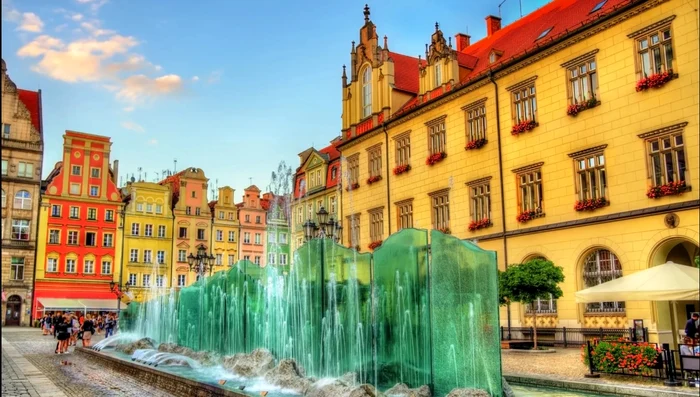
“Wroclaw has one of the most beautiful central squares in Poland, and I would dare to say even in Europe. The medieval square of the city is now a completely pedestrianized area, full of many historic houses, particularly colorful and one more beautiful than the other. There are many styles that practically explain the architectural evolution of the city, from Gothic to Baroque and even Art Nouveau. The real pearl of the old square in Wroclaw is the old Town Hall. It’s like something out of stories”says Kami, a well-known travel blogger, on the website “My Wanderlust”.
The chic cafes and taverns on the narrow, stone-paved medieval streets add to the town’s unique charm. Not-to-be-missed sights include the Botanical Garden of the University of Wrocław and Hydropolis, a state-of-the-art exhibition center dedicated to water. It is the only one of its kind in Poland and one of the few existing in the world. The exhibition space exceeds 4,000 square meters and includes approximately 70 interactive installations, organized into eight thematic areas.
For history buffs, a visit to the former Gross-Rosen concentration camp, now a memorial museum, can provide insight into one of the most dramatic periods of the last century. There are also many castles and historic residences in the city’s surroundings that are worth exploring.
Another advantage of this destination is that all these experiences can be experienced at much more affordable costs than in many of the major tourist capitals of Europe.
“I was told that Poland is one of the cheapest countries in Europe, but I didn’t realize how cheap it really is. If you want to visit some of the cheapest cities in Europe, go to Poland asap”said Hayley, an Australian blogger, on her website “Hayley Holliday”.
A city from fairy tales
This is undoubtedly Ljubljana, considered by many travel enthusiasts to be a true gem of Central Europe. And, surprisingly, it is not among the favorite destinations of Romanian tourists, although it is about an eight-hour drive from the Romanian border.
Ljubljana is the capital of Slovenia and also the country’s largest city. With around 280,000 inhabitants, it is one of the smallest European capitals, an advantage for those who want to avoid the crowds and discover at their own pace the charm of an elegant and welcoming city.
At the same time, Ljubljana is the main cultural, university and scientific center of Slovenia. Its geographical position, at the confluence of Germanic, Latin and Slavic spaces, has left its mark on its architecture and cultural identity. The city harmoniously blends Baroque and Art Nouveau styles with elements of modern urbanism and is known worldwide for the legacy of architect Jože Plečnik.
A travel expert reveals three affordable and spectacular European destinations for summer: gorgeous beaches, dreamy scenery and low prices
Multicultural influences are visible in the historic center, where Baroque and Renaissance buildings recall the great cities of the former Austro-Hungarian Empire, such as Vienna or Trieste. Incidentally, Ljubljana was part of the Habsburg Empire for centuries.
An important part of the city’s identity is linked to the creations of Jože Plečnik, often nicknamed the “Gaudí of Ljubljana”. The architect transformed the Slovenian capital into a unified urban complex, inspired by classical values, but adapted to modern needs. Among his most famous works are the Triple Bridge (Tromostovje), the National and University Library and the Central Square. Several of these creations have been included in the UNESCO world heritage.
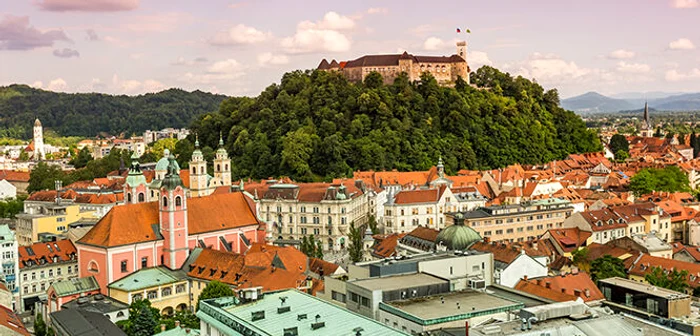
The historic part of the city is dominated by pastel-colored buildings and imposing churches, including the Ljubljana Cathedral, known for its elegant domes and richly ornamented frescoes. Among the sights that should not be missed are the famous Dragon Bridge, symbol of the city, as well as the Ljubljana Castle. Raised on a hill and very well preserved, the castle offers a spectacular panorama of the historic center and a foray into the medieval history of the region.
Ljubljana is a city that deserves to be discovered on foot, so that you can admire the architecture and the atmosphere at your leisure. A walk through Tivoli Park is almost mandatory, as is visiting some acclaimed museums such as the Museum of Contemporary Art or the Railway Museum, where locomotives and carriages from different historical periods are exhibited. From the Slovenian capital, you can easily reach other famous attractions of the country, such as the Postojna Cave, one of the most spectacular karst systems in Europe, or the picturesque Lake Bled.
In terms of costs, Slovenia is a moderately priced and relatively affordable European destination. Although it uses the euro currency and is somewhat more expensive than Romania, it remains generally cheaper than neighboring countries such as Austria or Italy. A tourist with a low budget can comfortably visit the country for around 50-75 euros per day, while for an average level of comfort the expenses are between 80 and 130 euros per day.
The splendor of the Baltic Sea
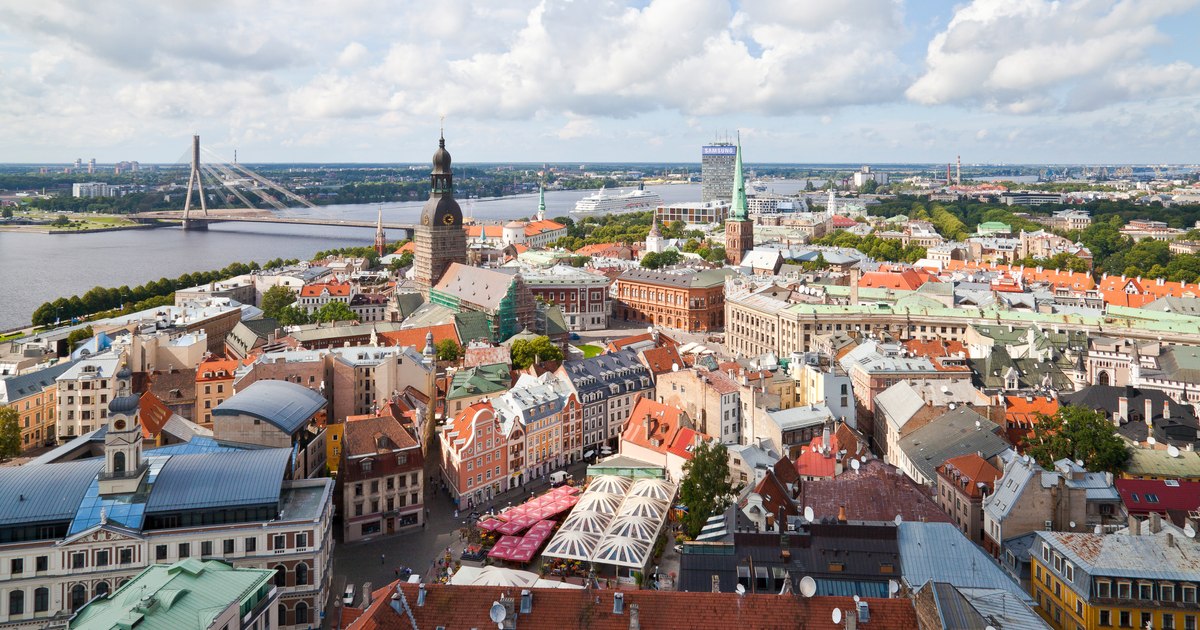
One of the European destinations still little known to Romanian tourists is Riga, a true jewel of the Baltic region. The capital of Latvia is located on the shores of the Baltic Sea, at the mouth of the Daugava River, and is the largest city in the Baltic States, with approximately 700,000 inhabitants. At the same time, it represents one of the most important cultural, economic and university centers of the region.
The historical center of Riga was included in the UNESCO world heritage in 1997, due to its special architectural and historical value. From this point of view, the city is often compared to famous destinations such as Vienna, Prague or Barcelona. Riga is especially famous for its Art Nouveau architecture, which stands out for its elegant, well-preserved and richly decorated buildings.
With its narrow streets, medieval squares and impressive buildings, Riga has the feel of a city from another time. The old center harmoniously combines Gothic and Baroque monuments with the largest concentration of Art Nouveau architecture in Europe, found especially in the area known as the “Quiet Centre”. It is precisely this combination of styles and eras that transforms the capital of Latvia into one of the most spectacular and elegant destinations in northern Europe.
The network of dozens of Romanians involved in “criminal tourism”, dismantled in Canada. Over 40 arrests and hundreds of indictments
No tourist should miss a walk on Alberta Street, famous for its National Romantic and Geometric Art Nouveau buildings designed by architects such as Eižens Laube and Mihails Eizenšteins. The facades are decorated with carved faces, floral motifs and mythological figures that turn the whole area into a real open-air museum.
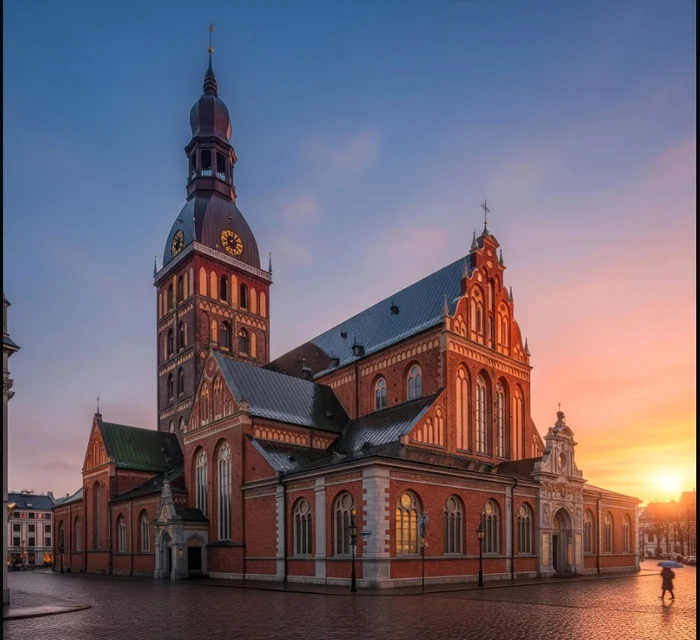
Among the most important tourist attractions are the House of the Black Heads, located in the Town Hall Square, an impressive Gothic building with origins in the 14th century, the Riga Cathedral, the largest in the Baltic States, remarkable for the harmonious combination of several architectural styles, and the Church of St. Peter, from whose tower a spectacular panorama opens over the city and its historical districts.
The museums of the Latvian capital are also worth visiting, including the National Museum of Natural History and the Fashion Museum, appreciated for its special exhibitions.
From Riga you can also easily reach the Sigulda region, located about an hour’s drive from the capital and considered one of the most picturesque areas of Latvia. Here you can admire spectacular landscapes, Turaida Castle and its museum, Gutmanis Cave, the largest cave in the Baltic States, as well as the ruins of the Castle of the Livonian Order.
“Riga is a city that really surprised me. I didn’t expect to get so attached to it. Although it’s not very big, I discovered a lot of places and experiences worth exploring. The city won my heart and every time I come back I find new reasons to fall in love with it.” says Kamy, author of the travel blog ‘My Wanderlust’.
For a tourist on a budget, a visit to Riga can cost around €55 per day, making the Latvian capital one of the most affordable urban destinations in Northern Europe.
