
There are hotels that do not function as simple places to stay, but as gateways to parallel worlds, carefully constructed or preserved in almost unreal forms. In such places, the journey no longer has a “before” and an “after”, because the experience begins from the moment you arrive.
Whether they are royal palaces suspended over water, glass igloos under the Arctic sky or reinvented industrial structures, these hotels become destinations in themselves. In many international editorial selections, including Travelers’ Choice Best of the Best, the emphasis is increasingly shifting from standard comfort to the value of the experience and context in which a destination is lived.
Taken together, these places suggest a profound change in the way travel is understood. The hotel is no longer a transit point, but a space that structures the entire experience. In some cases, it becomes the very reason the trip exists.
In this new geography of experiential tourism, architecture, nature and the story of the place are no longer the background but the main subject.
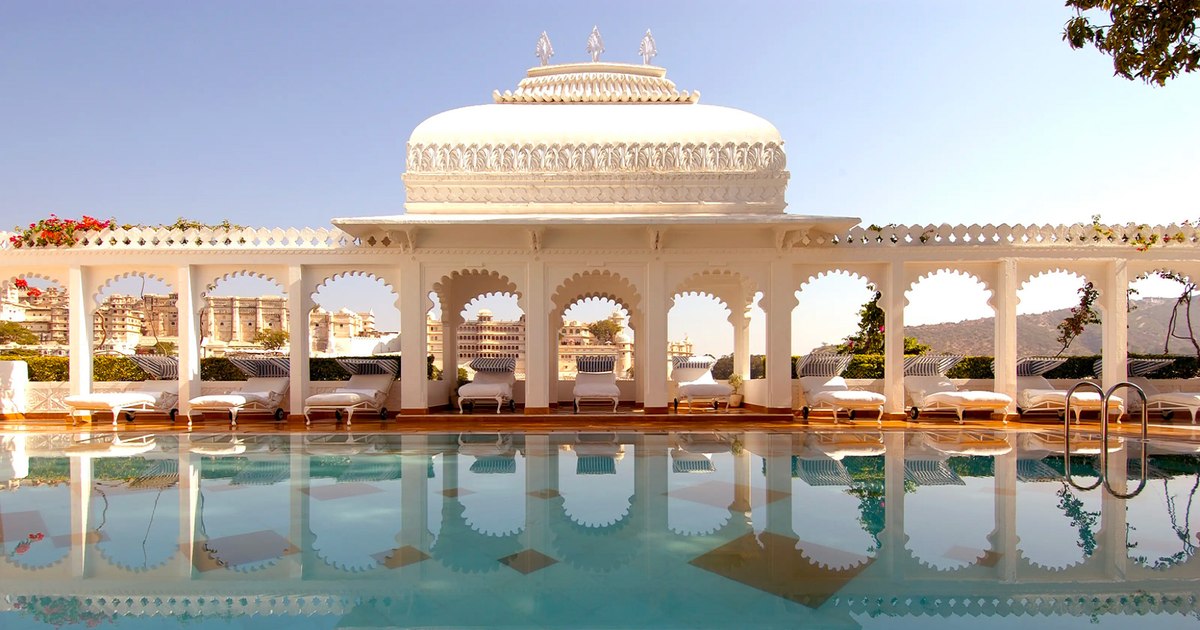
Taj Lake Palace, India – a palace that seems to float between the sky and the water
On Lake Pichola in Udaipur, the Taj Lake Palace emerges gradually, like an optical illusion rather than a solid construction. The changing light of day alters its contours, and the white marble reflects the water in a way that makes it difficult to separate reality from reflection.
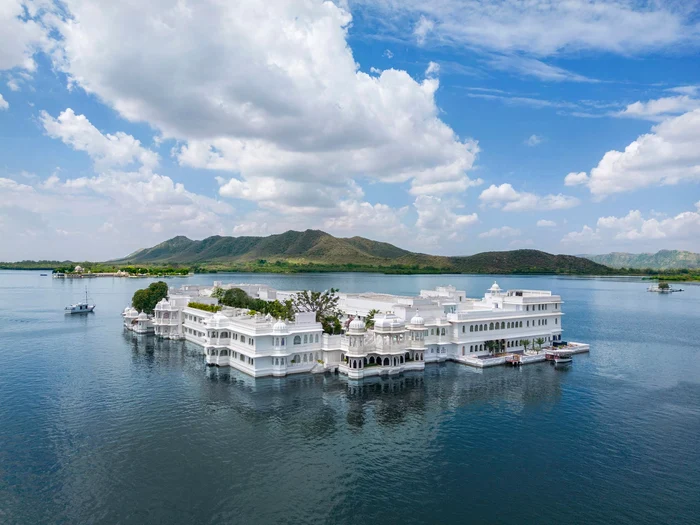
Built in the 18th century as the royal residence of the Mewar dynasty, the Taj Lake Palace was originally intended as a space of refuge, isolated from the rigors of the court and the city that developed around the lake. Today, this isolation has become the essence of the experience: exclusive access by boat functions as a ritual of detachment, a slow transition from urban bustle to a suspended world.
Inside, the palace maintains a regal aesthetic that does not attempt to reproduce the past, but to continue it. Inner courtyards, arches and stone textures create a visual rhythm that slows the perception of time. In the evening, when the light goes out over the lake, the entire edifice seems to dissolve in the water, and the boundary between architecture and landscape disappears completely.
Treehouse Lodge, Amazon – life moved into the forest canopy
In the Peruvian Amazon, close to Iquitos, Treehouse Lodge completely changes the scale at which the idea of ”lodging” is understood. Here, the cameras are not integrated into the forest, but raised within it, at the level of the canopy, where the ecosystem operates in an almost overwhelming density.
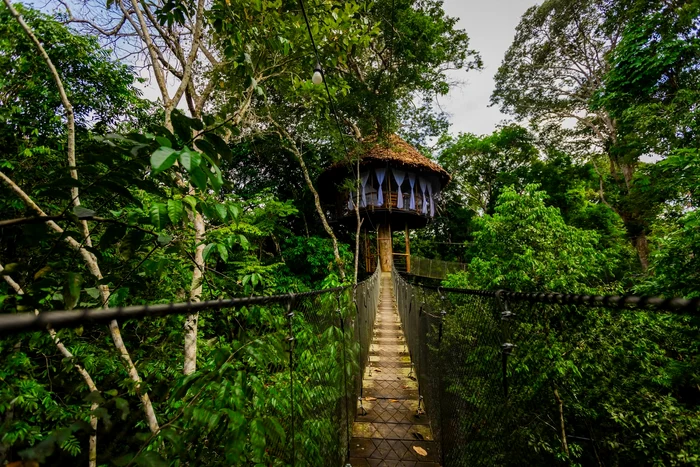
Treehouse Lodge is only accessible by a combination of roads and river navigation, and this isolation is not a side effect, but an essential part of the experience. As the city disappears, the Amazon becomes the only recognizable infrastructure, a living system where water and vegetation dictate the direction.
Once inside, there is no longer a clear separation between inside and outside. The sounds of the jungle constantly penetrate the space, and the night does not bring silence, but a change in intensity. Everything is in motion, even when it seems static, and the experience becomes more of a form of adaptation to an environment that never stops.
Crane Hotel Faralda, Amsterdam – a crane turned observation point over the city
On Amsterdam’s old docks, an industrial crane dominates the skyline like a vestige of another economic era. Transformed into a hotel, this structure has been preserved in its raw form, but completely re-signified.
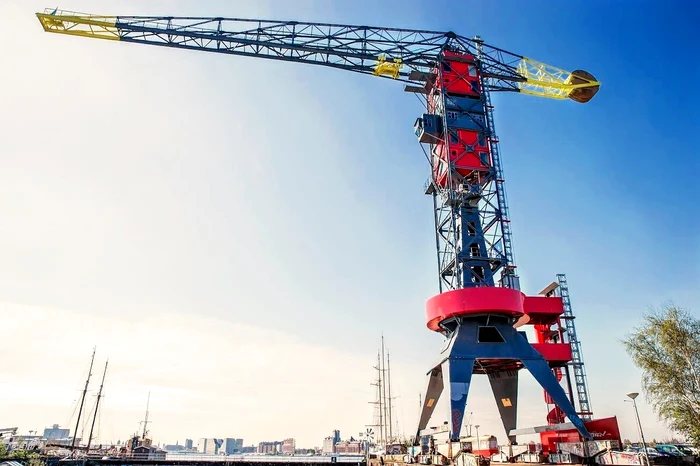
Crane Hotel Faralda does not try to hide the industrial past, but to amplify it. The suites are suspended high, and climbing into them becomes a gradual transition from the urban ground to a detached perspective on the city.
From above, Amsterdam is no longer the city of romantic canals, but a complex urban organism, fragmented into layers of water, light and infrastructure. At night, this geometry becomes even more apparent, and the city appears more like a system of flows than a static space.
Marina Bay Sands, Singapore – the city compressed into one structure
In Singapore, Marina Bay Sands redefines the idea of a hotel as urban infrastructure. The three towers joined by the suspended platform create a globally recognizable silhouette, but its true meaning is less visual and more systemic.
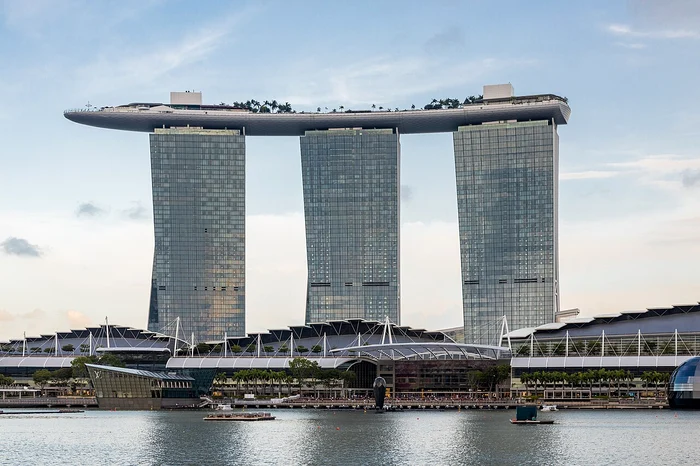
Marina Bay Sands functions as a microcosm of the city itself, where accommodation, gastronomy, retail and the view are integrated into one vertical organism. The rooftop infinity pool has become the iconic image of contemporary Singapore, but it is only the vantage point of a much more complex whole.
From above, the city unfolds like a perfectly organized map, where tropical vegetation and futuristic infrastructure coexist in a carefully controlled balance. Everything seems designed to be viewed from above, as if the city itself was conceived as a panoramic experience.
Icehotel, Sweden – architecture that disappears and returns every year
In Jukkasjärvi, the Icehotel is not a permanent construction, but an annual repeated process. Raised from the ice of the Torne River and rebuilt every winter, the hotel only exists temporarily, giving it an intentional fragility.
The pitfalls of holidaying in Spain: a mop left on the balcony or a sandcastle that is too big can bring you fines of 750 euros
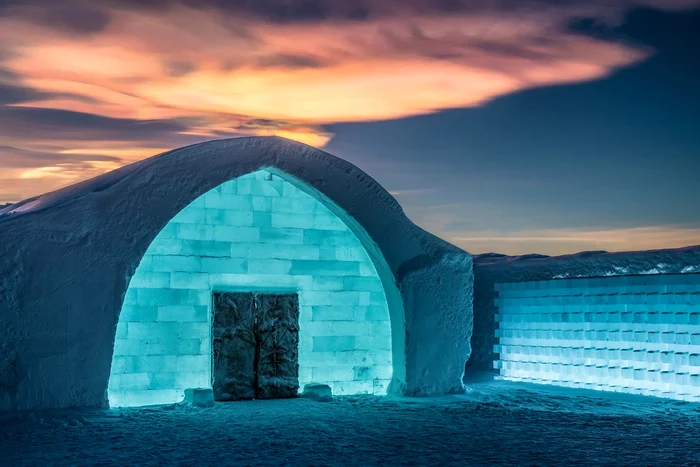
Icehotel is closer to art than architecture. Each room is sculpted by hand, and the result is a collection of ephemeral spaces that disappear with the arrival of spring.
The experience is defined by contrast: extreme cold outside, controlled quiet inside, and a light that turns the ice into an almost organic material. In northern Sweden, this instability is not a limitation, but the very identity of the place.
Kakslauttanen Arctic Resort, Finland – Arctic sky turned ceiling
In Finnish Lapland, Kakslauttanen Arctic Resort shifts the focus from indoors to outdoors without completely removing the boundary between the two. Glass igloos allow direct observation of the Arctic sky without visual interference.
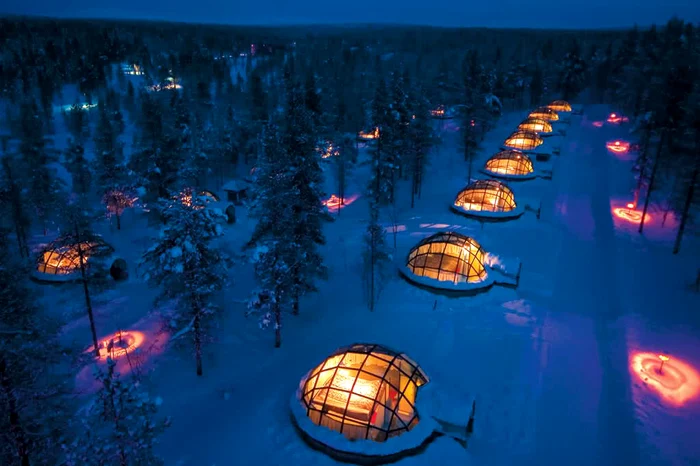
Kakslauttanen Arctic Resort turns the night into a static and dynamic experience at the same time. During periods of solar activity, the aurora borealis becomes part of the room’s architecture, completely changing the perception of space.
The extreme tranquility of the region accentuates this experience. Everything is reduced to essential elements: light, dark, temperature and sky.
Giraffe Manor, Kenya – the line between architecture and nature is disappearing
In Nairobi, Giraffe Manor retains elegant colonial architecture but transforms it into a space for direct interaction with wildlife. The presence of Rothschild giraffes completely changes the logic of a classic hotel.
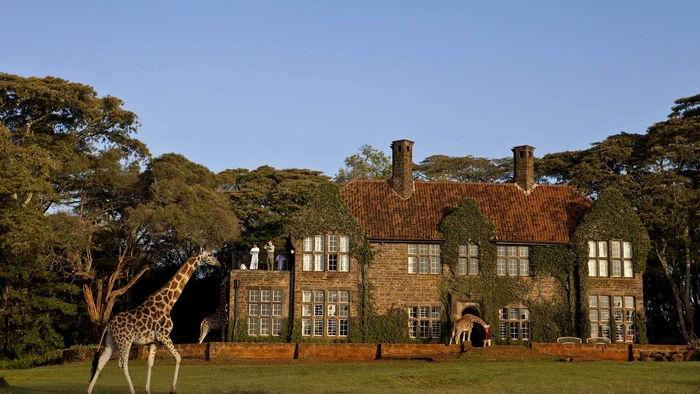
Giraffe Manor functions as a conservation space, but also as an experiment in human-animal cohabitation. In the morning, giraffes appear at windows and terraces, and the daily routine becomes a moment of controlled but unusually close interaction.
The experience is not spectacular in an artificial sense, but in its natural simplicity, where the boundary between inside and outside becomes fluid.
Burj Al Arab, Dubai – architecture as a global symbol
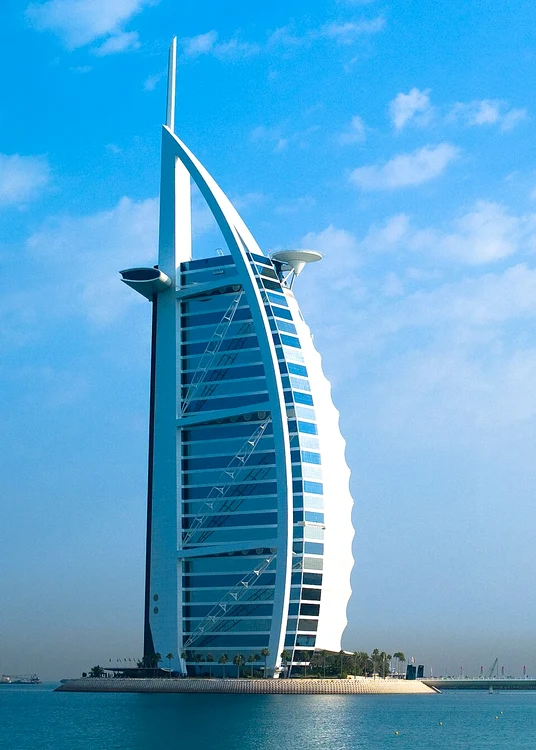
In Dubai, the Burj Al Arab is a structure that functions simultaneously as a hotel and as a symbol. Its sail shape, set on an artificial island, is designed to visually dominate the coast.
What facilities the accommodation must have, depending on the number of stars or daisies
Burj Al Arab is the expression of an aesthetic of scale, where luxury is translated into size, material and spectacularity. The interior continues this logic, with spaces that eschew minimalism and instead choose a language of controlled abundance.
Within the urban context of Dubai, the hotel becomes part of a larger discourse of architectural ambition and global identity.
Belmond Hotel Caruso, Italy – a palace suspended above the Tyrrhenian Sea
In Ravello, on the Amalfi Coast, Hotel Caruso occupies a place that seems suspended between the mountain and the sea. Formerly a medieval palace, the building has been transformed into a hotel that retains the atmosphere of a private residence.
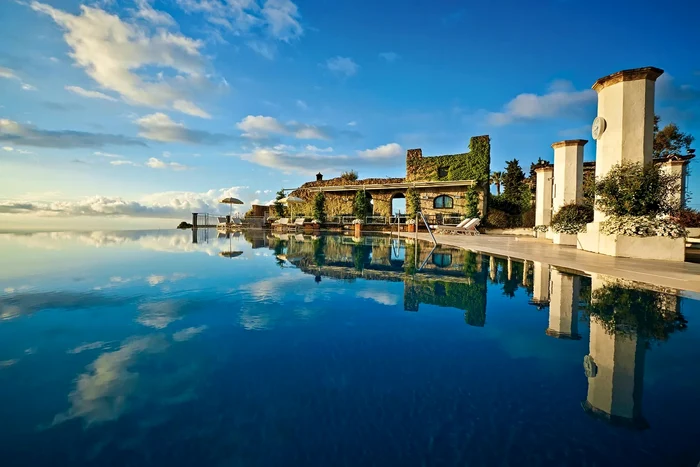
Belmond Hotel Caruso is defined by its relationship with the landscape. The terraced gardens, the old stone and the infinity pool create a visual continuity that blurs the boundary between the building and the horizon.
At sunset, the light completely changes the perception of space, and the whole ensemble seems to melt into the sea.
Amangiri, United States – architecture retreating into the desert
In Utah, Amangiri is built so that it does not compete with the landscape, but disappears into it. The architectural volumes are integrated into the rocky relief and the materials are chosen to reflect the shades of the desert.
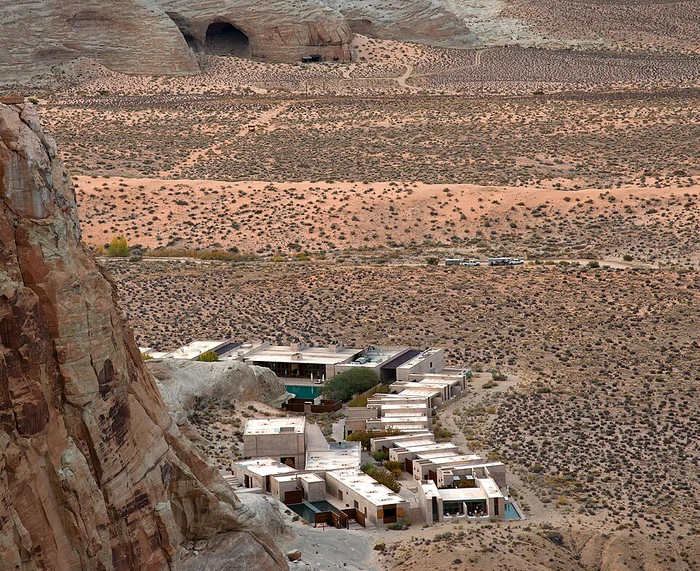
Amangiri functions as a discreet extension of an already monumental landscape. The nearby canyons and the tranquility of the area transform the experience into one of observation and retreat. Here, the absence of noise becomes a defining element, and the space acquires an almost meditative quality.
