
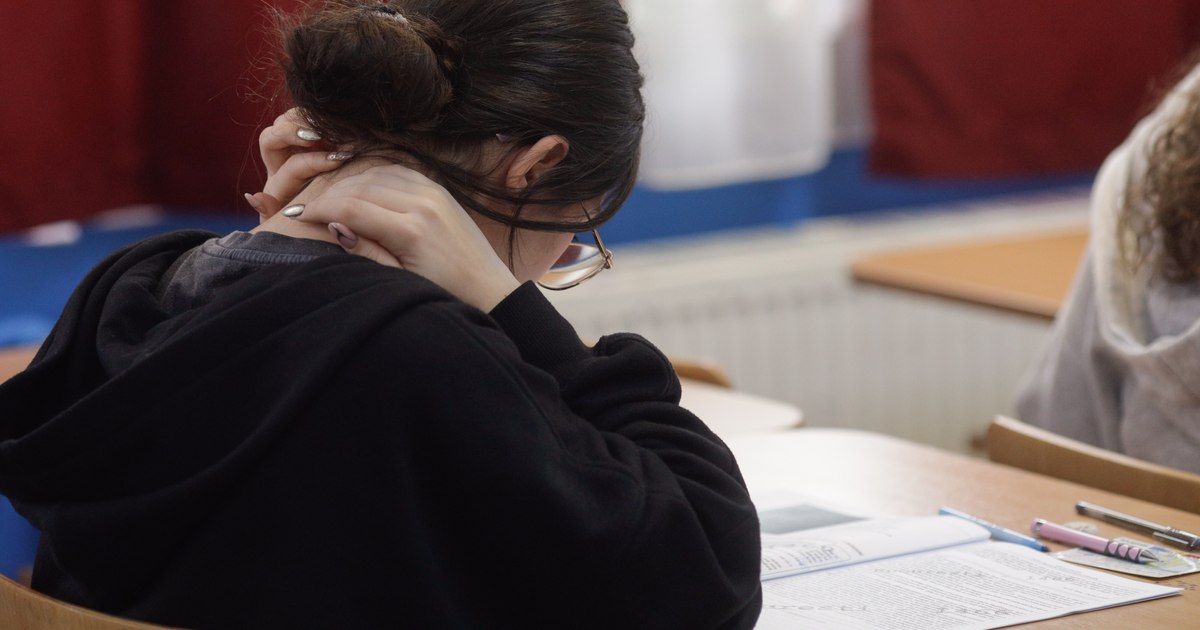
The 2026 National Assessment Exam will begin on Monday, June 22, with the written test in Romanian Language, and over 148,000 eighth grade graduates are expected at this test session. Anthropologist Mihai Copăceanu gives parents a set of ten essential tips.
The anthropologist points out that although the National Assessment is an exam less known to the general public than the Baccalaureate, its psychological impact on 14-15-year-olds is actually stronger.
“Psychologically speaking, the pressure and stress at 14-15 years old is much higher than at the Baccalaureate. They don’t have the experience of 18-year-olds who have lived through several exams, they don’t have their maturity and their indifference”explains Copăceanu, in a post on Facebook.
While some high school students may be more detached from the result of the Baccalaureate, the eighth graders were subjected to an intense discourse throughout the year, which created a much deeper anxiety for them. “The 8th graders, on the other hand, heard throughout the whole year and maybe from the 7th grade as well: “study, child, because this exam is the key to your future”, “if you don’t study, you won’t get into a good high school”, etc.”wrote the anthropologist.
Protect your sleep, avoid screens and prepare your logistics ahead of time
Copăceanu offers a series of concrete recommendations for parents, starting with protecting the child’s sleep.
“One or two nights before the exam, encourage your child to have a normal and balanced sleep schedule – which is more important than the new information. If he can fall asleep earlier and for more hours, even better. Lack of sleep or poor/poor sleep affects attention, concentration, mood and of course performance on the exam”he warns.
She also recommends avoiding screens two hours before bed and preparing the logistics the night before: report card, blue pens, water, tissues, math ruler, eraser and pencil.
Another essential tip concerns nutrition. “Prepare a normal breakfast and proper hydration. Prepare something light but substantial, without food experiments. Do not give in when the child says that he is not hungry and does not want to eat. Stress before the exam, three hours during the exam, another hour of waiting, worries, fear, heat, together with lack of food are risk factors for any unpleasant incident, feeling sick or fainting”explains the anthropologist, pointing out that a child who does not eat is more vulnerable to stress and heat.
Don’t do “interrogations” before the exam and avoid major changes in routine
Copăceanu recommends parents to avoid last-minute questions, which only increase anxiety. “Avoid the series of questions: “Do you still know the formula?”, “Did you repeat it?”, “What will you do if Bacovia fails?”. Do not do last-minute checks. They only increase anxiety”he writes. In their place, a simple encouragement is welcome: “You’re ready, go easy, I trust you”. Also, establishing travel patterns ahead of time and avoiding sudden changes in routine can reduce stress.
Admission to high school 2026. The trap of abolishing the vocational school: students who do not take the National Assessment risk being left without a place in the job they want
Another essential tip is to walk to the exam.
“Walking before the exam, physical activity (20-30 minutes of movement) increases blood flow to the brain and has a number of benefits: reduces stress and anxiety, reduces emotional blockage and muscle tension, regulates breathing and improves concentration. You will feel better and more relaxed than if you quickly arrive by car/taxi directly in front of the school”explains the anthropologist.
He urges parents to normalize the expression of emotions by telling children that it is normal to feel anxious, and to maintain a “normal pace”not a crisis one, avoiding tense discussions and exaggerations.
The last tip is perhaps the most important. Copăceanu suggests that parents write or tell the child a message of encouragement, support and unconditional acceptance, a message that conveys that parental love does not depend on grades and that all the work done has value in itself. “Years from now, your child won’t remember what grade he got on the National Assessment, but he will remember how you behaved”is the warning with which the anthropologist begins his post and which summarizes his entire approach.
Exam rules and logistics. Access, duration and prohibitions
For those taking the exam, the Ministry of Education has established that access to the exam centers is allowed between 8:00 and 8:30. Students must carry a valid ID and writing instruments with blue ink or paste. The tests start at 9:00 a.m., with a solving time of 120 minutes.
It is forbidden to introduce any kind of helpful materials, such as manuals, notes or collections, as well as mobile phones and electronic computing tools, into the classrooms. Personal items such as schoolbags, rucksacks or purses must be left in a storage room. The samples are audio-video monitored.
Students who take the National Assessment will find out the results on July 1, by 12:00, both online and in schools. The viewing of works and the submission of appeals take place on the same day, between 14:00 and 18:00, as well as on the 2nd and 3rd of July. Students can request to view the work, but must be accompanied by a parent or legal representative. The final results will be displayed on July 8.
The communication of the results is carried out anonymously, through individual codes, and the Ministry of Education has made available a TELVERDE line for reporting any malfunctions. The topics and mark scales will be published every day with written test at 3:00 PM on the dedicated website. The admission average in the 9th grade is calculated as the arithmetic average of the grades obtained in the two tests, without rounding.
