
Perfect security does not exist. Despite significant investments in prevention technologies, ransomware attacks, identity compromises and security breaches continue to affect organizations across all industries.
In 2026, the question is no longer whether an organization will be targeted by an attack, but how quickly it can detect, limit and recover from its impact. For this reason, more and more companies are shifting their focus from the sole focus of prevention to a broader concept: cyber resilience.
Cyber resilience means an organization’s ability to anticipate threats, withstand compromise, react quickly and restore operations without affecting business continuity.
The reality on the ground
Cyber resilience is not about building a fortress—it’s about creating an adaptive system where technology, processes, and people interact dynamically to adapt to change. The truth is that systems will fail and people will make mistakes. The question is not if it will happen, but rather how ready we are for that moment.
One of the biggest challenges facing modern organizations is the lack of continuous threat visibility. Attackers operate 24/7, but few companies can afford internal teams capable of permanently monitoring their IT infrastructure. For this reason, MDR (Managed Detection and Response) services have become one of the most effective methods of rapidly increasing cyber resilience by combining continuous monitoring, specialized expertise and active incident response.
For more information and advice on cyber resilience, ESET – Europe’s largest provider of cyber security solutions* – offers a free download a dedicated guide.
*according to Frost Radar™: Endpoint Security 2025 (Frost & Sullivan)
More and more organizations are prioritizing resilience and recovery capacity over the classic but necessary goal of breach prevention. Rather than assuming that incidents can be completely avoided, leaders design systems capable of withstanding failures, maintaining operations under pressure, and quickly recovering from disruptive events. Which reflects a broader understanding of cyber security as risk management. In practice, resilience doesn’t mean perfection, it means consistency under pressure so that when chaos strikes, we don’t panic and know exactly what to do. On the other hand, fragility means confusion about what needs to be done first, what needs to be fixed, outsourced or managed internally, which leads directly to what we can call paralysis.
A resilient organization looks different. It knows the likely scenarios and knows who does what, when and how across the entire structure — technology, processes and people. It does not aim for “never compromised” but “never knocked down”. If until now the cyber threat landscape seemed difficult to manage, the year 2026 will raise the level of complexity even more. Artificial Intelligence enables attackers to scale phishing, social engineering and vulnerability identification campaigns at unprecedented speed. In parallel, hybrid and multi-cloud environments expand the attack surface, and the geopolitical context continues to amplify the risks for organizations in all economic sectors.
The stages of resilience
Cyber resilience does not come down to a single flashy solution. We can look at it as a cycle, a rhythm in which our organization learns to function. Six stages define this cycle and each of them touches on three dimensions: technology, processes and people. Together, they form the backbone of continuity when the unexpected occurs. These six stages include anticipating risks, reducing the attack surface, identifying hidden threats and vulnerabilities, reacting quickly by automating incident response within the first 15 minutes, safely recovering operations, and continuously adapting to support business continuity.
Not all organizations start from the same starting point. Some already operate with advanced intelligence detection, orchestration and analysis capabilities; others rely only on a limited number of basic controls, such as endpoint protection and firewalls. But the resilience cycle is not a linear maturity model that all organizations must fully implement to be considered resilient. Rather, it represents a set of outcomes that can be achieved incrementally, depending on the organization’s maturity level, risk appetite and available resources.
Developing a resilient organization
Cyber resilience sounds great on paper, but in reality organizations face several obstacles that can derail even the best intentions: available budget, juggling a large number of tools that introduce fragmentation, additional costs, blind spots that affect visibility, fatigue caused by a large number of alerts. Then, of course, the human factor, which remains the big variable, but also other barriers such as gaps in the implementation of Zero Trust. A starting point in developing a resilient organization is the analysis of activities that can be managed in-house and those that should be outsourced. We begin by assessing our maturity objectively. We compare current capabilities with the six stages of resilience. If we don’t have the staff for 24/7 monitoring, we don’t pretend otherwise — we outsource detection and response to specialists who can provide this service. On the other hand, if identity hygiene and the patch management process are our weak points, we keep them in-house. These are, in a sense, ‘cultural’ elements, meaning they refer to practices and behaviors deeply ingrained in the way our organization works. Internally managed activities may include identity and access management, patch management, backup and recovery strategy. Conversely, components that require scale and expertise are perfect for outsourcing – for example Managed Detection and Response (MDR) or Threat Intelligence services. Cyber resilience cannot be ensured by a single vendor or a single set of controls. Workplace security (endpoints, user devices, and the telemetry and response capabilities built around them) is no substitute for identity management, SaaS governance, data loss prevention, or business process recovery planning. But a first step can be to integrate a complete package, with quick deployment and simple administration to increase visibility over endpoints, identity and data, so that our basic controls are reliable and run smoothly.
ESET provides a detailed report that includes useful recommendations for strengthening organizational security and for effective defensive actions. The report can be downloaded for free here.
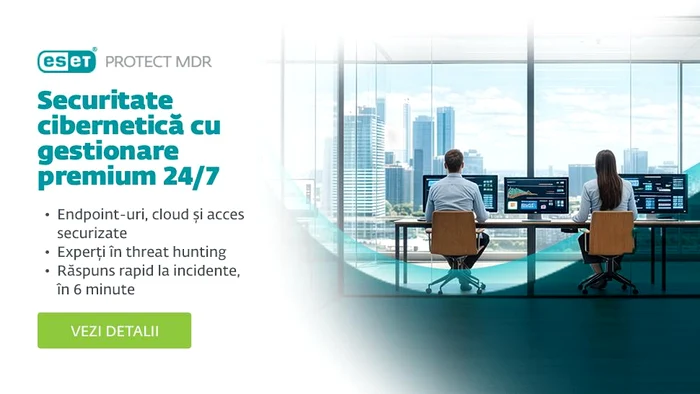
In 2026, organizations will not be judged by the ability to avoid any incident, but by the ability to continue operating when incidents occur. Cyber resilience means continuity under pressure, rapid reaction and effective recovery so that an attack does not turn into a major operational crisis. ESET offers state-of-the-art digital security solutions developed to anticipate and prevent cyber attacks before they become real. New functionality Ransomware Remediationintegrated into ESET solutions, is a proprietary technology that helps automatically restore encrypted files if ransomware is detected at a later stage of the attack, after the encryption process has already begun. For many organizations, MDR is the fastest way to get 24/7 monitoring and advanced expertise without the costs and hassles of building their own Security Operations Center. For organizations that need a higher level of protection, the solutions ESET MDR
adds a critical layer of security by combining 24/7 continuous monitoring with the expertise of ESET analysts. By leveraging XDR capabilities, event correlation and active incident response, MDR enables the identification and blocking of advanced attacks in their early stages, including those that evade classical detection. ESET security solutions are always available for free download and testing and can be requested here.
By integrating human expertise with the power of Artificial Intelligence, ESET remains at the forefront of protection against emerging and known cyber threats, ensuring the security of businesses, critical infrastructures and individual users. Regardless of the type of protection required – endpoint, cloud or mobile – cloud-first, AI-powered solutions are both effective and easy to use. In addition to real-time, 24/7 defense, ESET also offers effective localized support (including in Romania), actively engaging in the research of the newest threats through its own R&D centers, including the one in Iasi, and through an extensive global network of partners.
https://www.eset.ro/business/mdr-protection
