
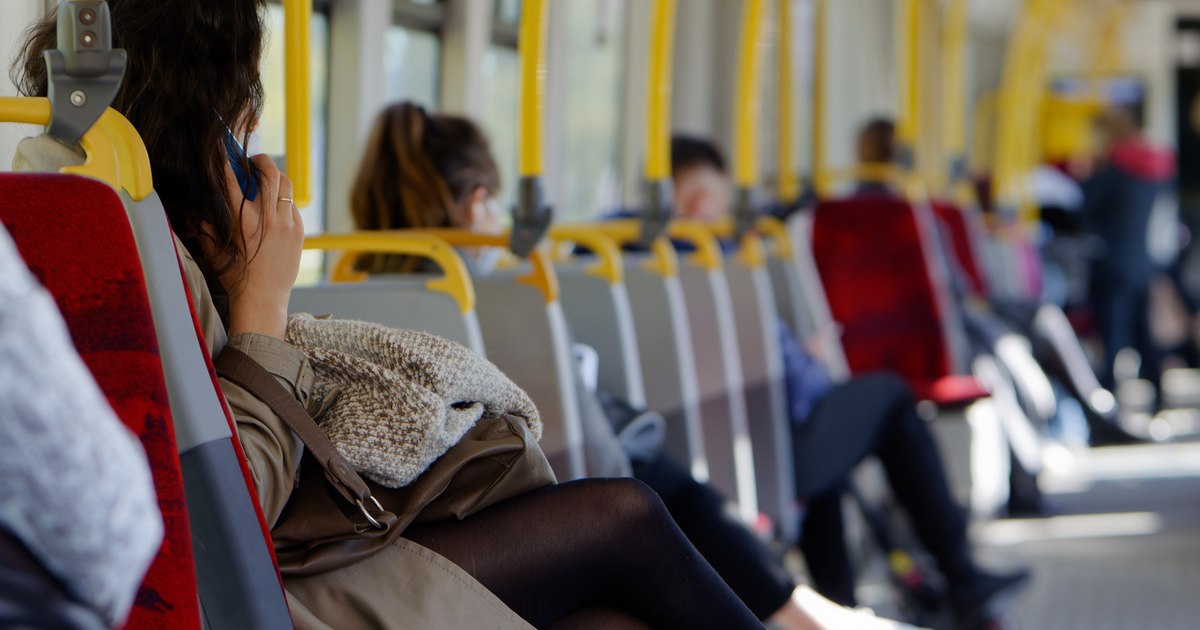
Talking on the speaker phone in public transport, making insistent comments about marriage and children to others, forcing the little ones to give hugs to their relatives or tipping that has become almost mandatory are just some of the behaviors that Romanians say they put up with on a daily basis, even though they consider them inappropriate. An online debate raises a simple but important question: Where does custom end and disrespect begin?
“What behavior is normal, but you find it out of place?” is the question thrown around on Reddit, and the answers have come in large numbers. Beyond the differences of opinion, much of it points to the same thing: people are increasingly bothered by considerate gestures “little things”, but which affects their comfort and day-to-day relationships.
Among the most common examples are talking on the loudspeaker on the bus or on the street. “Talking on speakerphone when you’re on public transport or on the street”someone wrote. Someone else added: “People who watch the same reel dozens of times at full volume”and another user added: “Or who screams on the phone.”
Many also complained about the lack of personal space. “When I’m standing in line and the one in the back is blowing on the back of my head. Move away!”someone wrote. Someone else recounted that there are people who even push the stroller into those in front, as if the physical proximity will help them move forward faster.
The comments about marriage and children almost unanimously entered the category of questions considered too personal. “Questions like: When do you get married and when do you have children?” someone summed up. Another panelist explained why such questions bother him: “This seems too personal a topic to me (…). The answer may depend on health issues or other sensitive topics.”
Numerous comments also concerned the way children are treated. Many users criticized the practice of forcing them to give hugs or kisses to relatives.
“Forcing children to be kissed or hugged by relatives or acquaintances when they clearly say they don’t want to or are shying away,” wrote a user. Another user recounted how his little boy politely refused a kiss from his grandmother: “She said ‘no thanks’ and left. In the meantime I explained to her that this is normal, that maybe she doesn’t want to be kissed by everyone either. Why should we force a child?”
Others have criticized parents who justify any behavior of their children with expressions such as “it’s a child” or “let him enjoy his childhood”even when the little ones disturb others in restaurants, on terraces or in public spaces.
The list goes on with tipping perceived as a social obligation, loud music in homes or yards, verbal aggression at work, spitting in the street, parking on the sidewalk, throwing things out the window, pressure to drink alcohol, use of the expression “let it go like that” to justify things done superficially or the tendency to explain any aggressive outing with the famous line: “That’s how I am.”
“Kids are just borrowing this kind of behavior”
Vocational counselor Aurora Oprea believes that many of these behaviors have the same root: the lack of social education and the inability to understand how one’s own gestures affect others.
“”What you don’t like, don’t do to another!” it is such a current proverb. Everyone is talking about the same social discomfort that has sharpened with fantastic rapidity in our society”, declare this for “Truth”.
The specialist states that she makes an exception in the case of elderly people who face hearing problems, mobility or difficulties in using technology: “As far as they’re concerned it’s not that they violate common sense, but that they can’t do otherwise. Obviously, in this category too there are exceptions where malicious intent trumps necessity.”
What do children lose who spend too much time in front of screens? Why psychologists say boredom is essential
Aurora Oprea says that her experience as a teacher and vocational counselor has shown her that many of the children’s behaviors are taken from the family.
“I have always tried to draw attention to the fact that what we see in children is the mirroring of their parents and that the children are not to blame for the lack of moral, educational and behavioral benchmarks that they cannot acquire alone. The school cannot replace the seven years at home”. she confesses.
Moreover, he emphasizes that he does not intend to blame the parents, but to draw attention to a limit that is becoming increasingly difficult to notice.
“It is not a criticism of parents, but an alarm signal to notice the fine line that separates freedom of action from insensitivity and violation of the norms of social conduct“, she considers.
Examples of how disrespect has become routine
“Think that in the Enescu Festival, in a hall like the Palatului Hall, phones ring during the concert. I mention this example precisely to highlight the fact that the present audience is made up of adults. If the consumers of culture themselves end up being careless, the children only borrow this type of behavior”. Aurora Oprea explains.
She also mentions people video calling on crosswalks or sidewalks.
“We don’t see that we can trip at every step, that we can hurt ourselves and that we can injure other people. We endanger both our own safety and the safety of those around us.” attracts the specialist’s attention.
In addition, he warns that intimate discussions in public spaces are not only a lack of discretion, but also a security risk: “It takes security of information which, especially these days, we have to value, being frauds everywhere.”
The counselor also talks about behavior in churches and medical institutions.
“In the church the man no longer enters to listen to the service for himself, but only comes to mark his presence, answers the phone, speaks as if he were out socializing and cuts off the connection of others with the spiritual need for which they came. Likewise in medical institutions, where silence, discretion and a more reserved behavior would help everyone involved”. she thinks.
“On Instagram I feel like the last man.” The viral debate that exposes a worrying phenomenon: social status bought on debt
“We have full responsibility for our actions”
Aurora Oprea says that responsibility towards others starts from the moment we leave our own home: “When we choose to do something, we must be aware that, once we leave the perimeter of the house, we have full responsibility for our actions, even if they seem “harmless”.“
In his opinion, the lack of consequences contributes to the spread of these behaviors.
“The lack of awareness or the lack of sanctions for one’s own actions creates an unhealthy habit that perpetuates and spreads“, emphasizes the advisor.
She believes that excessive noise, talking loudly on the phone, loud music and aggressive reactions when someone gets attention are signs of a deeper problem. “They are social markers that clearly show that we are in a time where the lack of education, respect and anticipation of the results of one’s actions is at alarming levels.”
As a solution, Aurora Oprea argues that both clearer rules and their enforcement are needed.
“I see nothing but clearer legislation of every modern action that produces social discomfort, and the application of sanctions for all of them. Rules must become part of our behavior, whether they are obeyed initially out of conviction or fear of punishment, until people come to obey them as a matter of course.” concludes the specialist.
