
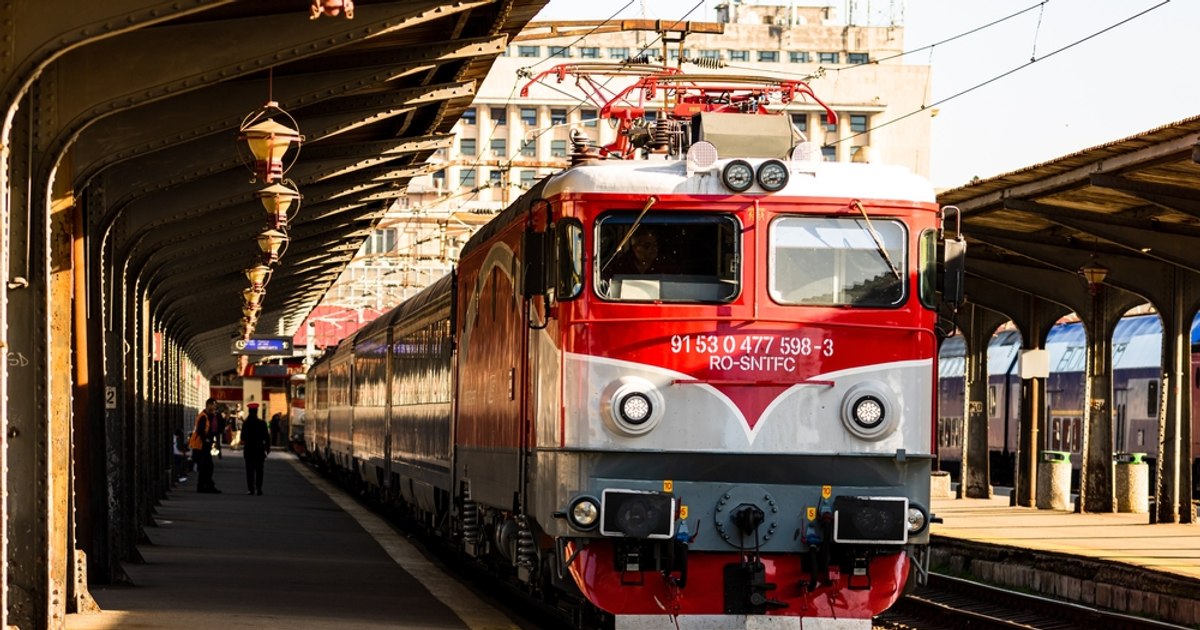
The Pro Infrastructure Association demands explanations from the Minister of Transport and the CFR management, after a locomotive recently modernized by PNRR broke down, and a train from Arad to Bucharest arrived ten hours late.
“On the evening of January 8, the brand-new PNRR locomotive 482-007 broke down, and the IRN 79 train it was hauling accumulated a 5-hour delay in the middle of the night between Arad and Timisoara, ending up arriving in Bucharest on January 9 at 6 in the evening instead of 8 in the morning”the representatives of the Pro Infrastructure Association wrote on Facebook.
According to them, the incident raises several questions: “First of all, how big is the danger of other sets hauled by the 19 locomotives of this type modernized by PNRR remaining in the field? We ask the manufacturer Reloc Craiova to follow the example of colleagues from Softronic who were transparent and published the necessary clarifications when a class 481 locomotive broke down: they said which part failed, who manufactures it, and it became clear that the probability of the event repeating itself is low. The Reloc locomotive has new components produced by ABB, a prestigious brand. What awaits the travelers with these units that already have a bad reputation, undeservedly, because of the oddly shaped box that was manually refurbished from the old box?”
In this context, the representatives of the Pro Infrastructure Association demand explanations from the Minister of Transport and from the CFR leadership.
“Minister Şerban si Preoteasa, still the head of Călători, must then explain how the relief locomotive, which left Timişoara, did not reach IRN 79, located somewhere between Şag and Vinga, because it also broke down on the way… As long as there is no fleet of reliable locomotives, even the PNRR ones manufactured with new parts have problems (only the chassis and box of the old ones are kept), at least in the middle of winter spare locomotives should be available at strategic points on the network”they added.
They also asked Minister Ciprian Şerban to reflect on the fact that “a mechanic, of a private operator in the area with a diesel locomotive, refused to pull the defective train because his hours on the job were running out”.
“Or in such cases, with a single blocked line, perhaps the legislation should be changed to allow low speed towing of a line blocking liner, no matter how tired the mechanic is.
Train 79 had to wait more than three hours after another one, which was coming from Bucharest, to borrow the locomotive from it. The result? A few hours delay of train 1999 Bucharest-Timișoara-Arad and, in a cascade, of 1998 Arad-Bucuresti from the second day.
It seems that, instead of urgently taking IRN 79 to Timișoara, the only functional locomotive that was found in the west of the country lost another two hours between 2 and 4 in the morning, between Vinga and Ortisoara, to move the damaged relief locomotive to the “tail” of train 79 so that it could also be taken to Timișoara. Mr. Minister, what is the priority: the people left in the field, on a frosty night, or taking the defective locomotives back to the home depot?”it is also shown in the post.
In addition, the Pro Infrastructure Association draws attention to the fact that international trains are sent on routes where there are construction sites, as only one traffic line is available: “Obviously, when something fails, the only available line will be blocked and the possibilities of help will be limited”.
“All the railway corridors that lead from Bucharest to the west of the country are choked or completely blocked by endless works. Practically, we no longer have a complete reliable double-line route on which we can travel without emotions, where we can send help to a broken joint. And we won’t have it in the next five years. So the never-ending modernizations and obsolete rolling stock (to say the least) put pressure on a railway system that is on the ground”concluded the Pro Infrastructure Association.
