
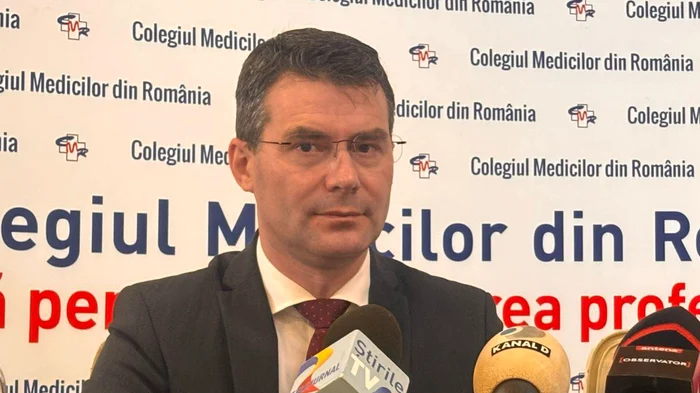
The president of CNAS, Horațiu-Remus Moldovan, proposes a major change in the way of purchasing medicines from the national health programs. “Those expensive and very expensive medicines, which are subject to cost-volume contracts, I think it would be useful to purchase them centrally, through ONAC, and for hospitals to be able to access them very quickly; to stop running 500 hospitals 500 procurement procedures”he declared for Adevărul. Thus, Moldovan argues, administrative blockages that leave patients without treatment could be avoided. Recently, cancer patients who were treated at the Bucharest Oncological Institute were sent home on the grounds that the health facility no longer has money for medicines.
How the CNAS president argues the need for change
“A centralized purchase of all medicines from the national health programs – which amounts to approximately 10 billion lei – I think is auspicious. In this way, we also avoid the problem of stocks, which are currently a real impediment, because each hospital must make its own stock of drugs, especially in the oncology area, so that when the patient comes for therapy, you have the respective drug in the hospital pharmacy”. declared the CNAS president.
The official also offered another argument:
“Imagine that if you distribute the amount of money that you have allocated for these health programs to a very large number of providers, then obviously those providers must also have very large stocks. Either this thing is mathematically impossible: to have a budget to block in many sanitary units in the form of stocks. And then we must be careful in the future and rethink the way these health programs are run”.
In addition, the CNAS president says that one more change would be needed:
“Part of the medicines and sanitary materials that are now provided by the health programs must be transferred to the normal framework contract so that the patient needs to benefit from them when he needs them”.
Patients’ access to medicines could increase through their availability in regular pharmacies, says Horațiu-Remus Moldovan. He considers “outdated” the way things are happening now: the drugs in the national health programs are closed circuit, and patients only receive them during hospitalization or upon discharge, from the pharmacy of the health facilities.
The case of the Bucharest Oncological Institute: “The hospital manager was not informed of the decision to send patients home”
The statements come in the context in which patients diagnosed with cancer, who were treated at the Bucharest Oncological Institute, were sent home, after the health unit ran out of the necessary drugs.
The Bucharest Oncological Institute ran out of medicines. Dozens of lung cancer patients sent back home
Moldovan says that he ended up in this situation not because of the lack of funds from CNAS, but because of the way the hospital managed things.
“The Bucharest Oncological Institute (IOB) has an average consumption of 11 million lei on these drugs. He received at the beginning of the month more than 12 million. That is, they got as much as they asked for. On the 10th, hospitals, if they estimate that they are treating a larger number of patients and the amount is not enough, must make a request to the Bucharest Health Insurance House. That’s the procedure. IOB did not do this on the 10th, but on the 20th. On the 29th, they also received the commitment credits. Because even on the 20th they didn’t take the steps correctly”.
The IOB manager reportedly told the CNAS president that he did not know what was going on.
From the discussions held with the lady manager, the hospital manager was not informed of this decision or of these decisions of some doctors to refer patients either. Because, if she had been notified, she could have made the steps to the Health Insurance House more quickly. And he could have done one more thing: to borrow those medicines and sanitary materials from other hospitals that run the Oncology Program and the moment he would have received the money from the House he would have returned them. But because it was not announced, this did not happen, said Horațiu Moldovan.
The CNAS president assures that there is a budget for national health programs:
“Especially on the Oncology Program, which is an absolute priority and is paid at the achieved level, so there are no ceilings. The situation is under control, but it requires proper management and a daily analysis of drug consumption and stocks, so that there are no discontinuities at the level of hospitals running the National Oncology Program”.
“Organization mode is outdated”
He admits that patients can go without treatment and says this also happens because of the way health programs are now organized.
It is true what the patients say, because these syncopes can occur at any time for administrative reasons. Where there are several steps, obviously a blockage can occur on each step. (…) I think that all health programs should be evaluated every 5 years and they should be flexible, they should not remain for life in the form of health programs.
Each entity, each actor, player in the healthcare system has its own interest
I asked the president of CNAS how long he thinks the measure of the centralized purchase of medicines could be implemented. The answer is complicated.
“It is not just the decision of the National Insurance and Health House. Here we are talking about a consensus and a very good collaboration with all the actors involved – from hospitals, health insurance companies, public health departments, the Ministry of Health, the Ministry of Finance, the Government of Romania – because there are many legislative changes that must be agreed. They are not complicated, they just need consensus and involvement. And, of course, we need the support of patients for these efforts.”
Alexandru Rogobete, shocking statement: chemotherapy drugs stolen through “fictitious invoices” from the Bucharest Oncological Institute and taken to private hospitals
Such a change could be met with resistance, says Horațiu-Remus Moldovan.
“There will certainly be dissatisfaction from the perspective of actors who are involved in this area of health programs, both in the public and private areas. And, often, steps in the patient’s interest were blocked. History has shown that they have been blocked without taking into account the patient’s interest in being insured and protected from the point of view of costs. Everyone claims that the patient is at the center of the healthcare system, but in reality each entity, each actor, player in the healthcare system has its own interest. The National Health Insurance House certainly has the following interest: according to the law, it is the main representative of the insured.”
