
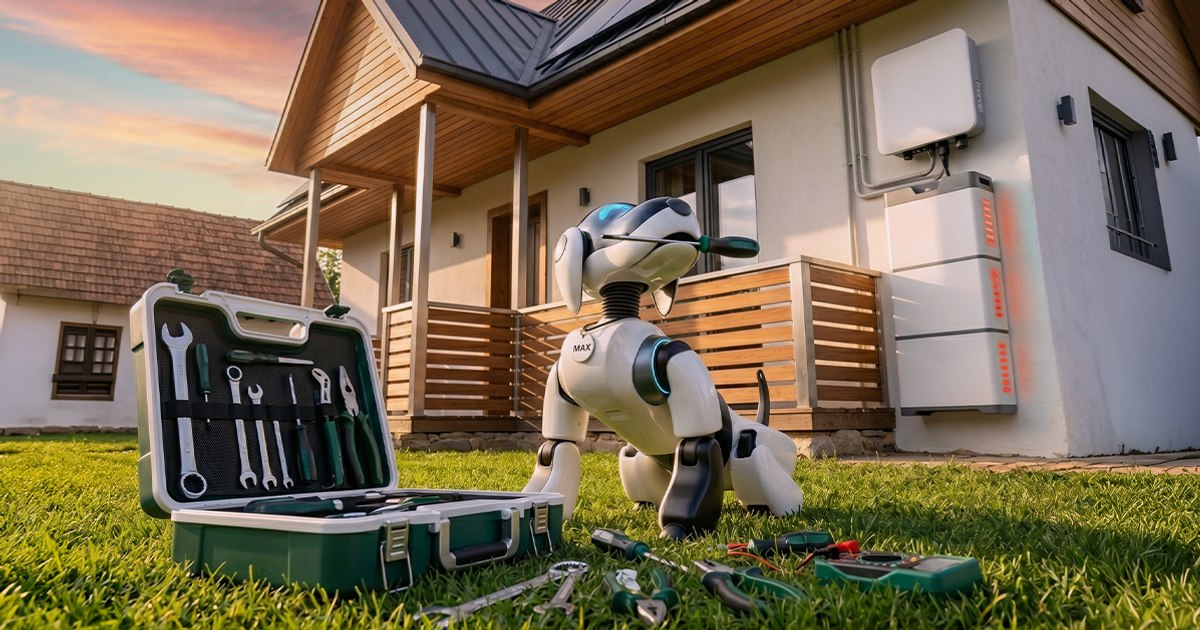
The photovoltaic batteries connect to the photovoltaic installation and accumulate the energy produced in excess during the day to be used in the evening, when the household’s consumption increases. The solution covers the gap between the solar production peak (between 12 noon and 3 p.m.) and the domestic consumption peak, a time when most homes are not active.
The self-consumption rate, which in an installation without photovoltaic batteries is generally around 30%, can rise to 60-70% with their integration. The result appears directly on the bill: the amount of energy taken from the network drops significantly.
More than 300,000 households in Romania already produce energy on their own
Of these, most with the help of photovoltaic systems. Photovoltaic panels have become more affordable, and the wave of installations in recent years has allowed a growing number of home consumers and small business owners to increase their energy independence and become prosumers.
A photovoltaic system produces energy during the day, with a peak between 12 and 3 p.m. Often, during that interval, a large part of the homes are vacant, and the consumption is minimal for reasons such as work, school, outdoor activities or not using some appliances for consumption during that interval. The energy produced and not consumed in real time is injected into the grid, although during that interval the demand and consumption are low. In the evening, instead, the consumption increases, and the most important aspect remains the gap between the moment of energy production and the moment of consumption.
Integrated supplier PPC Energie recently expanded its portfolio of solutions dedicated to prosumer customers with photovoltaic batteries and PPC Solar Upgrade packages. Both individual PV batteries and PPC Solar Upgrade solutions for non-hybrid PV installations can be purchased in equal installments on the energy bill, with support included for installation, commissioning and submitting the necessary documentation.
How photovoltaic batteries contribute to the optimization of consumption
Photovoltaic batteries solve that gap. The battery connects to the photovoltaic system and accumulates the energy produced during periods of surplus, usually during the day. In the evening, the supply is made from stored energy, and the amount of energy taken from the network decreases. With photovoltaic batteries, the self-consumption rate can increase from about 30% to 60-70%.
PPC Energie offers photovoltaic batteries compatible with Huawei and Deye inverters, in three capacities: 5 kWh, 10 kWh and 15 kWh. Batteries compatible with Deye inverters are available from 299 lei/month, and those compatible with Huawei inverters from 559 lei/month and can be paid in up to 36 equal installments, without commission, with payment directly on the energy bill. Installation and commissioning are included in the price. In addition, PPC also provides support for the submission of connection documentation.
The company’s entire range of photovoltaic batteries can be consulted at: www.ppcenergy.ro/prosumatori/sisteme-stocare-energie-electrica/
PPC Solar Upgrade is the new solution that integrates batteries into installations without a hybrid inverter
Some of the photovoltaic systems installed in recent years use standard inverters that do not allow the direct connection of batteries. PPC Solar Upgrade is a new solution that allows the integration of photovoltaic batteries in photovoltaic installations by replacing the inverter with a Deye hybrid model and installing 1 to 3 accumulators, depending on the needs of the household.
The company’s portfolio includes six configurations, from 6 kW single-phase systems with one battery (from 599 lei/month) to 15 kW three-phase systems with three batteries (from 1,429 lei/month). Similar to PV batteries purchased separately, payment can be made in up to 36 equal installments, commission-free, directly on the energy bill, with installation and commissioning included in the price. In addition to these, another benefit is the support for submitting the necessary documentation to obtain the connection certificate.
More information about PPC Solar Upgrade packages is available at: www.ppcenergy.ro/prosumatori/ppc-solar-upgrade.
How does it translate concretely, on the invoice, the impact of photovoltaic batteries in three real scenarios
The savings generated by the batteries vary depending on the power of the photovoltaic system, the household’s monthly consumption and the daily activity schedule. Based on a simulation model that takes into account an active energy price of 0.53 lei/kWh, three common scenarios are presented below:
Scenario 1 – A family of 3, active, which consumes mainly in the morning and evening with an average of 300 kWh/month. 6kWp panels produce on average around 600 – 650 kWh/month (with significant variations between summer and winter months). Being away from home during the day, when production is maximum, the degree of direct self-consumption does not exceed 20%, and most of the energy produced is injected into the grid. With 5 kWh photovoltaic batteries that allow the use of energy accumulated during the day for evening consumption, for this family, the estimated savings reach 135 lei/month.
Scenario 2 – A family of 4 people, with an increased monthly consumption of 450 kWh and a 6 kWp system; they have an electric car and one person works from home during the day. The degree of direct self-consumption is 30 – 35%, but the energy requirement purchased from the network remains significant. With 10 kWh photovoltaic batteries, this family can increase control over the energy produced, and the estimated savings reach 265 lei/month).
Scenario 3 – An extended family of 5 people that has a heat pump installed. The monthly consumption reaches 700 kWh, with a photovoltaic system of 10 kWp and an estimated production of 1000 – 1100 kWh/month (with significant variations between the summer and winter months). In this case, direct self-consumption is 40%. For this family, the 15 kWh photovoltaic batteries generate an estimated saving of 370 lei/month.
Note: Simulations are strictly indicative and based on an average daily model with 90% battery efficiency. Actual savings vary depending on individual consumption behavior, energy price and system configuration.
What to remember about the indicators of an efficient photovoltaic system
Direct self-consumption, i.e. consumption from own production, is always more profitable. Three indicators show whether a photovoltaic system is used efficiently:
Self-consumption rate – the percentage of produced energy consumed directly, without being injected into the network. A value below 40% signals the need for optimization.
Energy injected vs. the energy taken from the network – the ratio between the two that indicates whether a system is sized correctly for the consumption profile.
Most modern inverters and associated applications display these indicators in real time. If the self-consumption rate is constantly below 40%, the installation of photovoltaic batteries becomes an option to increase the efficiency of the system. They can increase the self-consumption rate from about 30% to over 70%.
Scheduling large consumers (dishwashers and washing machines, electric oven, electric stove, electric car) between 11:00 and 15:00, when solar production is maximum, remains a practical solution to increase energy efficiency. Replacing household appliances from lower energy classes with models from higher classes can reduce basic consumption by up to 50%.
Purchase in 36 installments, without commissions, directly on the energy bill
Photovoltaic batteries and PPC Solar Upgrade packages from the PPC Energie portfolio can be purchased in up to 36 equal installments, with payment directly on the electricity bill, without commissions. For these solutions, installation and commissioning are included in the price, and PPC Energie also provides support for submitting the necessary documentation in order to obtain the connection certificate.
PPC Energie is the electricity and natural gas supplier dedicated to meeting the needs of today’s customer, concerned with energy saving, efficiency and sustainability. With a base of approximately 3 million household customers, companies and institutions across the country and a network of approximately 80 modern stores, PPC Energie’s portfolio comprises value-added products and services that provide customers with comfort and safety.
