
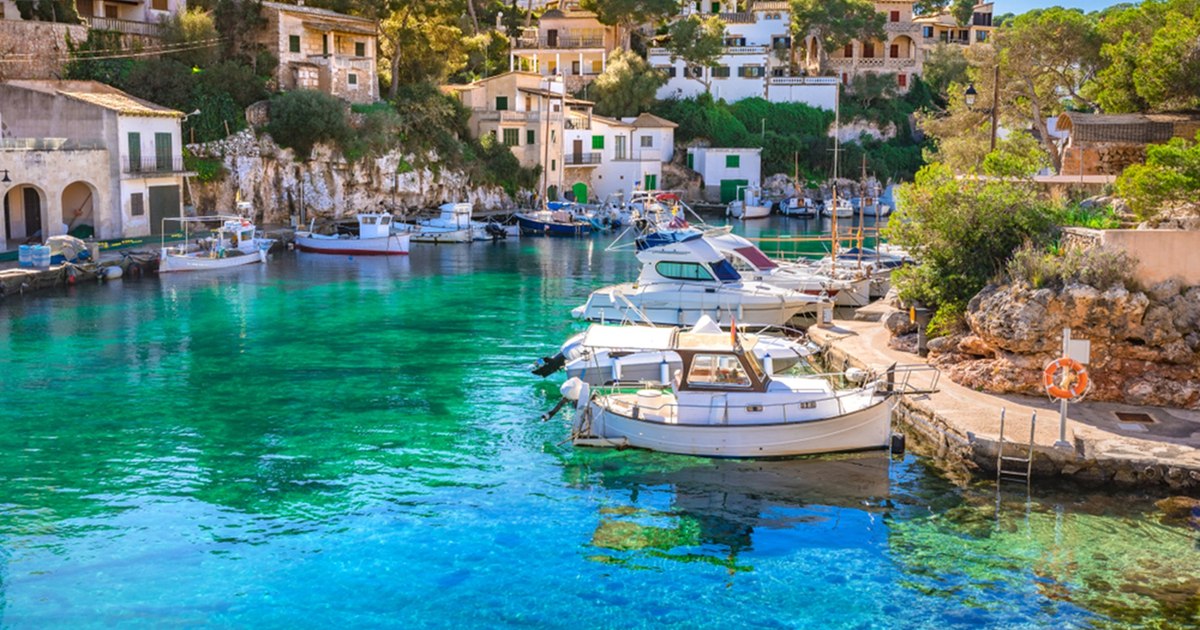
Authorities in the Balearic Islands, Spain, have announced that they will no longer collaborate with influencers on social networks to promote folk tourist destinations, claiming that “Tourism for selfie” It affects some of the most beautiful places in the archipelago.
Spanish authorities have taken measures in overcrowded locations by Photo Dertour tourists
In an attempt to reduce the effects of supraturism, the authorities had reached influencers – many of them with hundreds of thousands of followers – to redirect visitors from the well -known places to less visited areas, reports The Guardian.
The strategy, however, had an opposite effect, and the areas isolated and ecologically sensitive have been invaded by tourists who come, make selfies, post them online and leave.
“It had a completely opposite effect on the desired one and contravenes the government control policies”said a spokesman for the Department of Tourism in Balearic, on the weekend.
Measures taken by local authorities
An example is Caló des Moro, a small bay in Mallorca, with a capacity of about 100 people. After an influencer recommended the followers to enjoy its clear waters and the golden sand, the place was stormed daily by thousands of visitors.
In June last year, the mayor of the town, María Pons, organized a press conference stating that 4,000 people and 1,200 vehicles arrived there daily. She asked journalists and tour operators to never mention this bay.
Meanwhile, the local authorities have deleted all the images with the bay on the official site.
In ES Vedrà, Ibiza, the authorities closed access to a very popular belvedere point, after the locals complained about crowds and waste left behind.
Reactions against influencers
The reaction against influences is not specific only to Spain. In Bali, the authorities denounced the tourists who were photographed in sacred places and imposed big fines for filming in certain areas. In Vermont, the US, the city of Pomfret – famous for its autumn landscapes – was forced to restrict the access of tourists in the season.
Spain expects a record number of tourists this summer, after almost 100 million people visited the country last year. The protests against the effects of mass tourism – especially the increase in the costs of housing – have already started, with an incident in which the tourists from Barcelona have been attacked with water guns last month.
Last weekend tens of thousands of people went out into the street in the Canary Islands, chanting “Massive tourism leaves us without houses” and “Canaries are not for sale“Last year, the archipelago (with a population of 2.2 million) received a record number of 17 million tourists.
Throughout Spain, the lack of accessible homes is the main social problem, and the apartments for tourists are considered guilty by this crisis. Last year, tens of thousands of people protested in Tenerife, Palma de Mallorca, Sevilla, Madrid, Barcelona and other cities, and similar demonstrations are also expected in 2025.
Tens of thousands of ads have been removed
Meanwhile, the Ministry of Consumption in Spain, with the support of the Supreme Court, asked the Airbnb platform to eliminate 65,000 ads for illegal tourist apartments. In March last year, the ministry identified 15,200 illegal apartments in Madrid.
If it does not comply, Airbnb risks fines of up to 100,000 euros or six times higher than the profits generated by illegal apartments.
The company has challenged the government requests in the past to eliminate ads, but a court in Madrid asked the California company to delete 5,800 ads, according to the ministry.
An Airbnb spokesman said the platform will continue to challenge the decision and criticized The “indiscriminate methodology” of the ministry, claiming that it has no competences in the regulation of tourist accommodation.
The company representative also accused the ministry that “He ignored deliberately” The decisions of the Supreme Court of Spain, which stipulated that not all Airbnb ads must contain a registration number.
