
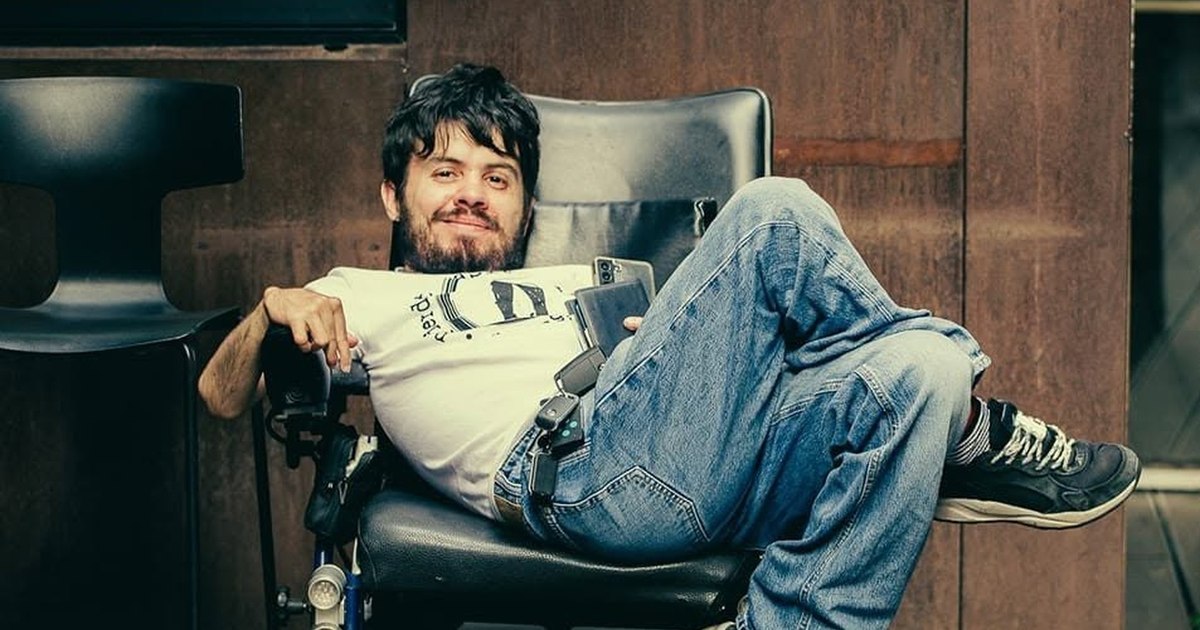
Alex Tache, an IT specialist and wheelchair user, talks on TikTok about the obstacles faced by people with disabilities, from blocked sidewalks to accessibility made “in the eyes of the world.” He explained to Adevărul why the wheelchair is just a tool.
Alex Tache, IT specialist, amateur actor and content creator on TikTok, where he talks about the daily life of people who use a wheelchair, recently took to the stage of the Bucharest National Theater, in the main role of the show “No magic pill.” QIn his videos, he talks about accessibility, independence and the prejudices that people with disabilities face.
A “voice” for wheelchair users
Alex Tache spoke for truth about the seemingly small obstacles that can turn an ordinary commute into a challenge, about his work in IT and about the desire to reach with his messages beyond the “bubble” of people already familiar with these issues.
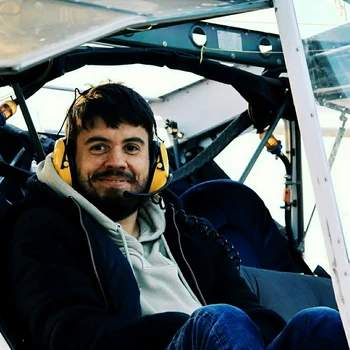
THE TRUTH: How would you briefly describe what you’re trying to show with your TikTok videos?
Alex Tache: Communism wanted to isolate people with disabilities as much as possible, so that society would appear perfect. The effects of that period are still felt. People tend to see only the disability, not the person. That’s what I’m trying to do: to show people that we are people too, and the wheelchair is just a tool that gives us access to a normal life. People can support us to have a normal life, because we need free sidewalks, accessible pedestrian crossings and, last but not least, respect.
What made you start speaking publicly about everyday life as a wheelchair user?
For several years I have realized that I can have an impact, that something can be left in my wake. When I got to go on stage at TNB, in the main role of the show “No Magic Pill”, the impact became much more palpable.
Video: Alex Tache. Facebook
Shortly after that, a social media friend approached me and helped me with what I was missing: guidance, solutions and support. That’s how we grew, in four months, from 350 followers on TikTok to over 11,000.
What are the seemingly simple things that can actually be much more complicated on a typical day?
Walking down the street. Cars parked everywhere, blocking sidewalks or crosswalks, end up being big challenges. Many times I have to walk on the road, instead of riding on the sidewalk.
The worst thing is that people have become so used to parking illegally that they don’t even try to park otherwise. A few days ago, there was a man parked on the crossing, seven meters from a free paid parking space.
What do you do for a living and how has working in IT helped you maintain your independence?
I ended up working in IT without any education in the field, just through hard work and the desire to learn. What motivated me, over the years, was to end up with a good enough salary to be able to carry out, in addition to my job, projects that would have a greater impact on society.
The first woman from Romania to participate in Miss World in a wheelchair: “It’s my accessory”
You also talked about getting your license. How was the experience and what would you like other people in a similar situation to know?
I got my license ten years ago and the experience was surprisingly very good. I went out with an instructor on the streets to see how I was doing with my mobility, and then, with his approval, I started school.
Video: Alex Tache. Facebook
I also got the medical record through the school and I think it helped that they had experience with people with disabilities. I hope that over the last ten years the experience has become even more accessible and enjoyable for those in a similar situation.
What are the most common accessibility issues you encounter?
Most of the time, accessibility is done only by the eyes of the world. In Germany, for example, the reception committee also includes an NGO in the field of disabled people. Things should not be done for us without us.
I was shocked when I was in the west and discovered how the problem of accessibility is there. I was in a small university town in Germany and I was looking for an accessible toilet. I arrived opposite the train station and found a toilet that not only had an adapted WC, but also a lift, an adult changing table and a small shower. In our country, we are often only happy when we find an accessible toilet.
Have you also had pleasant experiences, where people or places showed you that accessibility can be treated naturally?
The pleasant experiences are the ones where people treat me like a human and ask me directly what is okay and what is not. Too often, non-disabled people think they know better what disabled people need.
What reactions do you get most often from people who watch your videos?
People are very curious, and that makes me happy. It’s also the reason why I started making these videos: disability is still treated as a taboo subject, to the point where people no longer see the person, only the disability.
What would you like people who have never had direct contact with the life of someone who uses a wheelchair to understand?
We are all human, beyond disability. We have the same problems, the same turmoil, the same fears. The difference is that often all these problems are accentuated by the difficulties created by society: when we are looked at with pity, when we have nowhere to ride on the street, or when people consider us inferior just because of a disability.
The story of the wheelchair-bound student who qualified for the national stage of a school olympiad. He wants to become a psychologist
What are your plans for your page and what topics would you like to cover next?
I want to grow it and reach as many people as possible. The hardest thing for me seems to be reaching people outside my bubble, precisely those who need to know more about us the most. But it seems to work.
Further, I want to discuss all issues, put solutions on the table and at the same time show people who we are. Those who have been to the west notice that there are a lot of disabled people on the streets, and in Romania much less. Not because it doesn’t exist, but because there is still a strong stigma.
The costs of independence
Alex Tache also draws attention to the high costs borne by people who need a high-performance wheelchair. According to him, the settlement offered by the state is below 2,000 lei every five years, regardless of the specific needs and the medical situation of the beneficiary. In contrast, a wheelchair similar to the one he uses can cost, new, more than 8,000 euros.
“Because the state does not ensure the minimum necessary for the integration of wheelchair users, it ends up having much higher costs for each person who is not integrated”says Alex Tache.
