
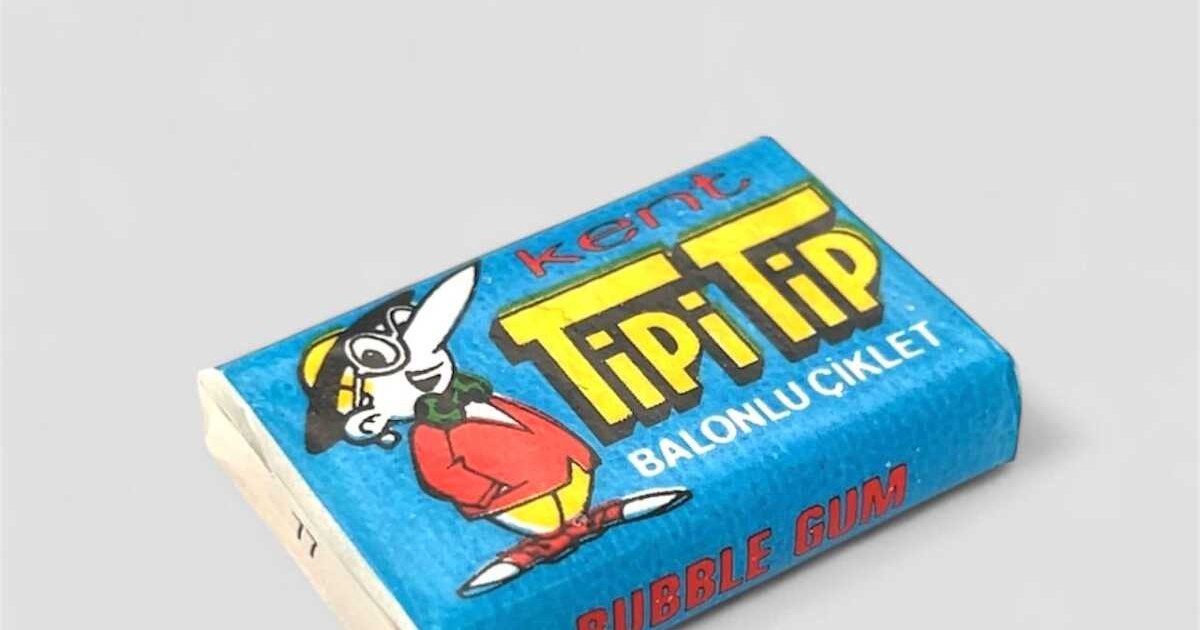
Do you still remember the “surprises” from Turkish chewing gum? For those who grew up in the 80s, in a time when Western consumer goods were rare and hard to come by, gummies like Turbo, OtoMoto, Tipitip or CinCin were true “trophies” of childhood. In the context in which, in the socialist trade, one could almost exclusively find inferior products, such as Gumela or Cilgum, the only ways to have access to something else were through regulars, foreign citizens or those who had the opportunity to travel more often outside the country – sailors, sportsmen or gunners.
Many times, Turkish gummy surprises functioned as real informal currency in the children’s universe. They were exchanged for balls, games, magazines or other desired objects, being valued according to rarity and the series from which they came. The phenomenon did not die out with the end of the communist regime. Turkish chewing gum remained extremely popular even in the 90s, and today, on international trading platforms, some series of surprises are sold for amounts that can reach several hundred dollars – a clear proof of the cultural impact they have had. If Turbo and OtoMoto contained images of cars and motorcycles, and CinCin was recognized for its surprises with famous footballers of the era, Tipitip stood out with its original inserts: small comics that presented the adventures of a cute character with a big nose, glasses and a brightly colored suit.
Although time has passed, and Tipitip gums are no longer on store shelves in our country, the character has remained alive in the collective memory. Its creator is Bülent Arabacıoğlu, a well-known Turkish cartoonist. Born on August 11, 1950, in Eskişehir, Arabacıoğlu is one of the representative figures of Turkish comics and caricature. Even today, at almost 76 years old, he has not stopped his activity. He teaches at a university and a vocational school, participates in caricature and comic festivals, and continues to draw the adventures of the other classic character he created, En Kahraman Rıdvan (“The Most Heroic Rıdvan”). In this context, “Weekend Adevărul” challenged him to a discussion about his career, about the birth of Tipitip and about the cultural impact that this character had in Turkey and in Eastern Europe.
A self-taught in Romania
There are collectors who today pay hundreds of dollars for a Tipitip surprise. Bülent Arabacıoğlu knows this, he receives letters and e-mails from them, and each message takes him back to 1976, when he visited Romania with his wife. Not as a businessman or cultural ambassador, but simply as a tourist. The connection with Romania is also a family one – his mother-in-law was born and raised here, before emigrating to Turkey. “I must mention that my mother-in-law was born and raised in Romania, and then emigrated to Turkey. Thus, my wife, my son and my grandson have Romanian citizenship today, in addition to the Turkish one. This common bond is a special blessing!”he says.
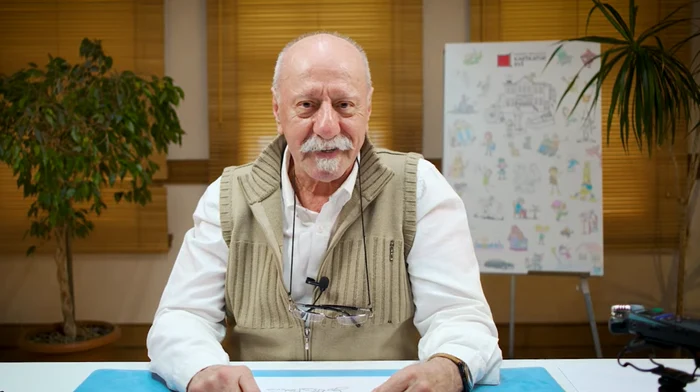
The 1976 visit coincided with the most difficult years of the communist regime, and Arabacıoğlu remembers that Romanians who realized they were from Turkey stopped them on the street with three kinds of requests. The first two were related to the underground economy of the era – gold and currency. But the third surprised him every time. “First, precious metals, especially gold. They showed us my wife’s necklace and bracelet and said: “Sell them to us, and when you return to your country, you can buy them in the Grand Bazaar in Istanbul.” At that time, there was no free gold trade in Romania. Second, they wanted to illegally buy American dollars or German marks in exchange for Romanian currency. Thirdly, they asked: «Do you have Tipitip gum?»… This was, of course, the question that made me the happiest. Because I created Tipitip in 1974, and in 1975 the surprises were printed and the chewing gum was put on sale. It had already become a very well-known brand. Over the years, Tipitip has become an extremely popular comic book character, both in Turkey and in the communist countries of Eastern Europe. Even today I receive letters and e-mails from collectors in those countries”.
Arabacıoğlu did not come to drawing on the artistic path, but on a much more unexpected route. He graduated in 1972 in topographical engineering at Yıldız Technical University in Istanbul, but never practiced in the field. “I completed my university studies in 1972. Although I obtained a surveying engineer degree from Yıldız Technical University in Istanbul, I never practiced. I became a cartoonist right out of college because I really liked drawing. Even now, although I am retired, I continue to work as an artist and illustrator. In addition to Tipitip, I also have a comic character called En Kahraman Rıdvan (“The Most Heroic Rıdvan”), whose adventures I published in various humorous magazines, starting in 1980. To date, I have also made 14 albums of his adventures, which are available in bookstores. I have been teaching at Istanbul Aydın University and Anadolu Bil Vocational School for about 15 years. More precisely, I share my professional experience with young people, because I am self-taught and I trained through work, without having attended specialized courses in drawing, caricature or illustration”.
Tipitip’s family
Tipitip was born from an order. In 1974, while working at Hürriyet newspaper, Arabacıoğlu received an unprecedented offer through an advertising agency: to create sketches for a “comic-themed” chewing gum, a new product for the Turkish market. He drew some variants and presented himself at a meeting with the management of the Kent Gıda factory. There, in the meeting room, the character received, unbeknownst to anyone, his first review. “One of the sketches was very much appreciated, and during the meeting comments were made such as: ‘Look at the character, he has a nose like a rocket!’ or “The character is perfect!”. That’s how this brand came about, naturally. After returning home, I drew a total of 70 character plates and handed them out. They had to be printed simultaneously, in series, using a roll-to-roll printing system. Since there were no such high-performing printing houses in Turkey at the time, the first series of surprises were printed in Germany. Afterwards, the printing continued at the Rotopak printing house, founded here in the country in partnership with the Kent Gıda factory”.
VIDEO Childhood, with good and bad: from the war bunker to McDonald’s
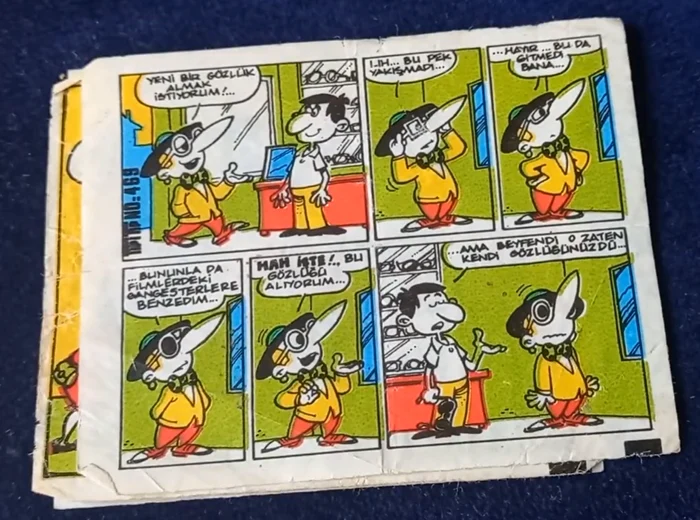
Success came quickly and changed everything. From a side project, Tipitip has grown into a miniature industry. Kent Gıda asked him for one-minute animated commercials, broadcast weekly on television. Arabacıoğlu quit the newspaper and founded an animation studio with a friend. There was also a magazine, “Titipip News”, four black and white pages, sent monthly, free of charge, to 84,000 addresses, with letters and drawings from fans.
But popularity also brought a moral dilemma. Tipitip was, from the very beginning, a clean character – “cheerful, honest, clumsy and funny, away from politics and sexuality, suitable for all ages”as its author describes it. When he had a girlfriend, Tipitoş, the complaints came. “We started receiving complaints. The common message was: “We love Tipitip and Tipitoş, but… we don’t think it’s right for them to live together without being married.” So I decided to marry them and create a family: the son Tipican, the daughter Tipicik and the dog Tipitop. At the same time, I changed his appearance: I replaced the bow tie with a tie, took off his hat and made him bangs, to adapt to the times”.
The last dream
Today, Tipitip formally belongs to a multinational corporation. The Kent Gıda factory was sold first to a British company, then to an American one. Arabacıoğlu still collaborates with them, but the dream of a comic book hits a logic that he understands, even if he doesn’t fully accept it. “From the very beginning, I gave the rights to use to Kent Gıda. Later, I became a permanent employee and worked for many years as a manager in the advertising department, until retirement. The factory was then sold to a British company, and later to an American one. I still work with them, but I have not yet been able to get approval to publish a comic book with Tipitip. Multinational companies mainly focus on global brands and consider Tipitip a local brand, that does not show the same interest as I. In any case, I thank you once again for the opportunity to remind your readers in Romania about this character who perhaps made their childhood happy”.
The comics of the “Golden Age”: how the Beatles ended up in “Historical Stories” PHOTO
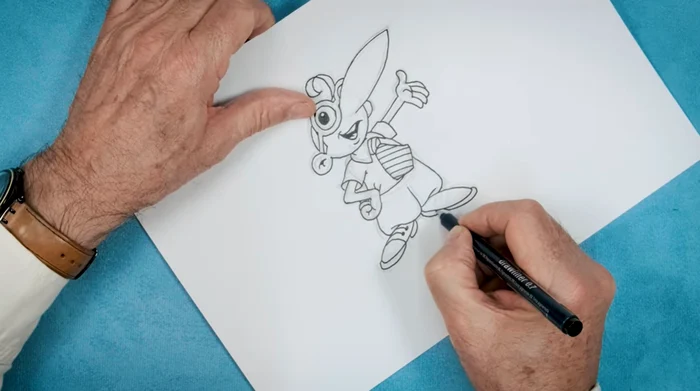
We are sure that somewhere in the attic boxes of the generation that grew up in the 80s, there may still be a few Tipitip surprises – small rectangles of glossy paper with yellowed edges, kept with the same seriousness with which trophies were once kept. Bülent Arabacıoğlu is almost 76 years old, teaches students, still draws and still hopes, despite the corporate bureaucracy, for the album that has not yet appeared. The rocket-nosed character has survived communism, privatizations and oblivion, proof that some childhoods cannot be bought or sold, no matter how much they are worth on eBay today.
