
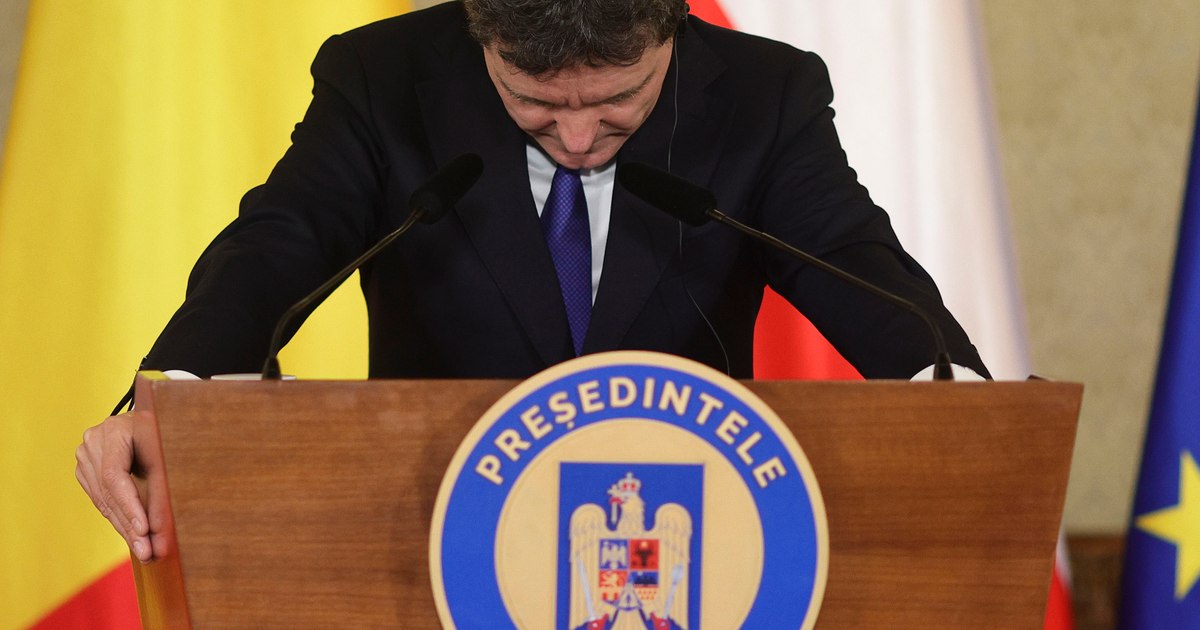
Romania chose not to activate Article 4 of the NATO Treaty after the Russian drone incident, opting instead for an informal discussion with allies in the region – a decision taken by Nicușor Dan alongside CSAT that divided both the political class and public opinion.
Analyst George Râpă explained to “Adevărul” why Romania did not activate NATO Article 4 after the drone incident and what the convening of the UN Security Council, Monday, June 1, means. In his opinion, Foreign Minister Oana Țoiu spoke prematurely, before CSAT had completed the assessment of the situation — a gesture that the analyst qualifies as disloyal to the president and the other members of the Council.
“Ms. Țoiu spoke out before the discussion in the CSAT, it was a disloyal gesture because in a way she put pressure on the president and the other members of the Council. On certain legal interpretations, obviously, article 4 could be invoked. In similar cases, NATO allies either invoked the article or not. In the end, even if the conditions are met, and in this case such an interpretation could probably be forced, it is a political decision that also of context. Other issues were probably analyzed in the CSAT, such as the fact that Romania did not prepare enough for such an incursion into the airspace, although we had four and a half years to do so. However, even without the invocation of this article, only a few hours after the incident, allies such as Mrs. Meloni announced that they were urgently sending anti-drone equipment to Romania.”
The signatory parties “will maintain and develop their individual and collective capacity to resist armed attack”
In the public debate, two camps appeared: one that demands the activation of NATO Article 4 and another that claims that Romania did not have sufficient reasons for such a measure. The analyst says, however, that the discussion ignores an essential obligation already provided for in the treaty, which, according to even Romanian officials, has been postponed or is in the development plan through the SAFE program.
“The beauty of law is that both sides can have their truth. But until we go to Article 4, we have Article 3 of the NATO Treaty which clearly states that in order to achieve the objectives of the Treaty, the signatory parties ‘shall maintain and develop their individual and collective capacity to resist armed attack.’ In our case, we can say that we did not use the systems we have, such as the Gepard 1A2 systems. In addition, there are delays in the acquisition of other systems such as SHORAD. So we are still discussing a reluctance to use military force to defend the national territory, for fear of disturbing Russia too much, but also delays in the purchase of new equipment – see including the scandal that PSD and AUR made on SAFE.
So yes, we can invoke art 4, but what do we do if those people ask us how we prepared for such incursions? Because the individual preparation of each NATO member country is also an obligation arising from the NATO treaty!”the analyst explains.
Regarding the measures taken so far by the Romanian authorities, he believes that the reaction was proportional to the seriousness of the situation and that Bucharest conveyed firmness without escalation.
“I think the response is in line with the challenge. Closing the consulate in Constanta is a pretty strong blow to Moscow. According to media reports, that consulate was actually an espionage center. The Russians were interested in what was happening in the port of Constanta, the place through which arms and other forms of aid to Ukraine pass. In addition, the threat to expel the Russian ambassador is credible today. I think we acted like a mature state, which does not act impulsively but which at the same time conveys firmness.”
The forum that matters
Another important topic is the participation of the Foreign Minister at the UN Security Council meeting. Even if concrete decisions are not expected, the meeting has an important diplomatic stake, says the analyst.
“We must say clearly that the only UN forum that matters is the Security Council, where Oana Țoiu will also go. Here, however, a decision can never be taken against one of the 5 who have the right to veto. We will not have a decision even now, it will be blocked by Russia. However, it is important because we join the countries on the eastern flank that show the whole world the criminal nature of the Russian regime and the fact that this country endangers international peace and security. It is a diplomatic gesture that shows that Romania has courage and does not accept to be disregarded”, says the expert.
US reactions and effect on public opinion
In the public sphere, there was criticism related to the lack of a direct reaction from the US President Donald Trump, or a high-ranking official. But the analyst says official reactions from Washington, from Senator Jim Risch, have been appropriate and warns that exaggerated interpretations risk fueling anti-Western propaganda.
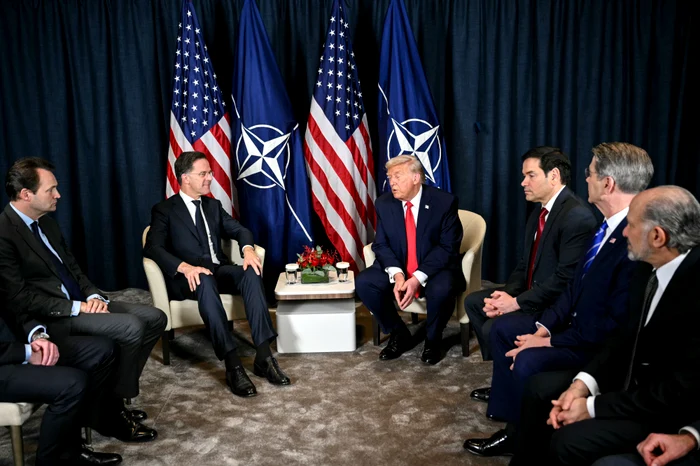
“The US reactions were in line with the seriousness of the incident. Republican Jim Risch is not just a senator, he is the chairman of the Foreign Policy Committee in the US Senate. His messages reinforced the statements made by the US ambassador to NATO and the American embassy in Bucharest. We ended up hurting ourselves by speculating, for example, about the lack of a reaction from President Trump, given that the White House did not comment on similar incidents. In addition, it is a bit much to believe that the most powerful man in on the map in the morning receives the latest news from Fetești, Brăila or Galați. The news channels from here did a great disservice to the strategic interests of Romania, when they announced that Rubio did not answer a question about the drone from Galaţi, when the American Secretary of State had only come out for a few seconds for a photo opportunity differentiating between a press conference, a press announcement and a photo opportunity. Through such approaches, we only increase anti-Westernism in Romania, increasing mistrust in allies, which is exactly what the aggressor state Russia wants.” says Râpa.
