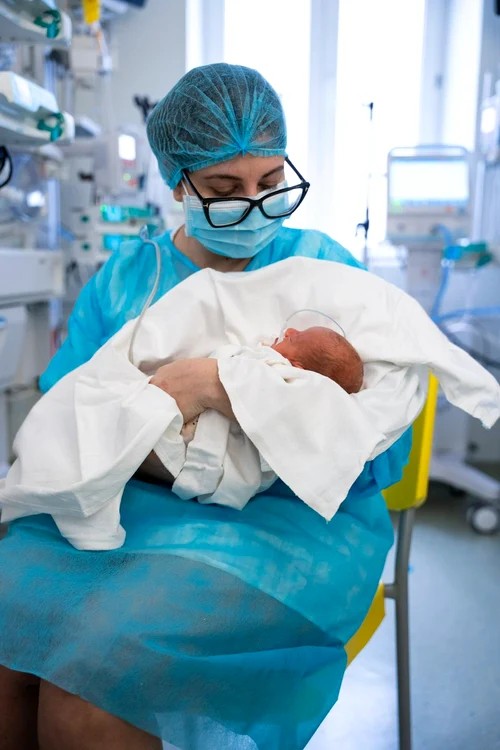
Between 10% and 15% of women experience postnatal depression, and the risk is higher with premature births, Save the Children data shows. In this context, the organization draws attention to the importance of monitoring mental health after childbirth and the inclusion of assessment and psychological counseling services in the package of services offered in maternity hospitals in Romania.
Prematurity amplifies mothers’ emotional stress
According to a research carried out by Polizu Maternity, by Salvați Copiii Romania, mothers of children born prematurely experience higher levels of anxiety, depression and stress. The data collected by the organization also shows that:
-
56% of respondents gave birth prematurely, and 74% were hospitalized for at least two weeks.
- only 37% of the babies were in the room with the mother, 34% in another room, and 29% in the Intensive Care Unit
-
76% of prematures remained hospitalized for more than 20 days, and almost a third exceeded 140 days.
Under these conditions, 64% of mothers of premature babies said they felt the need to talk to the hospital’s psychologist, compared to 42% of full-term babies.
But only 5% said that they were able to benefit from individual counseling in the hospital. And 8 out of 10 respondents did not know if this type of service is available.
In the same maternity hospital, the organization started a pilot program of emotional support. Ștefania Mircea, Save the Children program coordinator, says:
“Save the Children psychologists offered counseling to the mothers and their feedback was extremely gratifying. 80% of them were calmer, more confident and managed better to manage the stress caused by the prolonged hospital stay.”
Postnatal depression is not the same as the baby blues
Experts point out the difference between the temporary state of postnatal sadness (“baby blues”) and clinical depression.
“Baby Blues affects up to 80% of mothers and usually goes away on its own within two weeks at most. Postnatal depression, on the other hand, is more intense and persistent and can be manifested by a lack of ability to feel joy or pleasure, even in the presence of the baby; attachment difficulties and a sense of disconnection from the newborn or fear of not being a good mother; severe sleep disturbances, including the inability to sleep even when the baby is sleeping; difficulty concentrating and obsessive fears about the child’s safety”, says Stefania Mircea.
This draws attention to the need for immediate help:
“Untreated, postnatal depression can have profound effects on both the mother and the child and the entire family. It is a serious medical condition, not a sign of weakness, and proper recognition and management are essential.”
Proposed solutions: psychological counseling and support groups
To prevent the negative effects of postnatal depression, Save the Children recommends:
- the mandatory inclusion of psychological support services in maternity hospitals, as an integral part of perinatal care;
- developing an integrated counseling framework for parents of premature newborns, starting from the prenatal stage and continuing postnatally.
Also, access to settled psychological counseling is very important, specialized support must be easy to obtain, without financial or bureaucratic barriers. Support programs for mothers, such as support groups, spouse/family support, can provide a sense that you are not the mother, you are not alone.”Ștefania Mircea also points out.