
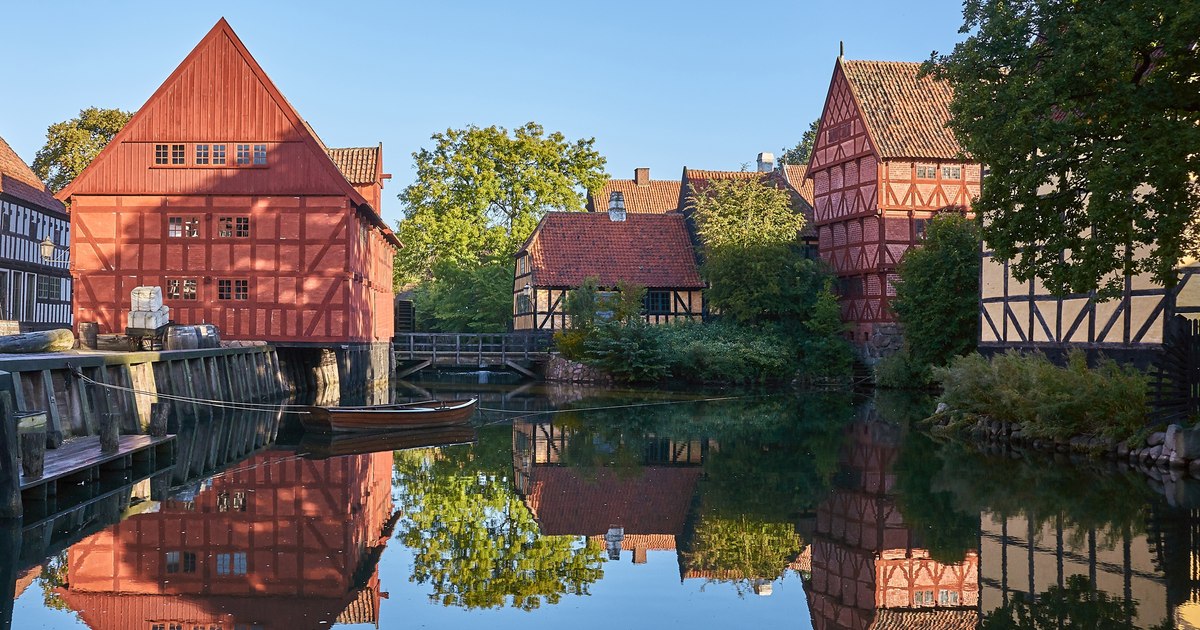
An open-air museum in Denmark that recreates four centuries of urban life and tackles themes such as migration, sustainability and social justice has won the European Museum of the Year 2026 award.
The National Open Air Museum Den Gamle By in Aarhus, Denmark’s second largest city, has won the European Museum of the Year 2026 (EMYA) award, one of the most prestigious awards given to museum institutions on the continent.
The award was presented on Saturday evening in Bilbao, Spain, at the annual ceremony organized by the European Museum Forum. The jury appreciated the way in which the Danish museum manages to transform history into a living and relevant experience for the present.
Den Gamle By does not function like a classic museum, with objects displayed in showcases and viewed from a distance. Visitors are invited to step into different eras, explore reconstructed streets, homes and commercial spaces and discover how urban life has changed over the past four centuries.
The museum’s four large thematic areas cover the period from the 1600s to 2014. Those who cross its threshold can see everything from historic buildings and traditional workshops to modern advertisements, shops, homes and spaces representative of contemporary society. Visitors can interact with animals, discover the atmosphere of different eras and see how cities and communities have evolved over time.
Daniëlle Kuijten, co-chair of the EMYA competition and member of the jury, described the institution as “a pioneering institution that brings together historic and contemporary urban environments. Brings them together to address pressing contemporary questions, including migration, sustainability and social justice.”
Beyond the historical component, the museum emphasizes themes that concern today’s society, its educational programs addressing topics such as equal opportunities, emancipation, social inclusion and environmental protection.
The jury also noted initiatives dedicated to the preservation of traditional plant varieties, gardening courses and workshops where participants learn to repair clothes or buildings using traditional techniques.
According to the evaluation made by the organizers, the success of the museum is also due to the way in which it involves the local community. The project was conceived as a space in permanent transformation, not as a static collection of exhibits.
“Volunteers play a central role. They contribute personal experience and specialist knowledge to the narratives explored. Participatory projects integrate the museum deeply into civic life,” appreciated the jury.
The competition organizers described Den Gamle By as a museum created “by (ordinary) people for (ordinary) people”, a formula that reflects the emphasis on public participation and direct connection with the community.
The other prizes
Other important awards were also presented at the ceremony in Bilbao.
* The Young V&A Museum in London, United Kingdom, won the Council of Europe Museum Award.
* The Kenneth Hudson Award for Institutional Courage and Professional Integrity was won by the Institute of the Museum of Madness in Trate, Slovenia.
* The Museum of Rural Civilization of Mendrisiotto, located in Stabio, Switzerland, received the Portimão Museum Award for Reception, Inclusion and Belonging.
* The Silletto Award for Community Participation and Involvement was awarded to the AlpenStadt Museum in Sonthofen, Germany.
* Malva Museum of Visual Arts in Lahti, Finland, won the Museum Award for Environmental Sustainability.
*Special commendations to Obersalzberg Documentation Center (Berchtesgaden, Germany), Cern Science Gateway (Meyrin, Switzerland), Tartu City Museum (Tartu, Estonia), Research Center – Tsitsanis Museum (Trikala, Greece), Sensoria – House of Perfumes and Flavors (Holzminden, Germany), Kunsthaus Baselland (Basel, Switzerland).
In the final assessment, the co-chairs of the jury emphasized that this year’s award-winning museums chose to look beyond the traditional role of custodians of heritage.
“The 2026 award winners reflect a wide range of thematic priorities, geographies and working methods. What unites them is a commitment to change: to question established narratives, address difficult histories and strengthen the social relevance of their institutions,” they transmitted.
