
The growing tourism has increasingly transformed Lapland, and the extension of the constructions affected the fragile ecosystem and the green spaces that were once intact.
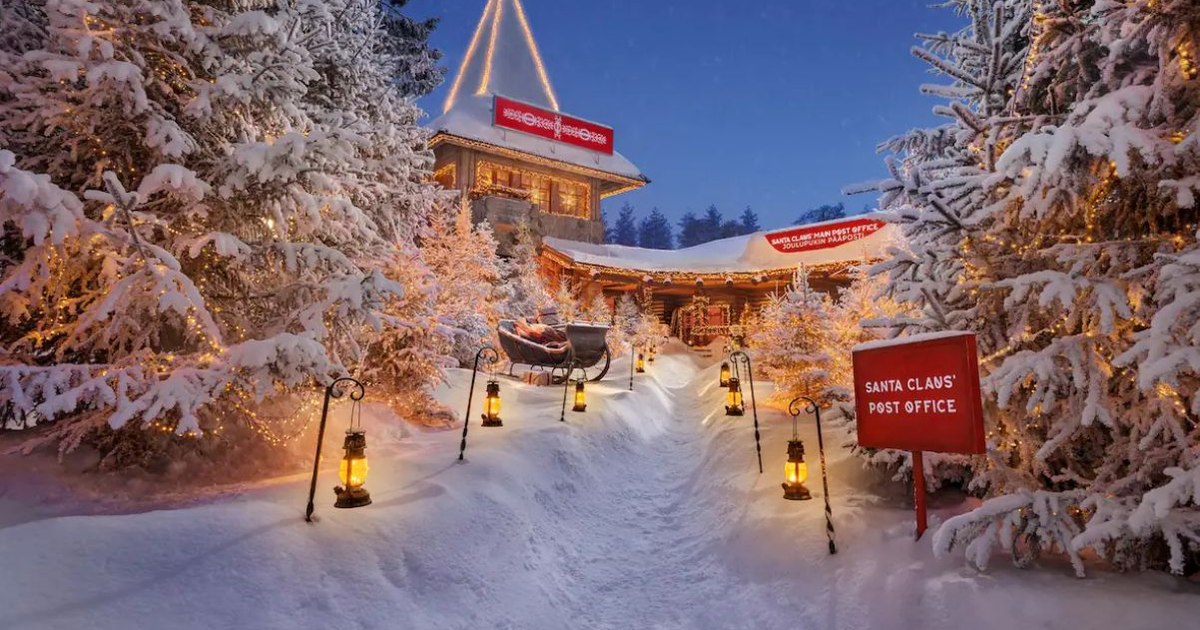
Lapland became known in folklore as the house of Santa Claus Photo Archive
Last year, over 700,000 people came to this region. This figure is 160% higher than 30 years ago, writes The Guardian.
The ascension of tourism leaves a significant imprint on the environment in Lapland. An analysis shows that, in the tourist areas of the Finnish Lapland, green areas equivalent to Herastrau Park in the Capital have been transformed into tourist purposes in the five years by 2023.
Developments include holiday homes, ski slopes and a virtual reality experience for tourists who missed the northern lights show, giving them a second chance to see Aurora Boreală.
Although some extensions are of greater magnitude, many are small developments, “In the string”composed of one or two holiday homes. But all leave their mark on the immaculate landscapes of the region. The Guardian estimates that 15% of the developments in Lapland were related to tourism, the percentage ascending about half in the main tourist centers.
Laponia, the largest and most northern region of Finland, became known as Santa’s home in the 1920s, and in the 1990s, its small capital, Rovaniemi (65,000 inhabitants), was self -proclaimed the hometown of Santa Claus. During the year, and especially in November and December, the city receives a number of tourists often larger than its population.
In Rovaniemi, holiday homes for tourists were built on green spaces that were once parks or forests. Other developments include a water park, a travel agency, a reindeer park, a Husky dog facility and an extension of the existing village of Santa Claus.
Beyond the city, in the popular ski resorts Levi, Ylläs and Saariselkä, the expansion of tourism has swallowed at least 430,000 square meters of natural landscape. In the north, Utsjoki Arctic Resort was built in an area designated by national importance. The owner of the complex, Juhani “Jussi” Eiramo, was requested for comments, but refused.
Last spring, the Municipal Council of Inari approved 227 lots for cabins along the shore of Lake Inari in Lapland, in one of the most isolated corners of Europe. These lands are located in old forests, where the indigenous communities practice the reindeer shepherd by generations.
Ecologists and cultural activists say that the rapid expansion of tourism in a fragile ecosystem causes irreparable ecological damage, contributes to the loss of biodiversity and represents a threat to the unique cultural heritage of the Sámi population, some of whom still practices the semi-nomada shepherd of the reindeer in the region, which stretches on the North North, Finlan Kola peninsula in Russia.
In a region as vast as Lapland, which covers half of Finland, this gradual pinch of tourism-equivalent to 180 football fields-may seem insignificant. However, “Along with forestry and mining exploitations, the development of recreational activities, such as skiing, are the main threats that the last wild areas of Europe are currently facing.”warns Steve Carver, a teacher of rendering and the science of wild areas at the University of Leeds.
