
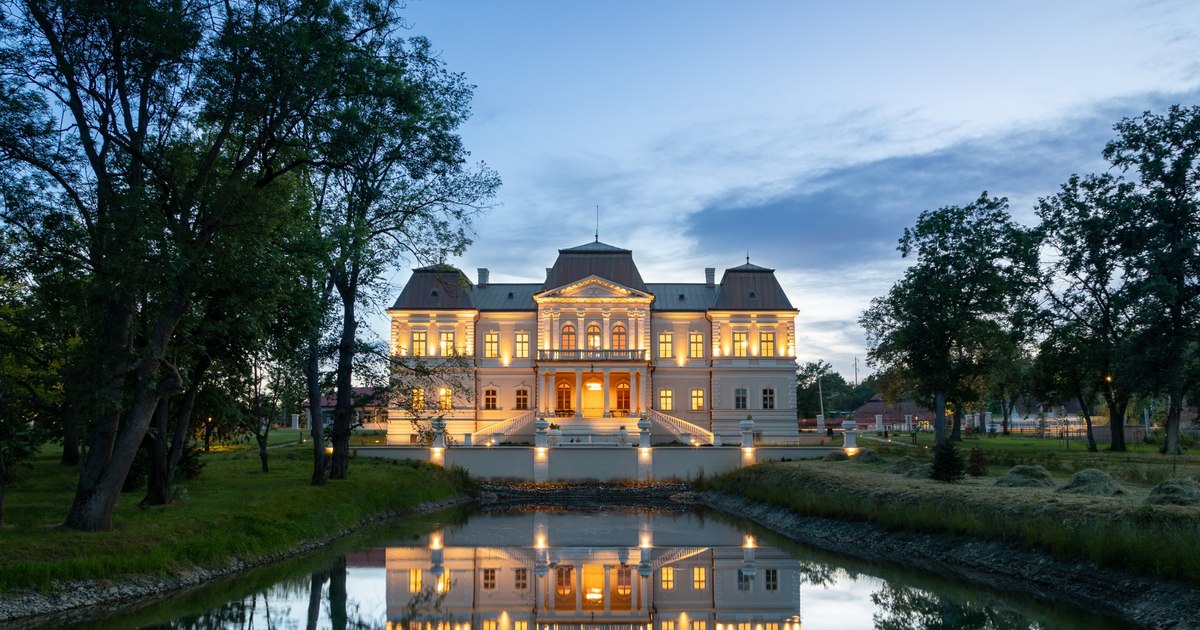
Banffy Castle in Răscruci was awarded the Europa Nostra Award for the way conservation work was carried out, as well as for the adaptive reuse of the cultural object through reintegration into community life.
The European Commission and Europa Nostra have announced the winners of the 2026 edition of the European Heritage Awards/Europa Nostra Awards, co-financed by the EU’s Creative Europe programme. Bánffy Castle in Răscruci is among this year’s winners in the Conservation and Adaptive Reuse category.
“The restoration of the castle was carried out with a deep respect for history and authenticity, while also aiming to give it a contemporary function: an open space — a cultural center dedicated to events, education and dialogue, contributing to the promotion of cultural values and the strengthening of local identity”it is stated in the announcement made by the European Commission.
The winners will be celebrated on Thursday at the 2026 European Heritage Awards Ceremony at the Municipal Theater in Nicosia (Cyprus).
European Heritage Award
Bánffy Castle from Răscruci is the only project in Romania awarded with the European Heritage Award – Europa Nostra 2026, according to monitorulcj.ro.
Thus, Cluj county received this distinction from a total number of 261 eligible applications, submitted by 40 European countries. The competition jury, made up of renowned heritage experts, particularly appreciated the way the County Council managed to implement the restoration, conservation and enhancement project of this edifice: “The project (…) demonstrates how a neglected aristocratic domain can be reintegrated into contemporary community life. Its integrated approach restored the building, gardens and landscape as a coherent whole, while encouraging long-term stewardship, skills development and strong local involvement in a rural context.”
Banffy Castle in Crossroads
Bánffy Castle is one of the well-preserved examples of noble architecture from the late 19th century in Transylvania. Located in Răscruci, a rural village near Cluj-Napoca, the domain is part of a larger historical landscape. The building’s current appearance largely dates from 1875-1885, when Baron Ádám Bánffy remodeled the residence. The interiors survived the 20th century, keeping much of the original decoration intact. After nationalization in 1948, the building was used as a school from 1967 until the early 2000s.
The Cluj authorities signed the contract for the restoration of the Bánffy castle in Răscruci
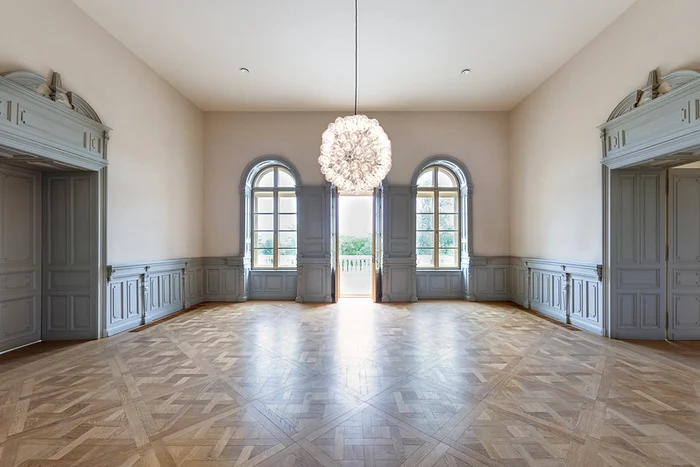
The last significant restoration work dates back to the 1960s. After its closure in 2005, the lack of heating and maintenance led to a progressive deterioration, especially of the interiors and decorative elements. Extensive restoration project The restoration project began in 2018 and was completed in 2023. Its objectives were to return the castle and its surroundings to the appearance of the noble estate created by Ádám Bánffy, to adapt it for use as a cultural center and to support local development by attracting visitors.
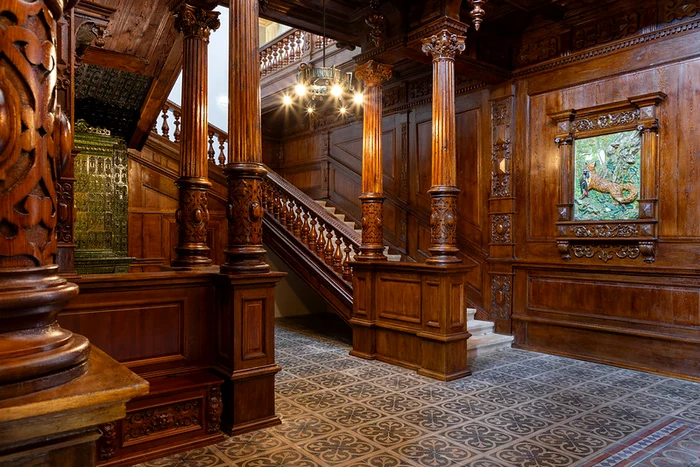
Extensive preliminary studies were carried out, including historical research, facade investigation, analysis of historic painting layers and finishes, archaeological and biological studies and an arboreal survey of the park. The original appearance and ornamental details of the building have been preserved. The wood panelling, carved ceilings, historic doors and windows, fireplaces, terracotta stoves, stained glass and sculptural elements have been preserved. Instead of cement, lime-based mortars and plasters were used. The works were based on traditional craft materials and techniques. During the works, previously unknown decorative ceilings and stonework in baroque style were discovered and restored in situ.
The surrounding park has been rehabilitated based on archival images and site analysis. The water pool, canal and lake were restored, the urns were preserved or recreated according to historical models, and the Japanese-style floating dovecote was rebuilt. The castle and park are open to local residents, visitors and specialists, with public events and educational activities taking place on site. Accessibility measures include adapted parking and lift access for visitors with reduced mobility. A digital 3D model of the castle has been produced and made available to the public.
