
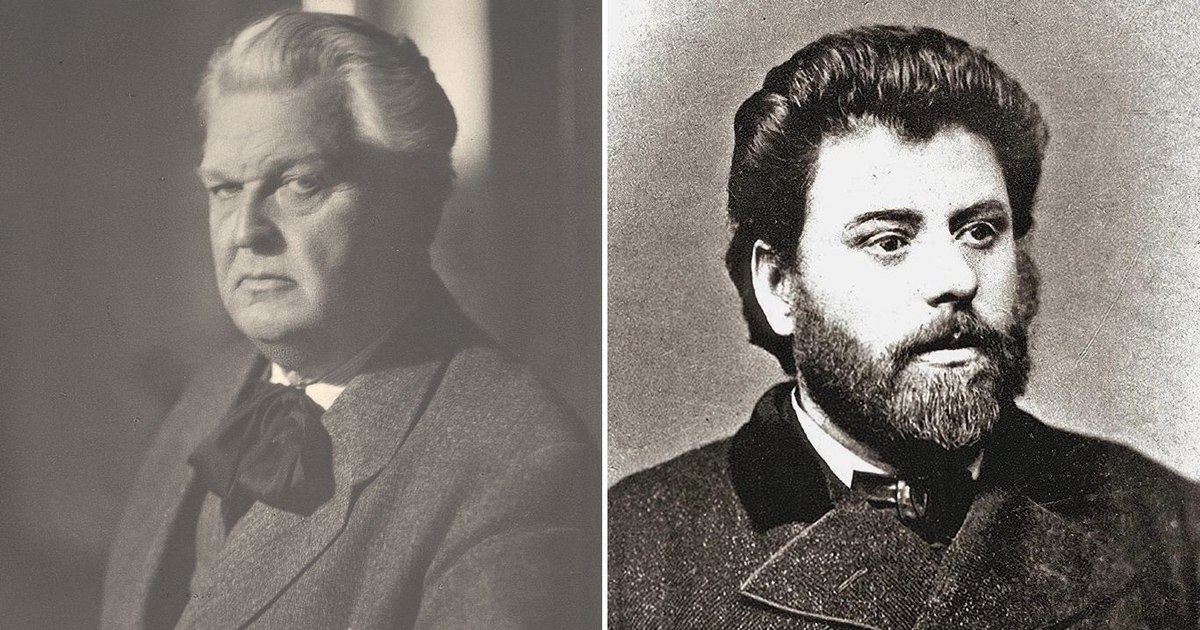
Although the public consultation was supposed to end on December 12, contradictory discussions about the new program for Romanian Language and Literature led to the extension of the period by another week. The announcement was made by the Ministry of Education. We talked, to find out their arguments, with intellectuals from both camps, both the one that supports the new program and the one that opposes it. If one camp talks about the importance of chronological landmarks and the beauty of language, regardless of the period, the other wants to bring literature closer to the needs and realities of today’s students.
Doina Ruști, plea for the chronological approach to literature
After the new version of the program was put up for public debate, contemporary Romanian writers divided into two camps. Doina Rusti, the author of novels translated into 15 languages, supports the chronological approach to literature.
“I took both programs: the communist one, and the one made in 2000, which many now defend and want. I can say that I was very happy when the 9th grade curriculum changed then; I liked that it was on homework. She’s pretty, really. But in the long run, the generations who studied under this homework program de-clocked—that’s what happened. And so I would argue for chronology. But this does not mean at all that we would return to communism, but that we give the students a map, we give them a system.”, says the author of the “Manuscrisul fanariot” for Adevărul.
The new curriculum, Doina Ruști believes, will not be restrictive for teachers. On the contrary.
“Athe same style from recent years can be applied by teachers to this program, which, attention, has no mandatory author, as were the canonical ones from the old program. Simply put, all texts are at the teacher’s choice. It is, however, a novelty. They are recommended at the end, but they are recommendations; they are not canonical, they are not binding. Almost anything can be done, with this condition: that the child remains with a clear impression of what was before us.”
“If Shakespeare was Romanian, he was now in the trash”

Regarding the arguments that the chronological approach will turn students away from reading, the writer says:
“I am absolutely convinced that people need a map, a landmark, a chronology, on which, afterwards, to place their reading pleasures and joys. Learning and reading go hand in hand, but that school, for everyone, is for learning: to have some landmarks, to know where we come from. How about the English taking Shakespeare out of the textbooks because the students don’t like his language? You realize, if Shakespeare was Romanian, now he was in the bin.”
In addition to novels and short stories, Doina Ruști is also the author of textbooks for the Romanian Language and Literature.
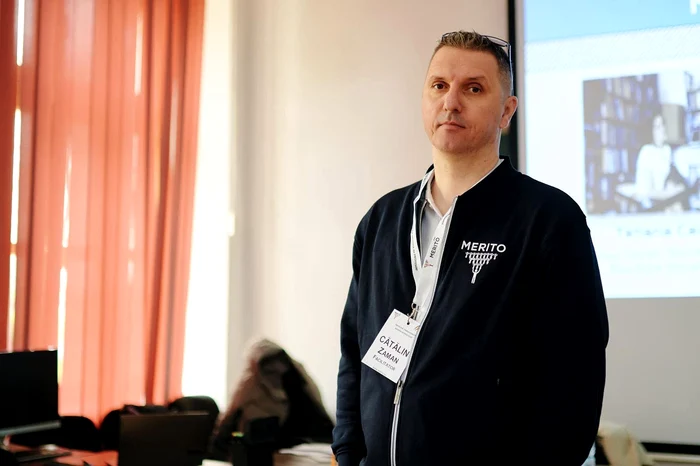
Cătălin Zăman: “School is not about teachers, it’s about students”
Professor Cătălin Zăman, who teaches at the “Mihai Eminescu” National College in Buzău, belongs to the other camp. Although he was looking forward to the new program, he was disappointed by the proposal.
“Anything long expected in education has been disappointing. I thought that at least now, I don’t know how many times, those who worked on the program, under the auspices of the Ministry, will be able to deliver us a program that puts the students’ interests at the center. Because at the end of all the work weeks – I’m sure people have worked there – I think the question that matters is not whether we have a program, but who does this program serve. (…)
If I read the arguments of those who worked on the program, the chronological approach does not seem to me to be a problem, but it seems to me to be an obsession of theirs: the obsession to study literature chronologically. I don’t know how well this diachronic study holds up today. School, let’s not forget, is not about the teachers, it’s not about their pride, it’s about the student. I think this is where the analysis should start”.
Cătălin Zăman believes that the two big camps actually represent two currents: one focused on the delivery of information, the other on training skills and students willing to read.
“It is very important to offer students texts that correspond to their universe of expectation. And the texts from the chroniclers will certainly not correspond. It is clear that there is a huge disconnect between what our students are experiencing today and the literature we should be serving them. Then comes the question again: could we capture them with those texts in such a way as to make them readers of literature? I doubt the answer would be positiveiv. (…) Professor Miclea says that a very good teacher follows the programs with sanctity, an exceptional teacher augments the realities. That’s what I think we should try to do.”.
I asked the teacher what he thinks the Romanian Language and Literature curriculum should look like in 2025. It comes with a mix between the theme approach, as it is done now, and the chronological approach, proposed in the new program.
,,How about studying the homework chronologically? How about organizing literature by theme, in diachronic study? Perhaps that would be a more useful approach. Let’s take love, for example. How it manifests itself from the works of the chroniclers to the present day. Because this theme appeared in one way or another in all literary periods. I think that such an approach would be much more attractive for students than a classical approach”.
He emphasizes that the proposed approach does not mean giving up the classic works of Romanian literature. On the contrary, he recognizes their value and recommends these works to students.
,“From Moara cu noroc to Anul Ancuței, from Ion to Alexandru Lăpușneanu, they read them. (…) You realize that we cannot break up. The approach I suggested does not mean a break with the past and the classic works, because we could not: they are monumental works of Romanian literature. I somehow manage to get them to read, regardless of the works I put at their disposal, be they classic or modern.”
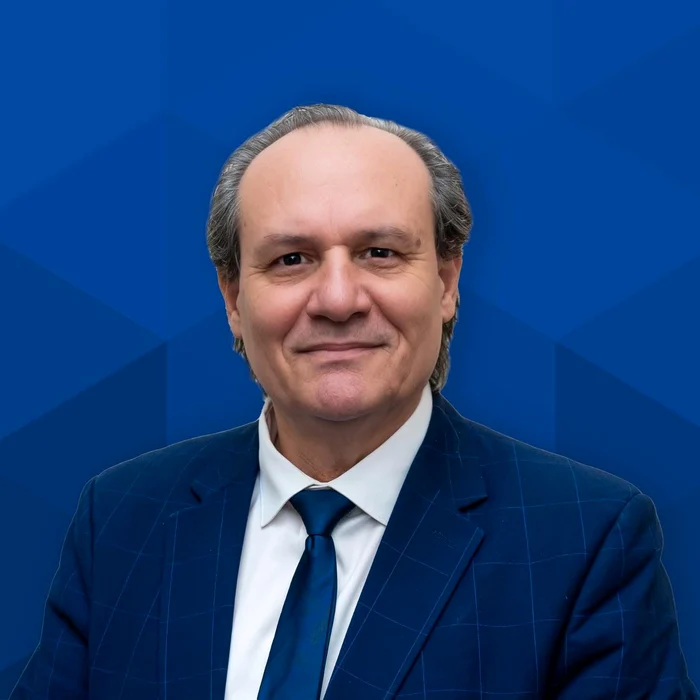
Marian Ursu: “The key is with the teacher”
Marian Ursu is in turn a professor of Romanian Language and Literature, but also director of Neagoe Basarb National College, from Oltenița, Călărași county. He appreciates personalities from both currents, both for and against the new programs. However, the proposed variant does not scare him at all. He says that in his 30 years of experience he has learned that the teacher is the key.
“The text can be of extraordinary beauty, in the context in which it is made to be seen in its beauty. And that depends exclusively on the teacher. (…) This is a problem of methodology. You can do this very easily if you know how. The texts are not the problem. Of course, at very young ages it’s important to do Harry Potter instead of doing something more demanding. But, for high school students, this is certainly not valid”.
The professor says he doesn’t think the easy approach to literature is the answer.
“I don’t think that presenting a fragment of a chronicle or a portion of a fairy tale or a legend from the popular area could mean a difficulty for a student. That’s why I’m inclined to think that this option is preferable to the other one, which essentially proposes the easier option. (…) They try to bribe the student through easy approaches, the convenient option. If we were to pursue this, we would have to do much less than we do in school, because it is inevitably human nature to try to avoid effort. I don’t think this is the option to apply”.
Marian Ursu is of the opinion that, properly guided, students can come to appreciate the beauty of the old language, including in the texts of the chroniclers.
“A text, no matter how it is conceived, in an archaic or a modern language, can certainly be explained or can be covered with the dictionary, in very short fragments. When the child realizes the beauty of the text of the portrait of Stephen the Great (no. from “Letopisețu Țării Moldovei” written by Grigore Ureche), he will understand that beauty does not consist exclusively in emoticons. We have an extremely beautiful language, which is not a handicap. We often say that archaisms are a terrible hindrance to the understanding of a text. But they can be explained and need not abound.” says Marian Ursu.
It also offers other examples, such as Creangă’s works or the texts from the Paşoptist period, which at first glance are difficult for today’s students to follow. Again, the reading key provided by the teacher can change everything, believes Marian Ursu. Moreover, he is of the opinion that modernization depends on the method, not on the content:
“It doesn’t necessarily have to be thematic chapters, I can go chronologically very well. Because, where you arrive at a specific theme, you will undoubtedly develop it. A purely informative literature will not be produced. It requires analysis. It is the text that offers multiple possibilities of interpretation”.
What will happen to the curriculum?
Public consultations for 9th grade programs officially ended on December 12. After a meeting with the working group that developed the Romanian Language and Literature curriculum, Daniel David announced the extension of the period for this discipline by another week.
“Taking into account the intense debates in the public space and following discussions with the scientific coordinator of the working group established to develop the program for the Romanian language and literature discipline, Minister Daniel David decided, with the agreement of the coordinator of this group, to extend by one week the period allocated for the integration and harmonization of some important suggestions expressed since the launch in transparency. This additional interval will also be used to explore some structural flexibility of the program”it is stated in a press release from the Ministry.
