
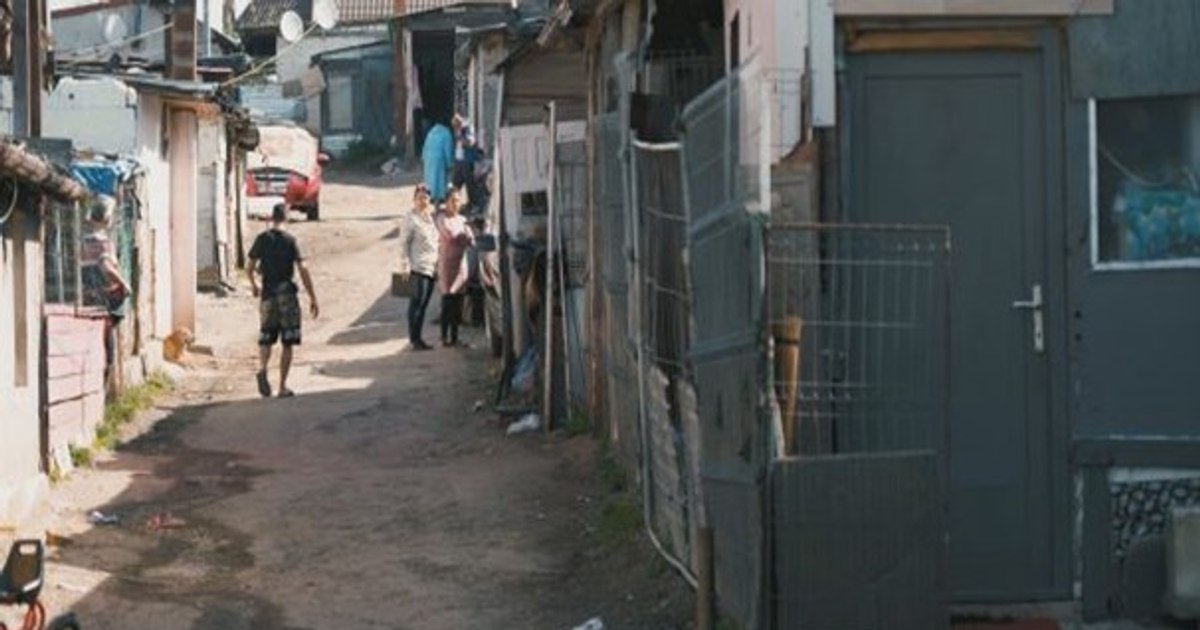
Also known abroad, through the reports broadcast by the BBC and Channel 5, the Pata-Rât area, located near the landfill of the city of Cluj-Napoca, is a place marked by social and environmental problems.
Pata-Rât, one of the most disadvantaged areas in Cluj-Napoca
The marginalized population and the Roma community living there have long faced a lack of access to decent housing, poor health services and limited opportunities for education and employment. Most of the houses in Pata-Rât are improvised, most of them without access to water and sewage.
More than 1,500 people live in approximately 400 households in the spatially segregated and disadvantaged urban settlement, in terms of social, economic and access to public services.
More than half of the population (52%) consists of children and young people under the age of 18. The percentage of the population of declared Roma ethnicity is 75.7%. The relative poverty rate is 45.7%, and the depth of poverty (median poverty gap) is 44.1% below the poverty line.
The Cluj Metropolitan Area Intercommunity Development Association (ADI ZMC) identified a solution to solve the community’s problems through a long-term integrated approach, which
influenced a real change, facilitating inclusion in society and ensuring a decent living for some vulnerable people.
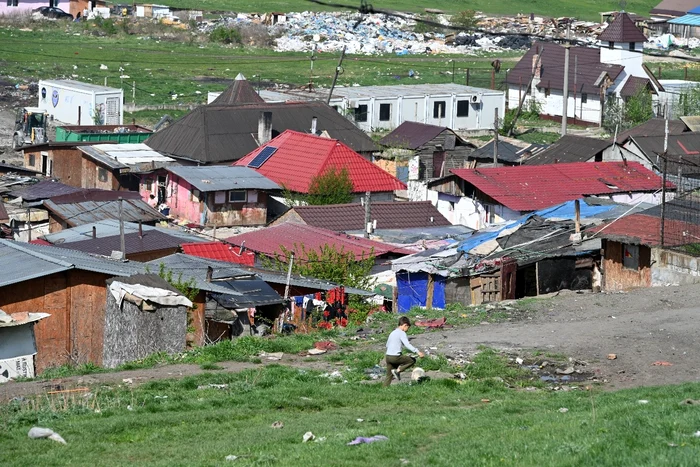
Pata-Rât is located next to Cluj’s landfill
With the support of Norwegian Grants, more than 3.4 million euros were used in the first intervention of ADI ZMC in Pata-Rât in the period 2014-2017. The pilot project “Social interventions for the desegregation and social inclusion of vulnerable groups in the Cluj Metropolitan Area, including marginalized Roma communities” meant a broad, multidisciplinary intervention that prepared the area for desegregation and, subsequently, the social inclusion of its inhabitants.
The results of this first initiative were not long in coming, and its impact profoundly transformed the life of an important part of the Roma community and created the premises for a second project to continue and create an even more lasting footprint in that community.
If within the pilot project, the objectives achieved included, among others, the provision of social assistance, the relocation of 35 families from marginalized areas in Cluj, the construction of 12 apartments in Apahida, the purchase of another 23 and, perhaps most importantly, the creation of a participatory social housing methodologies, the new project raised the stakes, setting its results even more complex.
Thus, in order to cover part of the urgent needs of the community, ADI ZMC, together with its partners, the Cluj-Napoca Social and Medical Assistance Directorate, Babeș-Bolyai University and Bergen City Hall in Norway, implemented the Pata 2.0 project.
The Pata 2.0 project to combat social exclusion
The project proposed a double general objective. First of all, it aimed to reduce the residential, social and economic disparities between the community of Pata-Rât, composed of severely deprived families, most frequently of Roma ethnicity, and the majority population of Cluj-Napoca.
Secondly, it aimed to combat the risk of social exclusion among other poor families in the Cluj Metropolitan Area, targeting, in particular, Roma families, who, without the support offered by the project, could be constrained by the economic circumstances social workers to move to the Pata-Rât area or other marginalized areas of Cluj.
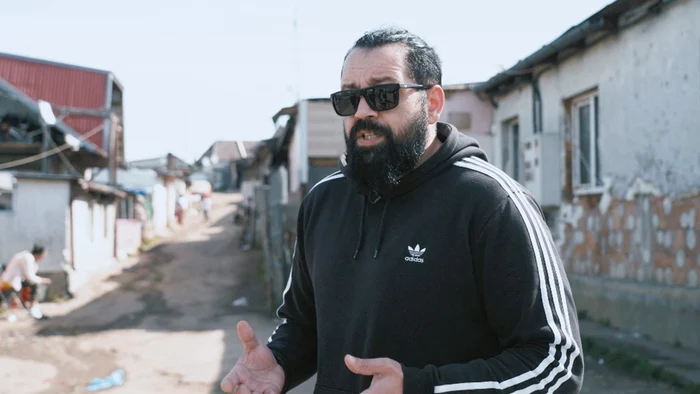
Alex “Pepe” Fechete, one of the beneficiaries of the Pata-Rât 1 pilot project
“My work as a facilitator started in 2010, when the houses on my street were demolished and we had to move in the dead of winter, in Pata-Rât, to a 16 square meter area. We were 76 families then, of which only 40 received a living area.
That was the moment I realized I had to be part of the change. I worked voluntarily for the community, for free, and the difference was felt when the first project, Pata 1, was also financed with Norwegian funds. He was the lifeline for me and my family and also the moment we started to live normally.
After relocation to decent housing, I returned to the community to help my peers have a life like mine, and Pata 2.0 meant the right to a normal life for many Roma families, the project having a rate almost 100% successful, with Roma families integrating into society and keeping their homes and jobs,” said Alex Fechete, aka Pepe, beneficiary and facilitator.
Pata 2.0 had a funding of over 8.76 million euros
Improving the quality of life through new housing and social services have brought major changes for the better for the residents of the Pata-Rât area, offering them a safer and more stable environment in which to live and develop.
Furthermore, by promoting social inclusion and access to services, the project helped to reduce the marginalization and stigmatization of the community, facilitating their integration into society.
“The impact of the implementation of the Pata 2.0 project has been extremely relevant, continuing to transform the lives of people in the Pata-Rât community, either for their relocation to social housing or through access to comprehensive social, health and educational services,” revealed Mrs. Olah Emese , deputy mayor of Cluj-Napoca.
The achievements of the project are significant. 75 apartments were bought until 2024, for the families of Pata-Rât, of which 73 were destined for social housing and 2 became housing of necessity.
342 people (73 families) have already moved into the new apartments located in Cluj-Napoca, Florești, Apahida, Baciu and Gilău, paying a modest monthly rent to ADI-ZMC based on the rental contract. The purchased apartments were equipped with appliances and furniture.
All persons moved to the new apartments benefit from psycho-social assistance designed as support for families in order to facilitate the transition from Pata-Rât to the majority community, in order to adapt and integrate into new communities, to comply with contractual obligations, the long-term aim of the intervention being to maintain housing in good conditions, preventing their abandonment and return to Pata-Rât.
At the same time, education had a place of honor. Worked individually with 93 students, to prevent school dropout, being intermediated, along with other interventions, meditations, mentoring and orientation courses for 30 students.
Babeș-Bolyai University organized over 230 non-formal educational activities (cultural, artistic, touristic, etc.) and 100 students received shoes and clothing, so that they could present themselves properly at school.
More than 350 other people benefited from free medical consultations, while the Cluj-Napoca Social and Medical Assistance Directorate delivered 70 “baby boxes” for mothers in the community.
At the same time, intervention methodologies were created, including a replicable and scalable relocation methodology developed by UBB.
876 students and 63 teachers, from ten schools in the metropolitan area, benefited from socio-emotional development sessions (combating “bullying”, social cohesion and combating discrimination), and the community received free food packages in the period of the pandemic and in periods with low temperatures, but also over 350 packages of firewood delivered to each household, in March 2023, against the background of the persistence of low temperatures.
“I believe that the aim of the initiative, namely the desegregation of vulnerable communities, should be applied in all areas of the country where Roma face poverty, lack of education or access to health. All the results were possible with Norwegian funding and I hope that the number of these projects will increase”, said the same Alex Feteche, beneficiary of the Pata 1 pilot project, who became a facilitator in the Pata-Rât community and a contributor to the Pata 2.0 project.
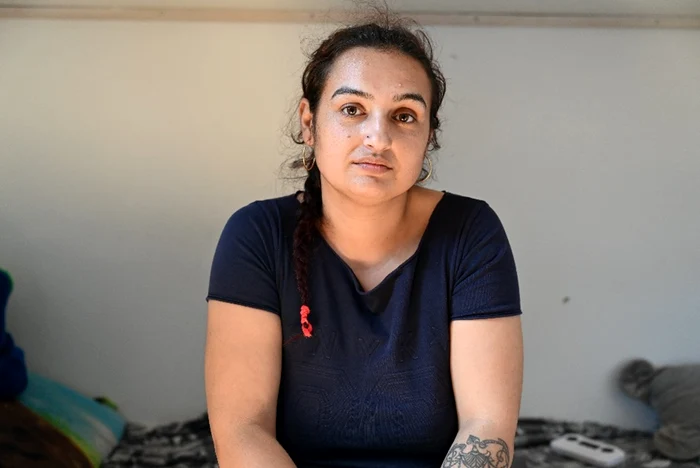
Stoica Maria, beneficiary relocated from Pata-Rât
“There is a difference like from heaven to earth how I live now and how I lived in Pata. We had no drinking water or toilet, the rain seeped through the walls every time and any stronger wind blew our roof off. I was living with my family in difficult conditions, and now I can say that we are happy and peaceful. I appreciate the whole project for what it has offered to me and my family, but also for what it offers to the other Roma in the community”, said Maria Stoica, also a beneficiary of the initiative.
The needs of the disadvantaged community remain pressing
“The needs of the Pata-Rât community still remain urgent, despite the extremely important results obtained in the Pata 2.0 project. The community there still needs the support of specialists to have access to services and a normal lifestyle”, believes the deputy mayor of Cluj, Mrs. Olah Emese.
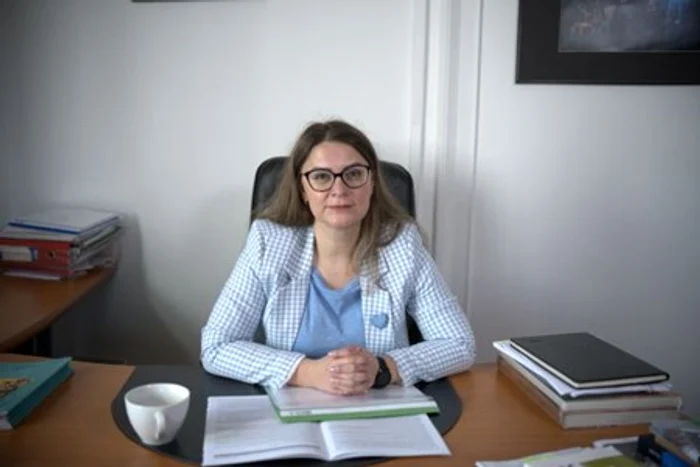
The deputy mayor of Cluj, Mrs. Olah Emese, involved in the project
In order to adequately respond to the needs of marginalized groups, it was called upon to increase the institutional training capacity by 30 professionals, including relevant staff from the public social assistance service in order to implement the methodology, learn from Norwegian best practices, as well as develop a set of public policy recommendations in the field of housing.
Norwegian grants were the driving force behind the transformation
The “Replicable integrated interventions for inclusive housing and combating marginalization in the Cluj Metropolitan Area” initiative has also demonstrated its merits at the international level, being considered a success story at the World Family Summit 2022, an event organized by the UN, through the UNITAR agency.
The financing of this project was provided by the “Local Development, Poverty Reduction and Increasing Roma Inclusion” Program (Local Development), supported by Norwegian Grants and operated by the Romanian Social Development Fund. More details about the project can be found here: www.desegregare.ro/.
program Local development it came in response to pressing needs of local communities, helping to increase social inclusion and cohesion. The results of this program are tangible and impressive. At the end of 2023, the 111 funded projects significantly contributed to improving the lives of many vulnerable categories: over 17,000 people belonging to disadvantaged groups benefited from personalized social services, and over 8,000 Roma from 24 counties had access to educational services and integrated, which helped them develop their skills and integrate better into society. Furthermore, 15,000 children and young people at risk of early school leaving benefited from specific support services, and 3,600 public administration employees and politicians were trained in the principles of good governance. Through the program, 6 recommendations of the European Court of Human Rights for Romania were implemented at the national level, and the principle of respect for human rights was strengthened.
The EEA and Norwegian grants represent the contribution of Iceland, the Principality of Liechtenstein and the Kingdom of Norway to reducing economic and social disparities in the European Economic Area and to strengthening bilateral relations with the 15 beneficiary states in Eastern and Southern Europe and the Baltic states. These financing mechanisms are established on the basis of the Agreement on the European Economic Area, which brings together the EU member states and Iceland, Liechtenstein and Norway as equal partners in the internal market. In total, the three states contributed €3.3 billion between 1994 and 2014 and €2.8 billion for the 2014-2021 funding period.
