
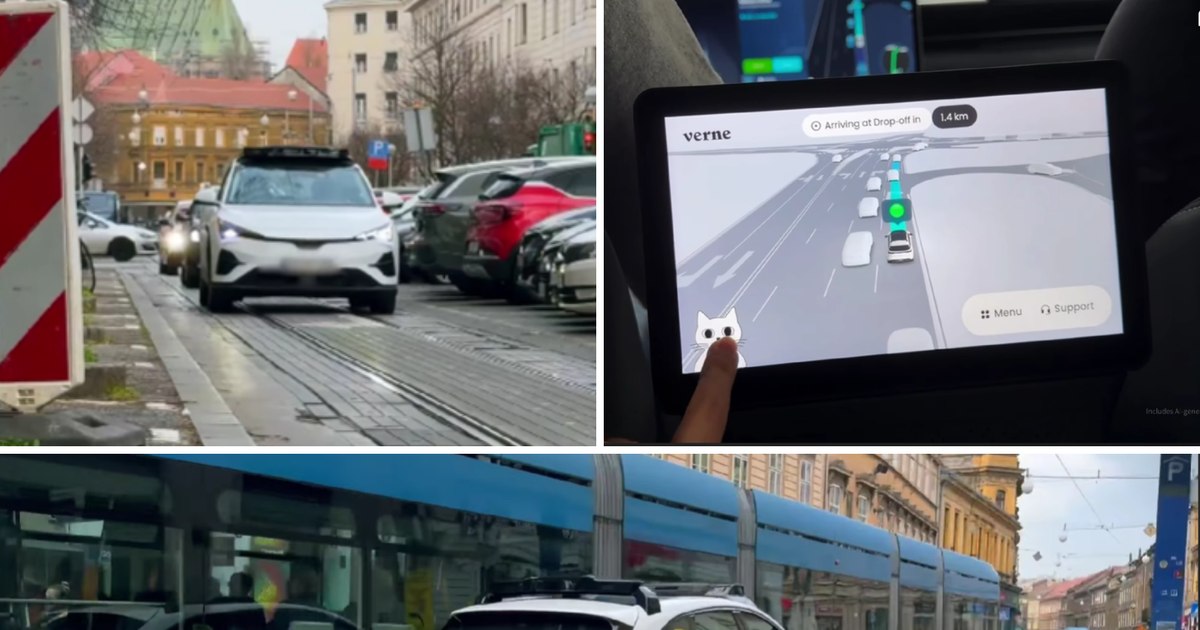
Uber, along with two other partner companies, is launching Europe’s first commercial robotaxi service in Zagreb, Croatia, where tests are already underway and preparations to introduce paid rides have begun.
A robotaxi, also known as a driverless taxi, is an autonomous vehicle operated for a ride-sharing company.
Uber, together with Pony.ai and Verne, plans to collaborate to implement a commercial robotaxi service, combining Pony.ai’s self-driving system, Uber’s global mobility platform and Verne’s service ecosystem and operational framework, according to a statement published on Uber’s website.
The companies will split the roles: Pony.ai will provide the self-driving technology, Verne will operate the fleet, and Uber will integrate the service into its app. The aim is to expand Zagreb’s robotaxis to other cities with a fleet of thousands of vehicles in the coming years.
Tests have already begun on the roads of the Croatian capital, using Pony.ai’s Gen-7 autonomous system, and preparations for the launch of paid races are underway.
Verne will handle approvals and rollout of the service, and Uber plans to invest in the company to support expansion.
“Partnering with Uber and Verne is an important moment in the expansion of autonomous mobility globally”said James Peng, founder and CEO of Pony.ai.
“In China, our Gen-7 system has achieved relevant commercial scale, including breaking even in Guangzhou and Shenzhen, demonstrating the maturity of our technology and business model. Leveraging this experience, we are well positioned to accelerate commercialization internationally.” he adds.
Analysts predict that within a maximum of 10 years, self-driving cars will be in widespread use around the world, with a focus on large cities, where demand is expected to be very high.
According to the latest analysis by the Boston Consulting Group (BCG), by 2035 at least 700,000, but even as many as 3 million, fully autonomous robotaxis could be operating in the world’s major cities, while in some markets fares for passengers could be lower than those of traditional taxi services.
