
The offer seems clear: “dental implant from X lei”. The problem is that, in most cases, that price only covers part of the treatment, not the entire process that leads to a functional and aesthetic tooth. Before comparing offers or making a decision, it is worth understanding what a complete implant actually means and what stages it consists of.
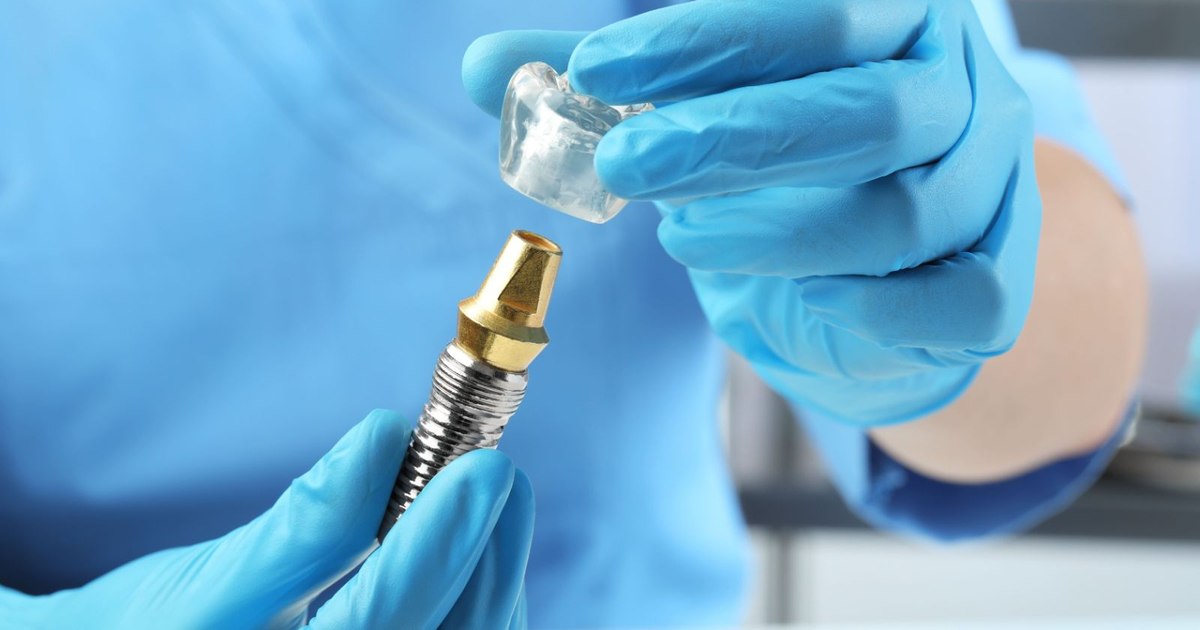
A dental implant consists of three distinct components: the titanium screw that is inserted into the jawbone, the prosthetic abutment that connects the implant to the crown, and the dental crown itself, i.e. the visible tooth. The price shown by the clinics often refers only to the first component, the titanium screw, and the abutment and crown are billed separately. Deals significantly below the market average also often exclude imaging investigations or preparatory procedures. This does not necessarily mean that a clinic is dishonest, but that there is a market practice that makes direct price comparison difficult without understanding what each offer includes.
The stages of treatment and what each one costs
Complete dental implant treatment is carried out in several stages, each with its own associated costs.
Consultation and imaging investigations
The first step is the initial consultation, during which the dentist assesses the condition of the bone, gum and adjacent teeth. This usually includes a panoramic X-ray or CBCT-type computed tomography, which allows precise planning of the insertion. Without this investigation, the doctor cannot assess the available bone density and volume, making the treatment plan incomplete. The cost of a dental CT varies depending on the clinic and the equipment used.
Surgical insertion
The second stage is the actual intervention, performed under local anesthesia, in which the titanium screw is placed in the maxillary or mandibular bone. Titanium is the dominant material in modern implantology, used in approximately 93% of cases, due to its superior mechanical properties and high biocompatibility.
osseointegration
There follows a healing period in which the implant integrates into the bone, a process called osseointegration. The duration of this stage differs depending on the location: in the mandible, the opening of the implant takes place after about three months, and in the maxilla after about six months, because the bone density is different. Clinical implant success rates are high, ranging from 95% to 98%, according to a multicenter study published in the International Journal of Dentistry (2025) of 651 implants placed in five private clinics over four years of current practice.
Prosthetic stage and final control
Once the osseointegration is completed, the prosthetic stage is carried out: the abutment is fixed and the definitive crown is applied. The final check verifies crown integration, occlusion and patient comfort. Some clinics include follow-up periodic check-ups in the treatment price, others bill them separately.
What can increase the cost from the original estimate
The most important variable in the cost of a dental implant is the condition of the bone. If the patient lost the tooth several years ago, the jawbone may be partially resorbed, and the insertion of the implant is no longer possible without preparatory procedures. Bone augmentation (bone grafting), sinus lift, or prior extractions are common procedures that add both significant time and cost to the overall treatment.
Therefore, any price estimate communicated prior to the consultation and imaging investigations is, by its very nature, incomplete. The treatment plan and final cost can only be accurately determined after clinical and radiological evaluation.
What does the cost of a dental implant look like in the local market
Prices for a complete implant, including the titanium screw, prosthetic abutment and definitive crown, vary considerably depending on the implant system used, the crown material and the individual clinical situation. On the Romanian market, the average for a complete implant is between 3,000-6,500 lei, with significant variations up or down compared to this average, depending on the brand of the implant and the complexity of the case. Complete All-on-4 or All-on-6 rehabs, which replace an entire arch, represent another cost category with substantially higher investment.
An example of transparent practice in this regard are the clinics in Bucharest that publish detailed prices on the website, explicitly differentiating the cost of the implant (from 3,000 lei for systems such as Megagen Anyridge or Bredent, up to 5,800 lei for the Straumann SLActive dental implant) from the cost of the definitive crown and associated procedures, so that the patient can understand the structure of the investment before the first appointment.
What to check before choosing a clinic
A few practical criteria help evaluate a dental implant offer. First of all, it is important to specify what the communicated price includes: only the titanium screw, or also the abutment and the crown. Second, it is worth checking whether imaging investigations (panoramic X-ray or CT CBCT) are included or billed separately. A third relevant aspect is the implant system used: implants from internationally established systems with solid clinical documentation offer greater long-term predictability compared to generic systems.
Last but not least, the longevity of an implant depends directly on the patient’s oral hygiene and compliance with periodic check-ups. Successful osseointegration and material quality are necessary but not sufficient conditions if not accompanied by adequate long-term care. Claims that present the implant as a permanent solution without conditions are clinically inaccurate and should be treated with caution.
The price of a complete implant is essentially the sum of several components and stages. Understanding this structure is the first step to an informed decision.
photo https://app.envato.com
