

October 30 marks 10 years since the tragedy in the Colectiv club. The fire started during a rock concert hosted by the club in the former factory “Pionierul” killed 64 people and injured 185 others, being considered the worst tragedy since 1989.
Commemoration of six years from Inquam Photos FOTO Collective
On October 30, 2015, on a Friday, more than 400 rock music fans gathered at the Collective Club, located in a hall in the former building of the “Pionierul” factory, to participate in the concert of the band Goodbye to Gravity, which launched, on that occasion, its second album, “Mantras of War”. The concert started at 21.00. After an hour and a half, while the band was playing a song, pyrotechnics were set off and all hell broke loose. The soundproofing layer ignited from the sparks and for those inside that windowless space engulfed in flames a fierce fight for survival began.
Witnesses to the fire speak of apocalyptic scenes, of people being trampled, people burned to the ground and young people desperately searching for their friends, girlfriends or relatives inside. Following the Colectiv disaster, which demonstrated the helplessness of the Romanian state both in the management of victims in hospitals and in the implementation and observance of safety measures in clubs and bars, 64 people lost their lives. More than 180 injured were left with physical but especially mental trauma. After the Colectiv fire, horror stories were left about an autumn day when people went to enjoy the music, but some never returned home.
It was the worst night club fire in Romania and also the worst accident in the country after 1990, even worse than the Balotești plane crash. The mass media qualified the Colectiv disaster as the worst tragedy in the history of Romania, after 1990. As a result of the fire, a Government fell and several people were convicted. The memory of the disaster remained as a living wound, but also the impression that, in essence, few things have changed and too few people have paid, legally, for the mistakes or carelessness that led to the tragedy.
Sentenced to death in a concrete bunker with only one access door
The chain of events of that evening of October 30, 2015 has been largely reconstructed. According to the statements of George Artur Găman, general director of the National Research-Development Institute for Mining Safety and Anti-Explosive Protection, the Colectiv club was basically like a bunker, made of reinforced concrete, it had no windows and on top of that it was covered with a sponge specially for soundproofing, which was very flammable.

In addition, according to the same specialist, the Colectiv club had only one access and exit door. The pyrotechnic effects were installed and then launched by two pyrotechnicians from Golden Ideal Fireworks Artists SRL.
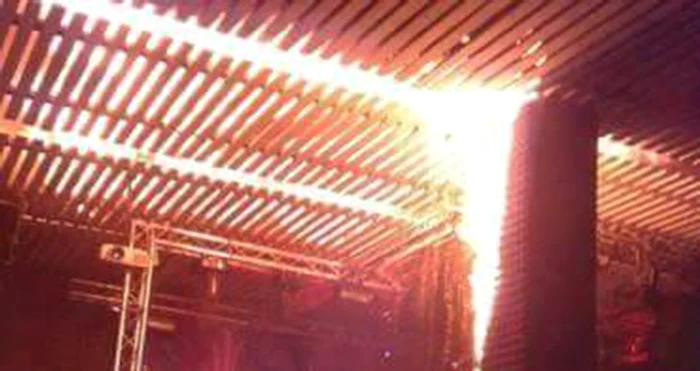
The ceiling of the FOTO Adevărul club lit up
At 10:32 p.m., the first call to 112 is registered.
By the time rescuers arrived, some of those who had come out had returned to rescue those in the dark hell. Some managed, through heroic gestures, to get several people out. Others, like Adrian Rugină, never came out again. At 10:40 p.m., only 10 minutes after the start of the disaster, a lot of burned, scared, disoriented people emerged from the gang at Colectiv. The tenants of the blocks in the area came out with water to help them.

The Collective Club after it burned down
As well as the on-call staff at the Bucur Maternity Hospital, located in the area. At 22.42, the first two ambulances and the fire trucks also appeared. The Red Intervention Plan was activated and more than 500 staff of the MAI and the Ministry of Health intervened at the Collective, with more than 75 ISU special vehicles, mobile hospitals, dozens of SMURD cars, crews with water, foam, people from the release. The scenes were horrible. People were dying on the street and their bodies were placed on pallets nearby.
“On October 30 at 10:30 p.m., I was at home. It was a normal evening, nothing special was foreseen. At one point, I took the remote control and started pressing the TV buttons. That’s how I saw what was happening in the Collective. I got dressed and went there. Later I found out that all my colleagues did the same. We met in the yard. After all the injured were taken to the hospitals, I entered the club. What impressed me was was the image with the 26 corpses, lined up on one side and the other. They were very young, too young!”Chief Commissioner Florian Eniţă told Adevărul at the time.
The Romanian health system did not cope with the disaster
The more than 180 injured in the fire at Colectiv were sent to several hospitals in Bucharest. The first at the University Hospital and then at the Floreasca Hospital, at the Arsi Hospital, Bagdasar but also at the Military Hospital, Elias, Colțe, Pantelimon or the Ilfov County Hospital. But the already deficient Romanian health system was unable to cope with this tragedy. Patients were crammed into unsuitable rooms, Romanian hospitals did not have sterile rooms for burns.

Not to mention the nosocomial infections in hospitals that supposedly killed many of those injured in the Colectiv fire. Ten people died in the hospital, some also due to acquired infections. Finally, after seeing that they could not manage the situation completely and that a second tragedy was looming, but this time in hospitals, the authorities agreed that some of the wounded should be sent abroad.
Carelessness and gross negligence. The fire at Colectiv is a textbook case
10 years have passed since the tragedy in the Colectiv club. Since then and until now, investigations have taken place, heads have fallen, people have sued the state, it has been demanded that the culprits be found and punished. For a decade, the drama at Colectiv has remained like an open wound especially for those who experienced it first hand, victims or relatives of those affected or killed in the fire.
“For those who are left with a physical disability, it’s hard because every time they see their body, they remember what happened. If they can’t do something they used to do, the same. And they have a state of revolt, of unhappiness (..) The labor of suffering that the people who went through the tragedy, but also those who were involved in saving the victims, went through can develop post-traumatic stress, which manifests itself through repetitive memories, thoughts about how they might have acted, accompanied by feelings of guilt, revolt, helplessness, regret, sadness, which can manifest behaviorally through withdrawal, resignation, or through nervousness, violence, irritability or nightmares. Survivors and rescuers need therapy over a long period of time, from several months to several years.”said psychologist Keren Rosner for Adevărul.
The pain was even greater when the cascade of carelessness and negligence of the authorities came to light, which indirectly led to the disaster at Colectiv. First of all, the location was problematic and the authorities did not take any action. There were flammable materials everywhere inside. Especially the antiphoning sponge as specified by the INSEMEX experts. The same specialists testified that this club was equipped with only three fire extinguishers and those of small capacity, and also had no fire sprinklers, mounted in the ceiling, which are activated automatically in case of fire. To top it off, two employees of the Inspectorate for Emergency Situations were three times at the club headquarters and did not take any action even though there were multiple problems. Secretary of State Raed Arafat confirmed at the time that the club was operating without fire safety approval for that evening’s firework display. And yet he was allowed to organize concerts.
Collective operated on the basis of the affidavit stating that it has 80 seats for customers. And there were more than 350 people at the concert. On January 14, 2015, the mayor of Sector 4, at that time, Cristian Popescu Piedone, issued both an operating agreement and an operating authorization to the club, documents drawn up by two officials of the City Hall. And this in the conditions mentioned above: no windows, with only one small door, with three small fire extinguishers and a lot of flammable material.
According to the technical report of the experts of the Prosecutor’s Office attached to the Supreme Court, there were also serious irregularities regarding the construction. However, as the report shows, there isn’t “evidence that inspection, control, guidance activities have been carried out during the last five years (i.e. since 2010)”. In short, nobody seemed to care. More than that: “Some of the works do not meet the requirements imposed by future regulations, especially if a quick evacuation of users from the related space is necessary”the document said. It was stated that at least two access routes were required.
Not to mention the fact that no one seems to have noticed the sponge containing polyurethane foam during inspections or checks. He is the one who amplified the disaster. “The expertise notes that according to the safety data sheet, this product is combustible, emits intense heat, emits thick and toxic smoke when burned, when heated it decomposes into flammable components. It releases particularly dangerous substances in a fire and must be kept away from matches, cigarettes, open flames or powerful heaters”it was stated in the same document.
Protests across the country and the fall of a government
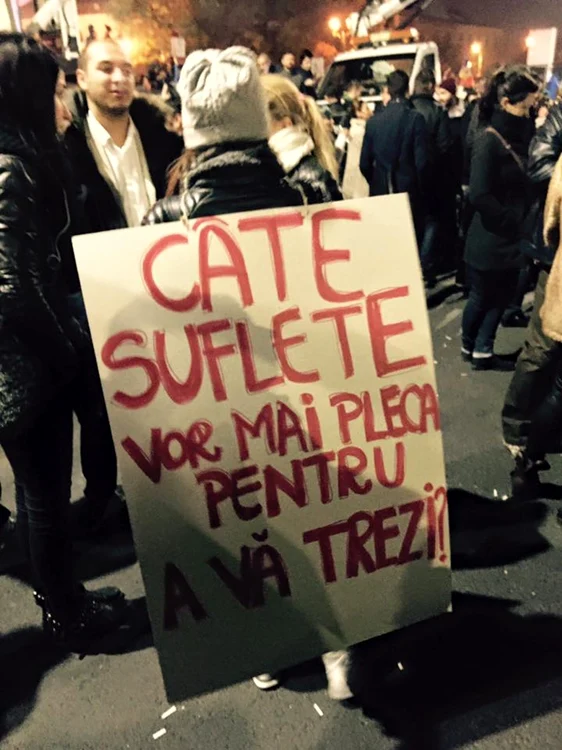
Following the Colectiv incident, the prime minister at that time, Victor Ponta, returned on October 31, 2015 from his visit to Mexico and participated in an extraordinary Government meeting on the topic of Colectiv. On this occasion, national mourning was declared for three days. On November 1, a commemoration march for the victims of the Collective was organized in the University Square. Around 10,000 people participated.

On November 3, following the statements of the mayor of Sector 4, a new rally was organized in the University Square, this time demanding the resignation of Cristian Popescu Piedone. At the same time, the protesters demanded the resignation of Victor Ponta. Rallies and protest movements were organized throughout the country, demanding the resignation of the Government. On November 4, Victor Ponta and the entire Government collected their resignations. Cristian Popescu Piedone did the same.
Justice after the Collective: convictions, acquittals and fugitives
“For the victims, it is very important to know that the perpetrators have paid. It is a sense of justice“, stated Keren Rosner. A criminal investigation was opened on October 31, 2015, but only on May 12, 2022 was the final sentence announced in the Colectiv case. Cristian Popescu Piedone, the mayor of Sector 4, in 2015, was sentenced to four years in prison with execution. He served one year and one month of this sentence. The owners of the collective club were also sentenced to prison with execution. They received the longest sentences. More specifically, Alin Anastasescu received 11 years and eight months, and Costin Mincu six years and four months.
At the same time, pyrotechnicians Viorel Zaharia and Marian Moise were initially sentenced to six years and 10 months in prison. For his part, Cristian Niță, the director of the fireworks company, received two years and six months in prison, suspended, for stealing or destroying evidence or documents.
ISU employees Antonina Radu and Matei George Petrică were sentenced to 8 years and 8 months in prison each. Antonina Radu, a native of the Republic of Moldova and an officer in the ISU Bucharest, fled to her native country, and even so far her extradition has not been successful. At that time, the entire management of ISU Bucharest-Ilfov was suspended. “No more searching in the system”said Prime Minister Dacian Cioloș, in a government meeting in 2015. However, none of them answered before the law.
