
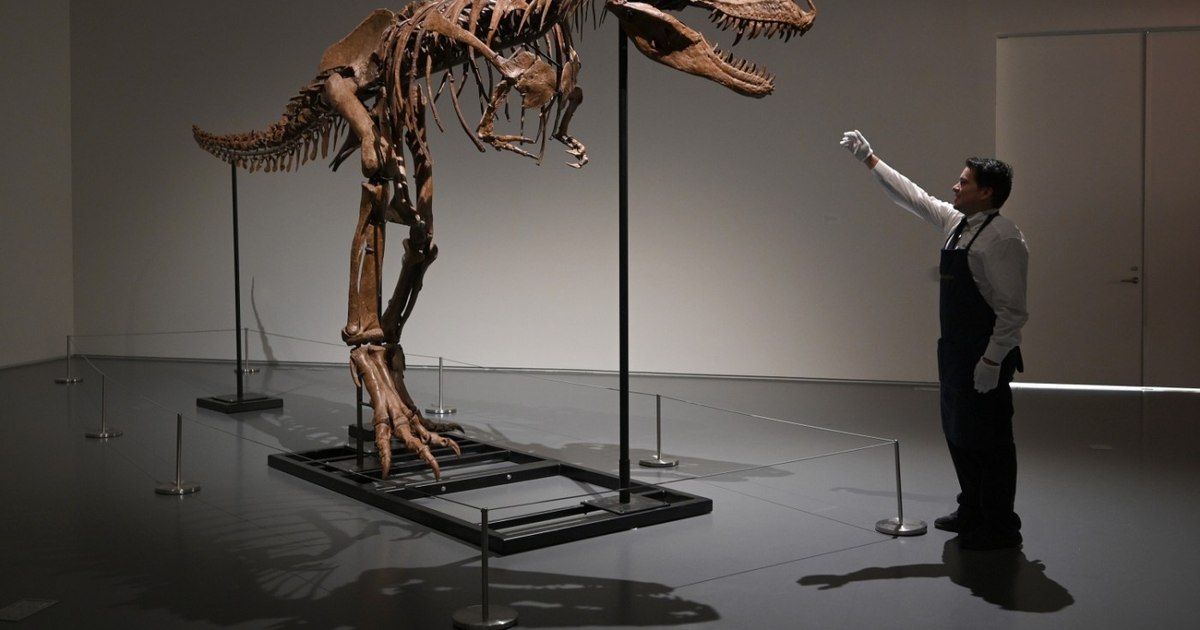
Tyrannosaurus rex, one of the most feared predators to ever live on Earth, continues to fascinate scientists. Although it had an extremely powerful bite and huge teeth, the dinosaur had surprisingly small arms. Now, researchers think they’ve discovered why.
A team of specialists from University College London and the University of Cambridge analyzed 82 species of theropods – bipedal dinosaurs, mostly carnivores, the BBC reports.
The study showed that short arms appeared in five different groups of dinosaurs, including tyrannosaurids, the family that includes the T-Rex.
Researchers have found a clear link between small arms and the development of large skulls and extremely powerful jaws.
“Everyone knows T-Rex had very small arms, but other giant theropods evolved the same way,” explained Charlie Roger Scherer, PhD student at University College London and lead author of the study.
Examples include Carnotaurus, which had forelimbs even smaller than T-Rex’s.
Scientists believe that the change is directly related to the food of these predators. At that time, their main victims were giant herbivorous dinosaurs, such as sauropods, which reached impressive sizes.
According to the researchers, predators began to rely more on their jaws and less on their arms to attack and bring down their prey. Over time, the forelimbs would have shrunk because they were no longer being used as much.
“The head has taken over from the arms as the main method of attack. It’s a classic case of ‘use them or lose them’.” explained Charlie Roger Scherer.
He argues that trying to grab a nearly 100-foot-long sauropod with its claws was not the most effective strategy, while attacking with its powerful jaws offered a much greater advantage.
