

Patients could do donations to hospitals in which they were cared for, instead of paying attention to the doctors, according to a draft law adopted by the Chamber of Deputies. The law would allow people to express their gratitude without being accused of offering. But the problem faced by the health system is quite different: in Romania there are doctors who condition the medical act, who refuse the patients on the grounds that “they have not pushed their envelope”. “This is the real and painful problem. Not that a patient comes with a bouquet of flowers or a box of candy ”, He stated for “Adevărul” Dr. Florin Roşu, the manager of the Infectious Diseases Hospital in Iași.
The little attention offered to the doctors are transformed into donations for the hospital. Archive
“Patients should be taught by doctors that a word of thanks and prayer are sufficient”, said USR deputy Emanuel Ungureanu, one of the initiators of the project. “Doctors are responsible to tell patients who want to support a hospital as a form of gratitude for the quality medical act that they have benefited that this can only be done through a legal donation to the health unit. Any other form of gratitude from patients towards doctors or other employees of the hospital are forbidden by law. (…) We have legalized the form by which any person who wants to support a hospital as a form of gratitude for the good that has been made to do it legally ”Hungarian said.
Hospital manager: “Conditioning of the medical act is a crime!”
Dr. Florin Roşu, the manager of the Hospital of Infectious Diseases in Iași, said for “Adevărul” that at present hospitals can receive donations, but only from legal entities. “And at the moment there is the possibility of offering a sum of money to the hospital, but in the form of sponsorship. We, for example, in the period Pandemia, I did not accept amounts of money, but I received through certain sponsorships equipment and medical equipment. These donations were made by associations or NGOs. Those who wanted to donate were choosing an association, and the contract was concluded between the hospital and the respective association ”, the current procedure explained.
As for the new law adopted in the Chamber of Deputies, Dr. Florin Roşu is of the opinion that he will not have the expected effect, being one trying to regulate a false problem: “EIt is obvious that the phenomenon of the sparrow must be eradicated. The conditioned medical act is a crime, and the phenomenon must be stopped. But it is very important how we try to do it. I, for example, do not believe that this law will produce its expected effects. I do not think that it will stop this national scourge that is called the bribe from hospitals ”.
The doctor believes that the gesture of providing a bouquet of flowers or a box of candy cannot be cataloged as a bribe: “The bribe is required. And it involves envelopes with money, not small attention like a flower or candy. This is actually the big problem: when the medical act becomes conditional. When the doctor asks the patient’s money to treat him for a service that the man benefits for free. It is a condemnable thing, under any criticism, no doctor should suit that. This job is a vocational one. We practice it because we want and because we like what we do. ”
However, the law that passed by Parliament will not have the power to stop the patients to give, nor to receive: “I do not expect to see patients now to queue at our door for donations. If they are to offer money, they will offer all the doctors. The man is not interested in the medical act is carried out in the hospital, with the hospital equipment, with the supplies there. Instead, he is interested in the doctor who prescribes the necessary treatment or investigations ”.

Radu Gănescu, president of the Association of Chronic Patients in Romania. Archive
Patient: “The law does not target the real problem we face”
Radu Gănescu, the president of the Association of Chronic Patients in Romania, told “Adevărul” that the law adopted by the Chamber of Deputies is useless in stopping the phenomenon of hospitals: “The bribe, in my acceptance and in the acceptance of patient associations, means when we are dealing with a form of conditioning of the medical act. This is the phenomenon that should be fought. And not by a certain law, because we have enough laws. We speak here, rather, moral, of a certain conduct of the medical body, of a mentality that should disappear. ”
This newly adopted law will not succeed in braking the phenomenon because it does not aim, in fact, where it should, it considers Radu Gănescu: “We should fight against doctors who ask patients to treat them. And not to show with their finger those who come to the doctor with a bouquet of flowers, a candy, chocolate or coffee. Therefore, the problem is to the doctor who asks, not to the patient who gives ”.
The conditioning of the medical act is a criminal act that must be sanctioned and stopped, said Radu Gănescu, which pointed out: “There is still discussed about the doctors who ask, but not at all about the goalkeepers who ask for money to let you go into the hospital, Nurses who ask for money to schedule you at the doctor. There are not too much talk about the bribe you have to give to the nurses or stretches. The phenomenon is much more complex, the scourge is deeply stuck in the system. Or, with such initiatives I do not think anything will be resolved. “
The law adopted in the Chamber of Deputies was inspired by those that exist in the western countries, considers Radu Gănescu. But what works in them does not necessarily work for us: “In general, the big hospitals from abroad receive donations through certain NGOs. In general, they are patients, even careers, even doctors who raise funds to modernize the hospital, to increase the quality of medical services. We, but, we have the culture, we do not have this education. Here it must be worked here, here it must be insisted ”.
“SPAGAGA free” hospital
The Hospital of Infectious Diseases in Iași was decreed last year the first hospital “SPAGAGE FREE” in Romania. “We have implemented a video surveillance program in the hospital yard and we will also introduce it in the building, in the common spaces, on the halls, in the waiting rooms, etc. There will be strategically located cameras ”,, explained manager Florin Roşu.
Within the hospital, he said, a computer program will be implemented soon by which the satisfaction of the patients regarding the medical act offered will be cheated. And one of the questions in the questionnaire that people will complete will be this, if they were asked for money or if they have offered such useful materials: “After a certain time we will analyze the trend, the trend, and depending on what the graph looks like we will convene the medical body, discuss the problem. We will know including the names of the doctors that the patients could complain about and we will have separate discussions with them.”
Following a survey conducted by the Ministry of Health, which also analyzes the satisfaction of patients regarding the medical services offered, Dr. Florin Roşu observed that there are still patients who offer from small attention to the bribe: “Instead, we had no cases in which a doctor from us has in any way conditioned the medical act. So, the doctor does not ask, but the patient offers. Well, the doctor, in turn, does not refuse. Therefore, these practices must be more and more rare until their total disappearance. ”
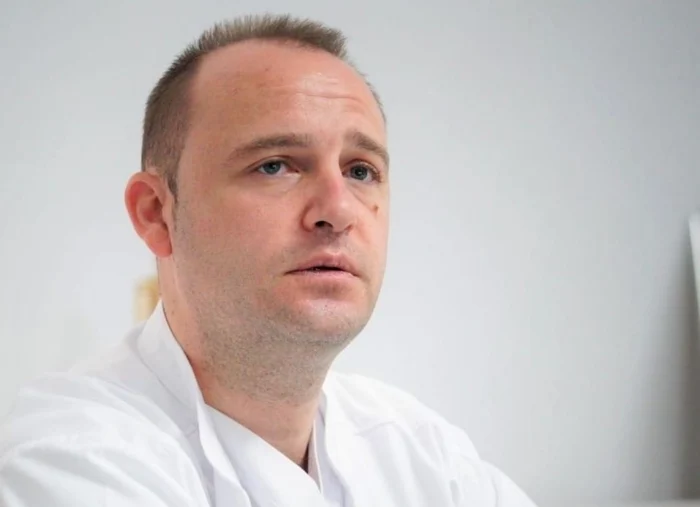
Dr. Florin Roşu, manager of the Iasi Infectious Diseases Hospital. Archive
Solutions
The doctor Florin Roşu is of the opinion that the bribe would completely disappear from the hospitals if the doctors had satisfactory salaries. “Not to think about the rates they have in banks, the maintenance they need to pay next month. I do not say that at the moment, in the health system, there are no good salaries. In no case. There are good salaries. It is true, however, that it would be better. But, on the other hand, however, we cannot claim salaries that are conveyed in the other European countries. We must be aware that the Romanian economy has some limits. But a gradual increase in wages, which will keep up with inflation, could combat the scourge of informal payments of any kind ”, He considers the manager of the Hospital of Infectious Diseases in Iași.
But the mentality of people should be changed. “To have information campaigns at national level, TV and radio spots through which to transmit this message as clearly and concisely as possible: it is not okay to offer money to the doctors, the bribe is punished by law. There is also a direct communication of hospital managers with doctors employed in those hospitals. Advise by the priests, they should know their rights as patients ”, said Dr. Florin Roşu.
