
Pumonar cancer, the condition of the former president of Romania, Ion Iliescu, is the cancer that determines most deaths on the globe. When symptoms appear that send us to the doctor is already late, and this is because the lung does not hurt. But there are investigations we can do.
When tumors give symptoms is late, say Photo doctors: Archive
The former president of Romania was officially diagnosed with lung cancer. It is admitted to the Emergency Clinical Hospital “Prof. Dr. Agrippa Ionescu” in Bucharest, and during the Monday morning it was undergone an endobronchial intervention, carried out under general anesthesia, the purpose of the procedure being to maintain the permeability of the upper respiratory tract.
“Following the specialized, imaging and histopathological evaluations, carried out so far, the multidisciplinary medical commission has established without doubt that the pulmonary condition that the patient suffers is oncological in natureă ”, it is shown in a statement sent by the hospital.
What is lung cancer
Pulmonary cancer is the first worldwide cancer as mortality, and as a number of cases it is in 2nd place. It is a real health problem, both at national and European level, and the lung cancer, because it is closely related to smoking and pollution, as the information that is available in the clinical studies is available to “
“It is an aggressive cancer, a cancer that evolves quite quickly. The last period has brought new therapeutic possibilities, which can extend the lifespan, but compared to the prostate cancer or breast cancer a patient diagnosed with lung cancer is very low.”, Said the pneumologist.
The possibilities of reducing the incidence of this type of cancer are very important for political will, explained the doctor, because one of the important risk factors is smoking, and from cigarette producers and other tobacco products come to the budget important amounts from taxes. However, the cost of treating patients affected by this vice is much higher, have drawn, over time, many specialists.
“There you can’t buy cigarettes from food”
„ÎIn the United States, where smoking has been given up – and anti -smoking policy was very obvious, both social and governmental, at the political level – a decrease in the incidence of lung cancer has been observed in the last 20 years. You can’t buy food cigarettes as you buy. That is, there are things that need to be done politically, there are political decisions, because the costs that the health system has with the treatment of patients affected by smoking, and here speak not only of lung cancer, but also of arteriopathies, COPD, all cardio-vascular and pulmonary disorders, is far beyond what collects the state from tobacco companies.draws the doctor’s attention.
The work is also in Romania, during this period, a screening program in order to detect lung cancer, and this is because without investigations it will be almost impossible to detect the cancer in the stage. Until the possibility of conducting such investigations within a dedicated program, it is well known that the investigation that may indicate a possible problem at the lung level is the computer tomography analysis.
“Screening It involves a chest CT, with a low dose of radiation, which is done if you have smoked more than 20 years, a package per day, and if, of course, you want to quit smoking ”, says the doctor consulted by “Adevărul”.
It is important to mention that the symptomatology appears, unfortunately, too late, warns the doctor, so the treatment becomes very difficult.
“The lung has no pain receptors and usually tumors are silent and manifests only when a complication occurs: a pneumonia or obstruction of airways, a locking of the airways, or when it already invades the thoracic wall and gives pain ”, emphasized the doctor.
Particular attention should be paid to the information that smokers in the category mentioned above remain at risk for 20 years since they abandoned smoking.
“The incidence of bronchopulmonary cancer It is increasing rapid in the last 30 years, in parallel with smoking. It is estimated that, at present, in most western countries, the percentage of lung cancer cases due to smoking is 90% in men and 80% in women; In the case of developing countries, the percentages are considerably lower. In our country, statistical data shows a considerable increase in smoking among women in recent years. The risk of developing bronchopulmonary cancer increases with the number of cigarettes smoked daily ”, It is shown on the website of the Romanian Pneumology Society.
Symptoms of lung cancer manifest late
“In a bronchus or lungs a malignant tumor develops, which evolves for a long time without symptoms. In its development, it can invade neighboring anatomical structures (heart, vessels, ribs) or send cells to distance, in other organs (brain, liver, bones) producing metastases ”, Explains the specialists of the Romanian Pneumology Society, on the website of the professional structure.
The main risk factor for this type of cancer is smoking. Although not many smokers make cancer, of the total patients with lung cancer about 85% are smokers.
“Cigarette smoke is a killer mixture of carcinogenic substances that can cause cancer sooner or later. Therefore, the risk of smokers is cumulative, the more they smoke, the more the risk of cancer increases. Conversely, those who abandon smoking have an increasing risk of cancer, but only the non -smokers, only after 10 years ”, SRP data shows.
Pulmonary cancer begins to manifest often in advanced stages, after a significant period of evolution in silence. One of the symptoms is cough (or changing the character of the cough), a symptom that smokers often consider normal and neglect. What generally scares is Expectory of blood strings or even hemoptysis (blood expectoration), symptoms so alarming that the patient comes to the hospital. Other symptoms may still be: persistent chest pain, weight loss, Lack of appetite, the hoarseness of recent appearance and no longer, itair ips.
“None of the symptoms is typical. Often the symptoms can be completely lacking and the problem is discovered on the occasion of a routine control ”, explains SRP specialists.
How to diagnose lung cancer
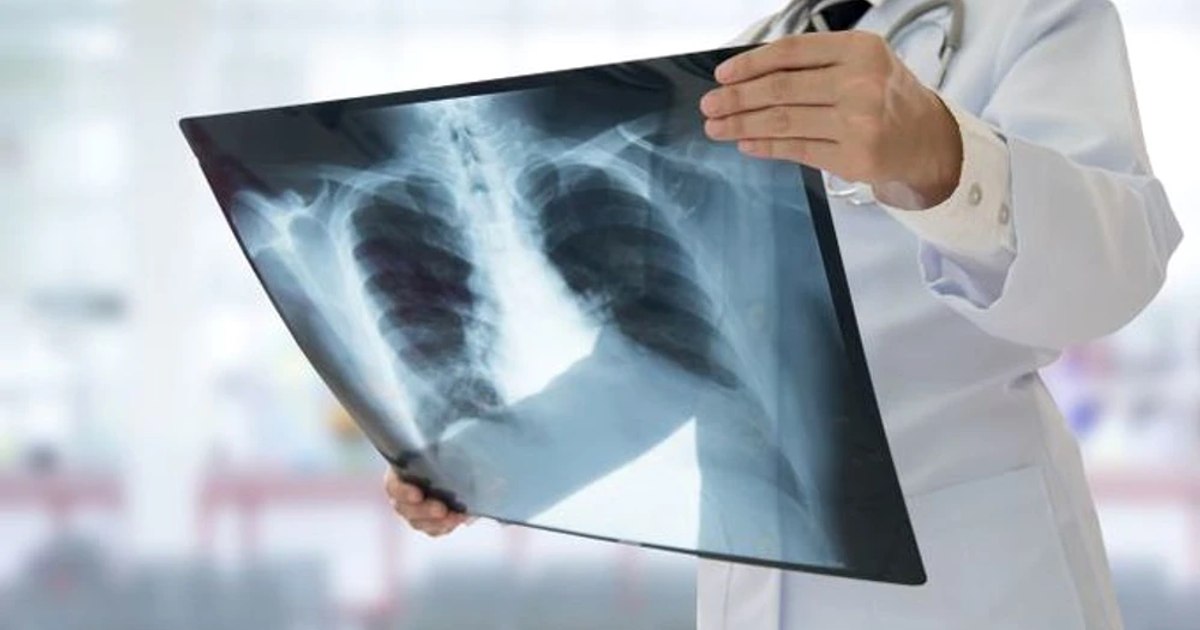
An investigation that may indicate a problem in the pulmonary area is pulmonary radiography, which can show the presence of a tumor in the form of a stain of various sizes in one of the lungs. However, normal radiography does not exclude the presence of a small tumor, for example hidden behind the heart. Sometimes a pleurisy (accumulation of fluid in the chest) can occur, which can be a complication of lung cancer.
An essential investigation for diagnosis is bronchoscopy, which is done by “pinching” a fragment of about 1-13 mm from the modified area, which is sent to pathological anatomy. From here comes the answer if the harvested tissue is malignant (cancerous) and from what type of cells it is made.
It is worth mentioning, it is shown on the SRP website, that the bronchial biopsy, like any biopsy, does not cause or determines the “scattering” of cancer, but it does nothing but highlight the existing cancer.
Even better than radiography shows the location of the tumor computed tomography (CT), which allows to appreciate the extension of the tumor to the neighboring tissues and the possible presence of the metastases. Tomography does not replace bronchoscopy, because it does not allow biopsy and highlighting of cancer cells.
Other investigations that may be useful in establishing the diagnosis are: abdominal ultrasound – which can highlight liver metastases; Bone scintigraphy – can highlight bone metastases, etc.
“The diagnosis of cancer is certain when there are cancer cells in bronchial biopsy or in the secretions aspirated during bronchoscopy or in the pleural fluid, ” You would be mentioned in the article on the website of the Romanian Pneumology Society.
Staging and treatment
The stage of the disease is the next stage that is established after it has been concluded that it is lung cancer. Staging also depends on the choice of the right treatment, but also the prognosis. “The stage is appreciated according to the size and position of the tumor (T), the presence of lymph nodes (N) and metastases (M). For example, a tumor of less than 3 centimeters, which only affect a small bronchus and is accompanied by a small pulmonary ganglion on the same side as the tumor, without metastases, is a good treatment. 10 cm large tumor, which affects a large bronchus or even trachea, is accompanied by a palpable ganglion at the base of the neck and metastases in the liver, is in stage IV, benefits from few therapeutic options and has a poor prognosis ”, shows the specialists.
Detection in advanced stages (the most common cases) leads to modest treatment response, which makes healing too rarely expected, doctors say.
The operation with the complete exclusion of the cancerous tissue (often a whole lung) is the best treatment, the surgery being followed by cytostatic chemotherapy that is often addressed to the “gone cells” that have not yet been in metastases. However, the operation is not possible in all cases, because the patient must have an acceptable respiratory capacity, to have a sufficiently healthy heart, to have an acceptable nutrition, “But especially you must be a tumor to be in a stage that allows the operation (from i to III) ”, notes the specialists.
Patients who cannot be operated are guided to oncology, and within this specialty it is appreciated whether or not a cytostatic treatment is instituted.
“Many oncology services do not accept (rightly) the initiation of this aggressive treatment if there is no confirmation of cancer by biopsy or cytology. The cytostatic treatment is given in cures of 2-3 days at intervals of 3-4 weeks. Combinations of 2 drugs in 6 cures are usually used. Radiotherapy can also be associated, which is done in sessions during periods of 10-15 successive days, directed on the lung or a place of a metastase (brain, for example) ”, I also describe the specialists of the Romanian Pneumology Society.
“Pulmonary cancer does not heal alone”
Cytostatics give serious side effects – from vomiting, bad mood, to hair loss and anemia – which can be overcome with symptomatic drugs, “But especially with the patient’s conviction that the disease with which they are struggling is more serious than the adverse effects,” which is why the belongings are often advised by doctors not to hide the patient the disease.
In advanced cases, in which the benefits of chemotherapy weigh less than the adverse effects that torment the patient, palliative and symptomatic therapy is indicated: pain therapy, cough, dyspnea, psychological counseling.
“Pulmonary cancer does not heal itself. Untreated, it often evolves quite quickly, with accentuation of symptoms, weight loss, complete lack of appetite, degradation of the general condition, which go to death in intervals varies from a few months to one year from the date of the diagnosis. However, there are more as well as more, as well as to the complication. massive) can suddenly lead to death.”, Explains the specialists.
