
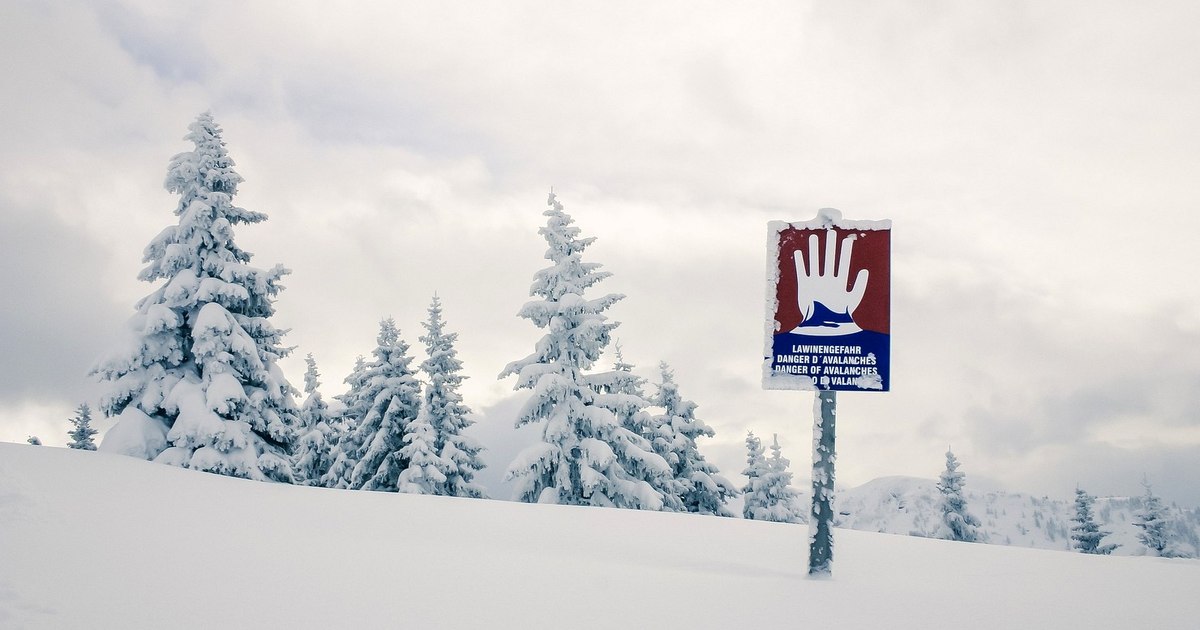
Tourists who go on winter mountain hikes or ski in undeveloped alpine areas are advised by mountain rescuers to consider that there are no completely safe areas on the mountain in winter. Some indications show that the risk of avalanches is higher in certain places.
The first days of winter were poor in precipitation in the Carpathian Mountains, and snow was preserved only at altitudes above 1,800 meters.
However, the risk of avalanches should not be neglected, experts say. It is present in the alpine areas of the Făgăraș, Bucegi, Șureanu, Parâng and Retezat mountains, on the snow-covered ridges.
“At over 1,800 meters, against the background of positive daytime temperatures, the snow will continue to melt. The water resulting from the melting will penetrate the upper layer, moistening it. During the night, this moistened layer on the surface will freeze, forming frost crusts. Towards the ground, the older and hardened layer will be maintained. During the day, on certain inclined slopes, especially in the valleys where more consistent deposits are encountered, under overloads will maintain the risk of triggering avalanches of generally small and isolated medium sizes, which can engage the moistened upper layer – moderate risk”, shows the latest meteorological bulletin published by the National Meteorological Administration on December 15, 2025.
And in the Țarcu and Rodnei Mountains, at altitudes of over 1,800 meters, small avalanches can occur, by wet snow sliding over the older layer near the ground, the risk being amplified in case of overloads, meteorologists say. Such phenomena can manifest themselves especially on shaded slopes, where the persistent snow is unstable. As winter progresses, the risks and dangers in the mountain area will become greater.
Places where avalanches occur frequently
Avalanches can occur anywhere the snow-covered terrain is steep enough. Once a slope is larger than 10 m × 10 m (about the size of a tennis court), it can accumulate enough snow to generate a dangerous avalanche for one person, notes Avalanche Canada, an avalanche information platform.
According to specialists, most avalanches occur on slopes between 30 and 45 degrees. Convex portions of a slope are trigger points, places where avalanches frequently start.
“There is also risk when you are directly under these convex areas,” shows Avalanche Canada.
Cornices form when wind-blown snow creates prominent accumulations along ridges and atop slopes. These too are unstable and should be avoided whether people are on the ridge or below it.
In forested areas, avalanche lanes can be identified by openings in the forest. In the alpine area, they are recognized by the slope and shape of the slope.
“Even if you’re on low-slope or almost flat terrain, it’s important to always be aware of the possibility of avalanche-risk slopes above you,” shows Avalanche Canada.
According to mountain rescuers, tourists who arrive in the snowy areas of the mountains in winter do not have to do anything extreme to get to an avalanche risk area. They are advised to be aware not only of where they are, but also of what is above them. In some areas, however, the effects of avalanches can be more serious.
“Depressions with steep edges, such as narrow gullies, stream beds or ditches, can channel moving snow, causing it to accumulate in a much thicker layer over a small area. Trees, rocks and cliffs can also increase the risk of injury if you are caught in an avalanche.” shows the information platform.
Signs indicating avalanche risk
The favorable conditions for the production of avalanches are heavy snow, wind, warming and instability of the snow cover.
According to experts, a snowfall is considered heavy when 30 centimeters or more fall in 48 hours, or when two centimeters (or more) of snow fall per hour for several hours.
Wind can promote avalanches as it carries snow from one place to another, which can lead to the formation of dangerous wind slabs on the sheltered slopes of ridges and high landforms.
“An indication that wind has influenced the snowpack is streaks or linear shapes visible on the surface. If there has been recent snow transport, it is very likely that wind slabs have formed,” informs Avalanche Canada.
Strong sun, high temperatures and rain can have a destabilizing effect on the snowpack. The first warm-up (around 0 degrees Celsius or above) after a snowfall is often when avalanches occur.
There are also some visual and auditory warning signs that indicate that the snowpack is unstable and that the avalanche risk is increased. Those who observe them are advised to avoid those areas and not to pass under slopes where avalanches could occur.
“If you see cracks spreading from the area where you walk, this is a clear sign of snow instability. If you see avalanches or traces of recent avalanches, this is an obvious indication of instability. A whumpf is the sound made when the internal layers of snow collapse. The sound is exactly as the word is pronounced. The occurrence of this phenomenon indicates instability and can signal the start of an avalanche“, show the specialists.
The lack of visible signs does not mean that avalanches are not possible.
During the winter, alpine routes at high altitudes and crossing steep slopes should be avoided, warns Salvamont Romania.
“Never enter a closed area. Do not go alone. Check weather reports, avalanche forecasts and local information. Use appropriate equipment and check its condition. Notify a contact person of the chosen route. Follow the advice of an experienced person who knows the area well. Do not advance in a compact group, but behind each other, at a safe distance. Announce if you are late. Ask for information from professionals: mountain rescuers, guides, lodgers, ski instructors. Consider that there is no safe zone!”, Salvamont Romania representatives send.
Mountain rescuers add that death on the mountain is not a heroic act, but the consequence of negligence.
