
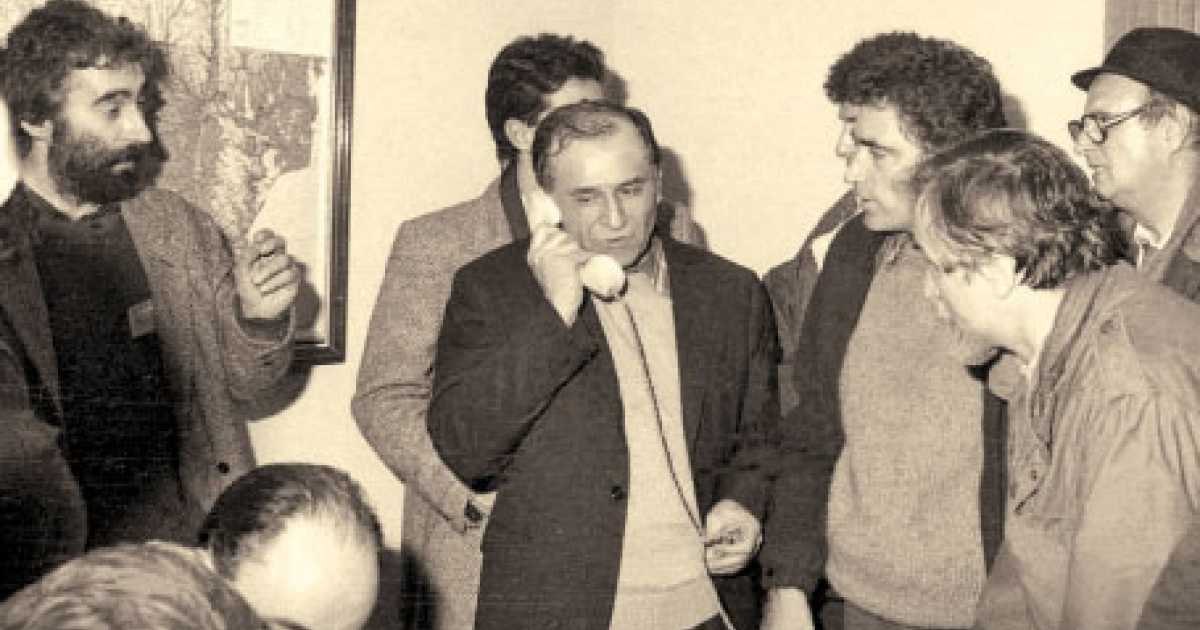
What secrets do the diplomatic documents hide from the years when Ion Iliescu, Petre Roman and Adrian Năstase controlled Romania’s destinies? The declassification of Foreign Office archives promises to shed new light on the backstage of the Revolution, how Moscow tried to reconfigure its influence after 1989 and the controversial decisions that banned King Michael from returning to the country. In an interview given to “Adevărul” newspaper, historian Cosmin Popa analyzes the impact of these late unblocked documents and explains how embassies turned into annexes of the Security.
In an interview given to “Adevărul”, the history researcher, Cosmin Popa, emphasizes, right from the beginning, that the legal deadline for the declassification of documents has long been exceeded. In his opinion, the archive of the Ministry of Foreign Affairs has a good reputation precisely because it has already declassified most of the documents up to 1989, thus avoiding the new waves of secrecy that appeared in the 2020s. As for the secret services, Cosmin Popa states that their documents circulated on separate channels and did not enter the usual archival circuit of diplomacy.
“In the Archives of the Ministry of Foreign Affairs, one usually finds diplomatic and institutional correspondence between, first of all, the Minister of Foreign Affairs and diplomatic missions or various diplomats charged with a series of extraordinary missions in the sense that, outside the rules of diplomatic representation, there is correspondence between the Government and the Ministry of Foreign Affairs and, of course, correspondence between the Ministry of Foreign Affairs and the Presidency or between the Ministry of Foreign Affairs and other institutions interested in the information that the Romanian diplomatic representations obtained them, whether it is embassies, representations in international organizations and so on.”
What was the difference, in the ’90s, between diplomats and undercover officers?
As for the secret services, Cosmin Popa states that their documents circulated on separate channels and did not enter the usual archival circuit of diplomacy. However, towards the end of the communist regime, the diplomatic missions had become, in many ways, an extension of the Department of Foreign Intelligence of the Security. For this reason, many diplomats who sent reports to MAE headquarters were also undercover officers.
“However, given the fact that, at the end of 1989, the Ministry of Foreign Affairs and, especially, the Romanian diplomatic missions had in many ways become an annex of the Department of Foreign Intelligence, of the Security, certainly many of those who sent reports to the Headquarters of the Ministry of Foreign Affairs at that time were also undercover officers, working within the diplomatic missions. But the documents to the Headquarters of the Foreign Intelligence Service followed a circuit different. But it is important to say that these reports represented, to a good extent, the information that the foreign services received, as we said, having a number of officers covered among the Romanian diplomats.
The relationship between Ion Iliescu and the Soviet Union
One of the main topics on which new information is expected is the reaction of the Soviet Union to the Romanian Revolution. However, Cosmin Popa does not believe that the archives will produce spectacular revelations. According to the historian, there are already enough testimonies, documents and research that show that Moscow wanted in Romania a leadership close to the reform policy promoted by Mikhail Gorbachev through Perestroika and Glasnost at the end of the Cold War.
“Relations between those who took power, aggregated around Ion Iliescu, and the Soviet Union were conducted, let’s say, through other channels, usually through the channels of the Communist Party of the Soviet Union or the channels of the special services, not through highly institutionalized and bureaucratic channels, such as those of the Ministry of Foreign Affairs, to which much more people had access than those who were at the center of the decision would have wanted. But we will certainly find documentary reflections of the attitude on that Gorbachev and the others in the Soviet leadership had towards Ion Iliescu, whom they knew not yesterday, from today, they knew him for a long time and to whose public profile contributed not only the Soviets, but also Free Europe and other, let’s say, institutions in the political orbit of the United States.
The fact that the Soviet Union wanted, at that time, for power to be taken over in Romania by someone not only close to the Soviet Union, but also close to the policy of openness and reform, to Perestroika and Glasnost, is an absolutely natural and understandable thing within the logic of the end of the Cold War at that time, all the more so since, when the Revolution took place in Romania, the international consensus was that of maintaining the Soviet Union, of consolidating the democratic Soviet Union, with even more so than Gorbachev and those who supported him at the time.
Ion Iliescu seized power with a typical communist government program“
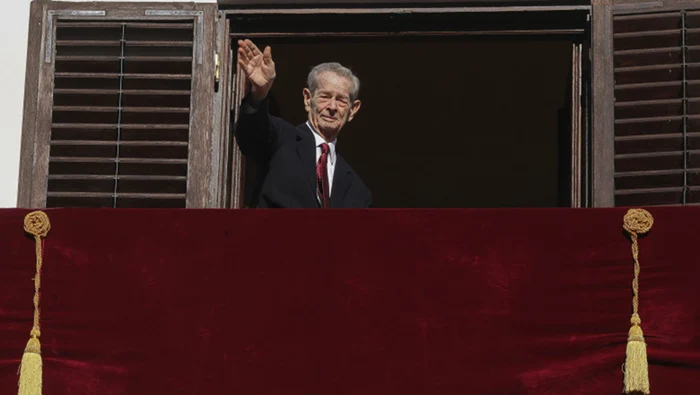
“King Mihai turned out to be quite a peaceful man”
Cosmin Popa appreciates that the authorities after 1989 perceived King Mihai as a potential danger for the stability of the neo-communist regime. King Mihai proved, in the end, “a rather peaceful man” and willing to accept the status quo after his abdication in 1947. King Mihai was allowed to enter the country in 1992, while in 1990 and 1994 he was denied access, being stopped, the first time near the border and the second time at the airport.
“Here it is meaningless to deal with the assumption. what the file would sound like, because it is not even important what the file would sound like, if we refer to the political motivations that justified the decisions taken by the Romanian authorities. It is very clear. I think there is another direction in which these documents will be, if not crucial, at least relevant. Namely, we will find out to what extent and in what way the insertion of Soviet interests into the Romanian institutional system took place later Russian, because that period is essential for the way Russia repositioned its interests in Romania and reorganized its community of people who supported its interests. This is very important.
Fortunately for the Ion Iliescu regime, King Mihai turned out to be quite a peaceful man and quite willing to respect, if you will, the status quo established with the declaration of the Republic at the end of 1947. That, however, did not prevent the people of Bucharest from behaving as they did with King Mihai, seeking and succeeding, to a good extent, in antagonizing the population against him and inventing all kinds of alleged dangers that the king would have brought with him, which only deepened the faults of the civil conflict of that time in Romania, something that suited Ion Iliescu perfectly, who governed with the tools of hybrid warfare before it was officially invented.”
Romania and German reunification, how did economic relations collapse after 1990?
Referring to the reunification of Germany, Cosmin Popa recalls that Romania maintained relations with both German states and that the recognition of the Federal Republic of Germany in 1967 had already caused tensions with Moscow. He recalls that France and Great Britain viewed reunification with reservations, fearing the unbalance of Europe, but had to accept the new geopolitical reality. As for Romania, Popa says that the authorities in Bucharest largely followed the Soviet diplomatic line regarding reunified Germany.
“In fact, it is the first Romanian communist state to recognize Federal Germany, which also generated a series of political frictions with the Soviet world. Of course, Romania had direct interests in Germany, because both Federal Germany and Democratic Germany were part, if you like, of the foreign policy strategy of communist Romania.
Now, judging the way things unfolded, in the sense that the Soviet Union is the one that agreed to the unification of Germany, under certain conditions related to the transformation of Germany into a neutral state, but without these things being fixed in a document, I think that Romania, because at that time it wanted to return to the sphere of influence of the Soviet Union and apply in Romania the policy that Gorbachev applied in the Union Soviet, he simply repeated, if you will, the considerations that Soviet diplomats were issuing at the time, related to the unification of Germany.
From this point of view, I don’t expect the documents to bring much new information, because it is a subject about which a lot has been written, documents have been published. It is very clear that Great Britain and France were, for a long time, against this reunification, as a result of the danger of breaking the European balance, but they had to accept this reunification, not only at the American pressure and not only at the request of the Soviet Union, but also at the pressure of the natural process that was taking place in the two Germanys.”
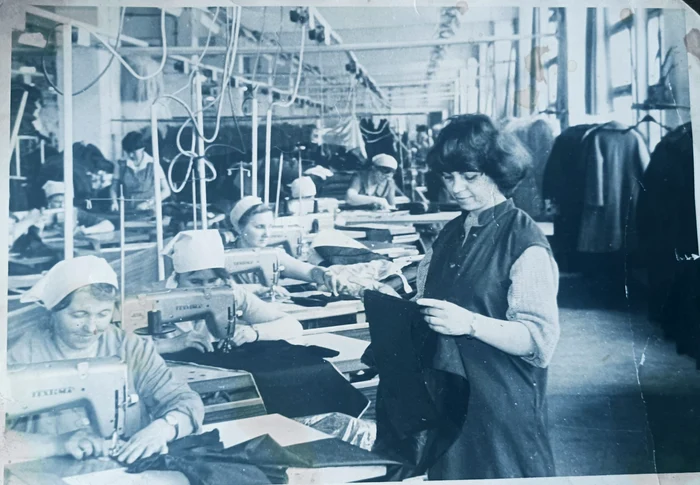
And the Romanian-German economic relations before 1989 between Romania and Germany were prolific. Cosmin Popa reminds that Romania collaborates intensively with companies from Federal Germany, especially in the textile industry and in the field of industrial technology imports.
“We worked not only in the textile industry. There were massive imports of German industrial equipment, machine tools and so on. A lot of licenses were bought from Federal Germany and there was also a fairly consistent trade. But the emergence of a reunified German state was not likely to call into question the exchanges that had collapsed at the end of the 80s anyway. And surely more problematic for the Romanian state, for the new authorities, was the collapse of the former market socialist states. But the collapse of the market of former socialist states was a matter that was happening anyway, and whether or not Democratic Germany survived the end of the Cold War, that market of communist states was falling apart anyway, because, as I said at the beginning, the Soviet Union had already made the decision to give up this internal empire.”
Asked how long it might take to research the approximately 5,000 declassified files, Cosmin Popa says that the number itself is not the main problem.
“The reports from the embassy in Moscow will be more important than those from Kuala Lumpur”concludes the researcher.
