
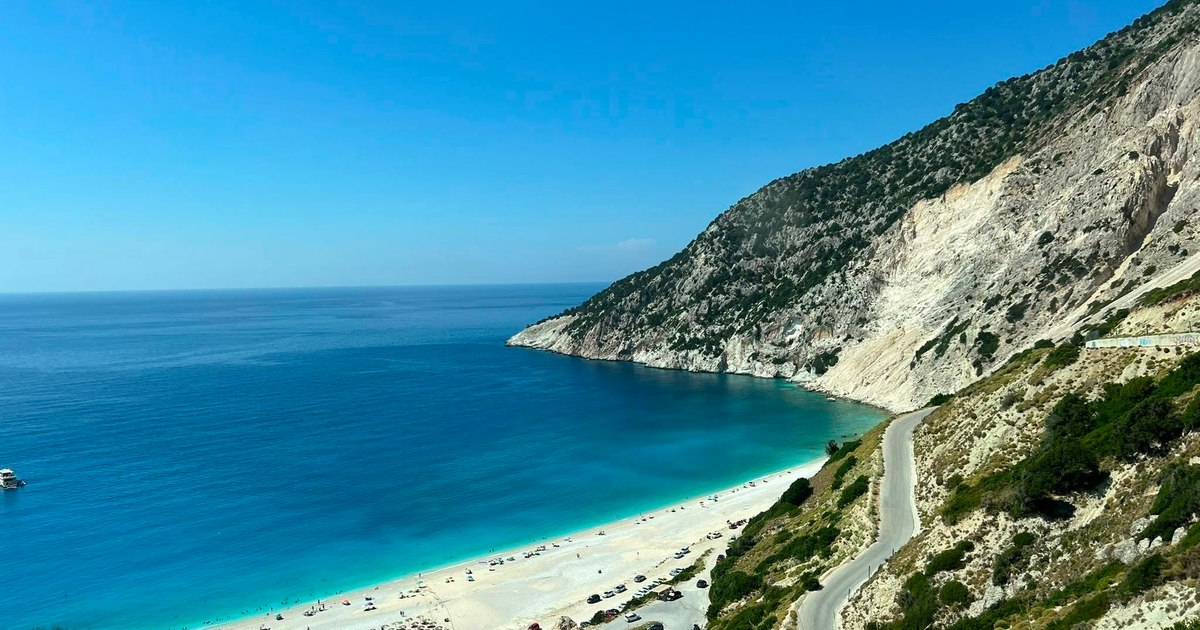
Myrtos beach, considered the pearl of Kefalonia and one of the most beautiful beaches in Greece, was affected by a landslide. Famous for its spectacular turquoise waters, Myrtos is one of the main tourist attractions of the island, being visited annually by thousands of tourists, including Romanians.
The images captured on the spot show the impact of the landslide and bring back into focus the fragility of a landscape formed over thousands of years by continuous geological processes, according to Kefaloniafocus.
Myrtos is one of the symbolic images of Kefalonia
The contrast between the white stones, the intense blue of the sea and the spectacular cliffs that descend steeply towards the shore have turned this beach into one of the most photographed places in Greece.
The recent landslide is not an isolated phenomenon for this area. Over time, near Myrtos beach, rock fragments have also been released, caused by the geological characteristics of the limestone slopes.
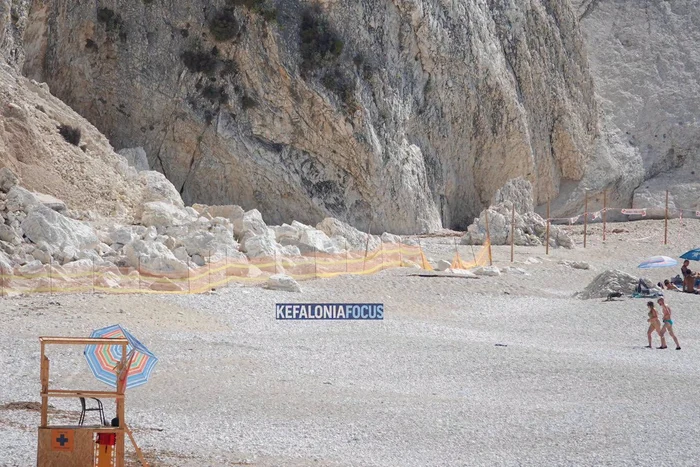
To reduce the risks, protective measures have been taken in the area and certain safety zones have been established for visitors. These measures are all the more important during the summer season, when Kefalonia is one of the favorite destinations of tourists who choose Greece for their vacation.
Specialist assessments are required
Geologists and competent authorities are to assess the situation to establish the extent of the phenomenon and to determine if there is a risk of further rockfalls.
Although the image of a landslide on one of Greece’s most famous beaches may cause concern, experts point out that such phenomena are part of the natural evolution of mountainous and coastal areas.
In the height of the tourist season, when the island is visited by thousands of people, the priority remains the safety of the tourists.
