
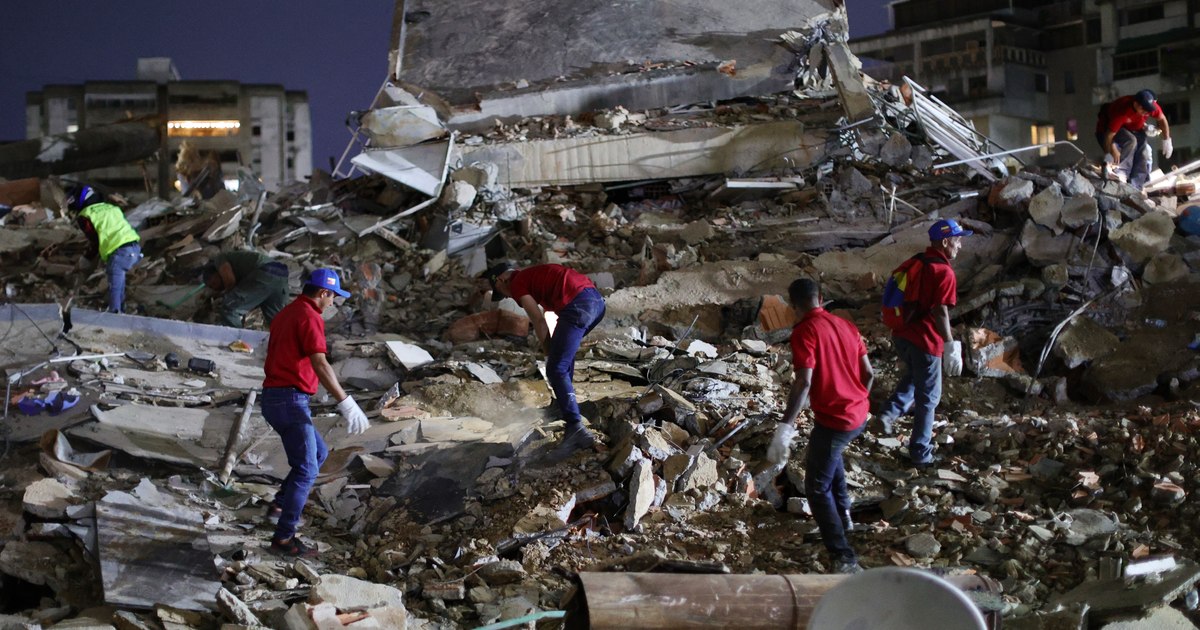
South America and Japan were hit, on the same day, by several earthquakes with a magnitude between 6.9 and 7.5 on the Richter scale. The most dramatic situation is recorded in Venezuela. In the west of the country, an earthquake measuring 7.2 on the Richter scale, followed by another measuring 7.5, struck the capital region of Caracas, toppling buildings, trapping people under rubble and prompting scientists to warn of the possibility of significant loss of life and major destruction.
In the context of these dramatic events, construction engineer Matei Sumbasacu, founder of the Re:Rise platform and activist dedicated to reducing seismic risk in Romania, explained to “The Truth” why we can’t know when the next big earthquake will hit our country and what exactly we should do to be more prepared.
“Seismic prediction involves the early identification of three essential elements: the exact moment when the next earthquake will occur, its location, the areas that will be affected and the estimated magnitude. These three components are indispensable for a prediction to be really useful. Currently, although there is research initiated since the 1960s-1970s regarding the so-called seismic precursors – since certain phenomena have indeed been observed that sometimes appear before some earthquakes – the main difficulty lies in the fact that the time interval between the appearance of these signals and the occurrence of the earthquake is not known.
These signs can appear a few hours before, but also a few days, weeks or even months before. Thus, we cannot know if Romania will be hit by an earthquake in a few days, a few months or a few years”explained the expert.
Unprecedented, but insufficient progress regarding the consolidation of buildings in Romania
Although prediction remains a myth, disaster preparedness is a reality that can be improved. Matei Sumbasacu drew attention to the fact that, although important progress has been made in recent years in strengthening buildings with seismic risk, they are totally insufficient in relation to the real needs of the country.
“In Bucharest, at present, approximately ten public building consolidation sites are open, carried out through the National Program for the Consolidation of Buildings at Seismic Risk. In order for the advance to be proportional to the extent of the need, we would probably need 50 to 100 such active sites simultaneously.
The reason is that, in Bucharest, there are hundreds, even thousands of buildings that require strengthening interventions. Therefore, from the perspective of preparation, important and unprecedented progress is being made, but these are totally insufficient compared to what would be necessary”Sumbasacu said, stressing that the consolidation process will take decades, even in the most optimistic scenario.
The most vulnerable cities in case of an earthquake
In addition to Bucharest, there are other cities that are extremely exposed to a major earthquake, and the effects would be devastating, regardless of the size of the town.
“Vrănce earthquakes define Romania’s seismic hazard. A major earthquake is strongly felt in certain regions of the country, especially in the extra-Carpathian area. Although these earthquakes affect the entire territory, to a greater or lesser extent, in the regions outside the Carpathian chain – that is, Moldova, the center of the country, the south, southwest and east – the seismic movement can be particularly violent.
Chain earthquakes on three continents: Japan, shaken shortly after Venezuela. An earthquake also occurred in California
So, the cities most at risk are those where the hazard is high. In addition to Bucharest, we can list cities such as Ploiești, Craiova, Galați, Brăila, Constanța and Iaşi, but also larger municipalities near the Vrancea area, such as Focșani – all these urban centers will encounter major difficulties in the next big earthquake”explained the expert.
For smaller cities, the situation is even more dramatic, as financial and logistical resources are extremely limited.
“In smaller cities – localities such as Vălenii de Munte, Moreni or Câmpina, which have blocks and old constructions – the collapse of two or three buildings could completely paralyze both the intervention services and, above all, the reconstruction, recovery and recovery processes. These localities do not have the necessary financial resources to rebuild such blocks.
We can realize the extent of the problem even in Bucharest, where a single block, the one in Rahova, generated huge difficulties regarding the relocation of people and the restoration of the building. Imagine what the same situation would mean for a town hall the size of an average city, whose total annual budget is about 10 million euros, given that the reconstruction of a single block costs about the same amount”emphasized Sumbasacu.
Individual training remains the most effective weapon
Faced with the grim reality regarding the preparation of the authorities in the event of an earthquake, the engineer proposes a solution that does not require huge funds, but a change of attitude: strengthening relations between neighbors.
“The most important element, as I mentioned before, is the preparation of communities. Why? Because in an emergency, especially in the event of an earthquake, no matter how well trained the emergency services are – which, by the way, are excellent and in demand internationally – the local community is always the first to intervene. So each of us must reflect on his role in the community where he lives, works or studies, according to his social status. Each person is perhaps part of more communities. Let’s think about how we can contribute, what we can do to help our fellows and start rebuilding community ties in Romania, getting to know our neighbors better.
It is a highly effective, relatively easy and even enjoyable action to reduce seismic risk – to organize a meeting with neighbors to get to know and care more about each other. If we manage to change this attitude and make Romanians care about those around them again, we will overcome the next big earthquake much better”concluded Matei Sumbasacu.
