
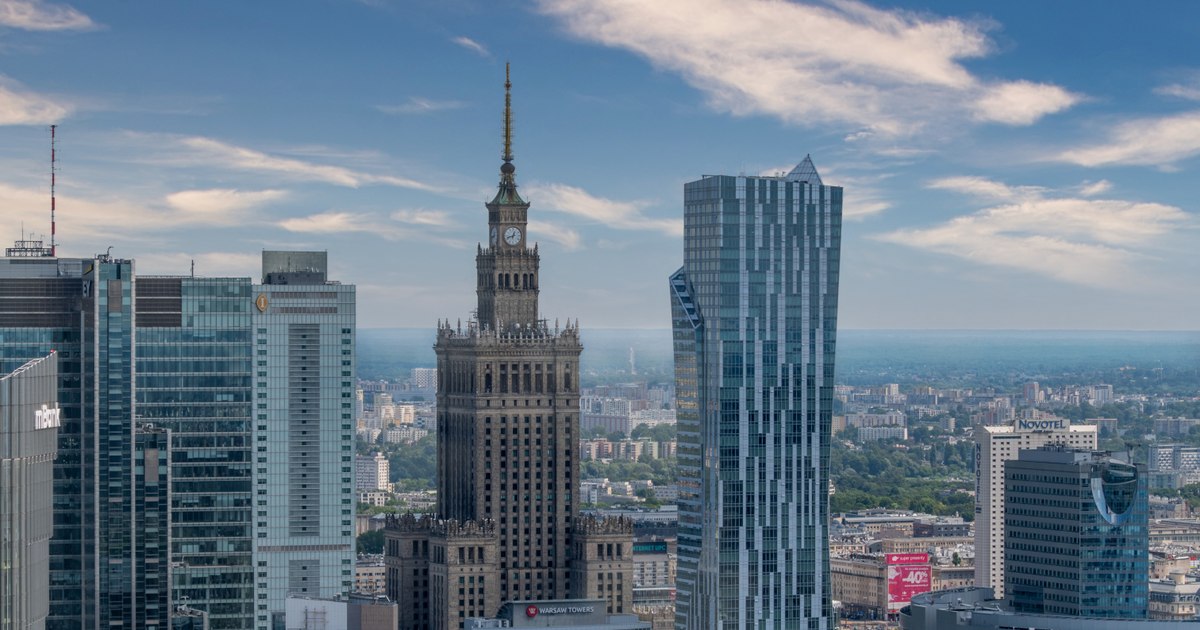
Located approximately two hours’ flight from Bucharest, Warsaw has become one of the great tourist destinations of Central Europe. The capital of Poland, sometimes dubbed the “New York of Europe”, impresses tourists with the contrast between its turbulent history and its modern image.
Poland and Romania, two former socialist countries, affected in the 80s by economic crises, shortages and social discontent, left communism in 1989 and joined the European Union in the 2000s.
Although the economic situation of the two states began to improve after 1990, Romania lagged behind Poland in several important areas for the economy.
An analysis recently published by Bloomberg presented Poland as one of the most dynamic economies in the European Union, with a GDP of over 915 billion dollars, more than twice that of Romania. However, Romania has almost half the population and a lower public debt than Poland.
Warsaw, between skyscrapers and historic buildings
In terms of tourism, Poland has become increasingly attractive, and its capital, Warsaw, a source of inspiration for visitors from all over the world. The city, reborn after being destroyed in the Second World War, is the “New York of Europe”, writes Anca Vărdășan, on her travel and fashion blog, The Casual Cat. The Romanian told the experience lived in the city that reminds of Bucharest through the Palace of Culture and Science, its emblematic building, similar to the Spark House, both built in the early 1950s.
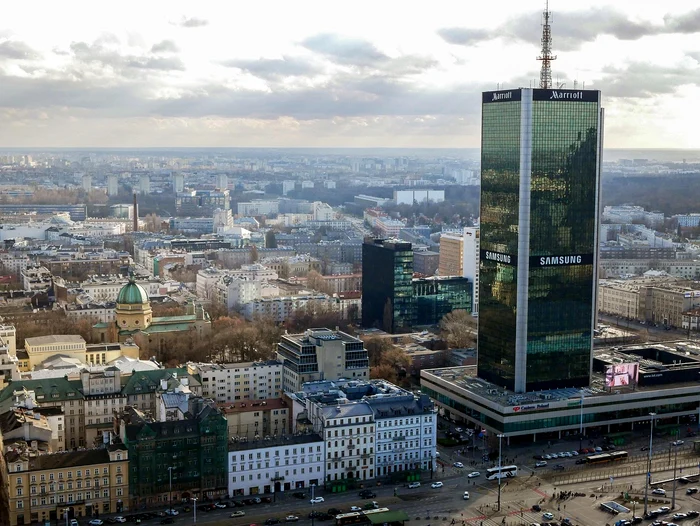
“Coming from the former communist bloc, we really expected this familiarity. However, we did not expect to find such a big city, full of skyscrapers rising from the familiar landscape of the communist blocs. Because Warsaw is a modern, quite refined city that rose from that communist reality. A wonderful surprise. A wonderful city. Right in the center of Warsaw is the Palace of Culture and Science, or PKiN, a tall building inspired by the American Art Deco. Next to it, there is a huge Ferris wheel. One of them is the tallest building in the European Union. Around PKiN there are huge and very vast shopping centers Warsaw from one end to the other is truly magnificent.” notes Anca Vărdășan.
The Palace of Culture and Science, the historical site of the Stalinist era
The Palace of Culture and Science, inaugurated in 1955, has remained one of the tallest and best-known buildings in Warsaw. It was built by Soviet workers, historians show, at the initiative of Joseph Stalin, ca “but of the Soviet people for the Poles”.
For a long time, the 30-story building was regarded as a symbol of socialist power and the pride of People’s Poland, and its monumental halls were the site of numerous concerts, exhibitions, fairs and performances. Today, the palace houses theaters, a cinema, museums, trendy pubs and the main Warsaw Tourist Information office.
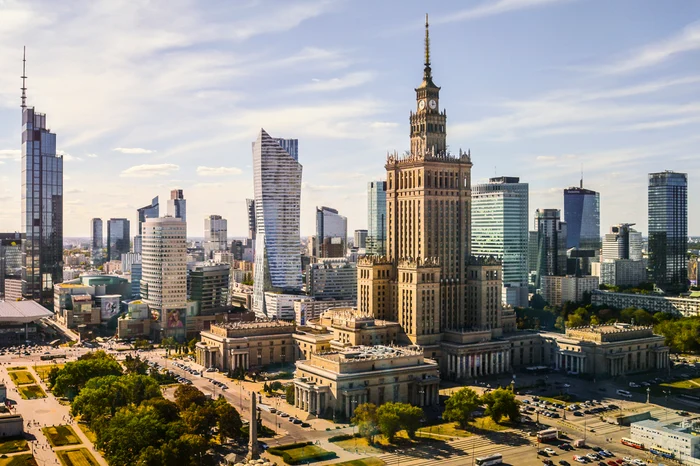
“Climb to the observation deck on the 30th floor of the building and admire the beautiful panorama of the city from a height of 114 meters. Look at the sculptures in the socialist realist style placed in the niches of the palace facade. Each symbolizes a different field of science, art, technology or culture, for example a young man with a book of classical literature, a member of the Komsomol, an archer and a woman from Central Asia. On the straight line from the entrance on the main street you will find a stone tribune of honor, from where the first secretaries of the Central Committee of the Polish Communist Party greeted those marching in the May Day parade“, informs the Go to Warsaw tourism website.
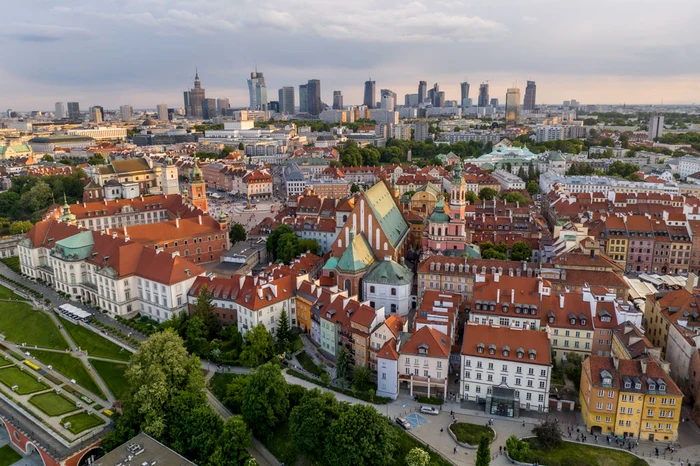
In Warsaw, close to the modern center, tourists find the Old Town — Stare Miasto — included in the UNESCO world heritage list. Here is the Royal Castle, the former residence of the rulers of Poland, and in the Castle Square, the column of King Sigismund III Vasa, who, in the 16th century, moved the capital of Poland from Krakow to Warsaw.
Can Romania still catch up with Poland economically? Harsh comparisons: “Decades of disappointments have produced apathy and cynicism”
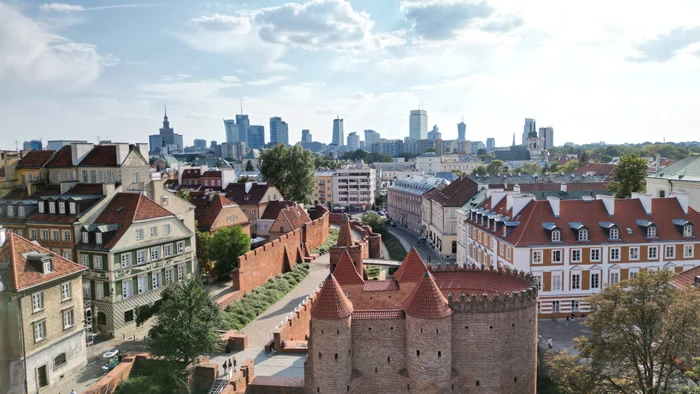
“The Old Town Square is the oldest and one of the most charming squares in Warsaw. It is impossible not to fall in love with this place! It was laid out at the turn of the 13th and 14th centuries. Festivities and fairs were held here, but convicts were also executed here. Although it is over seven centuries old, its shape has changed very little. In the middle of the square is the statue of the Siren from Warsaw, the emblem and protector of the city”shows the tourism platform.
The Vistula River, the emblematic artery of Warsaw
Vistula, the emblematic river of Warsaw, had a huge impact on the development of the city, and today it offers tourists and locals many attractions.
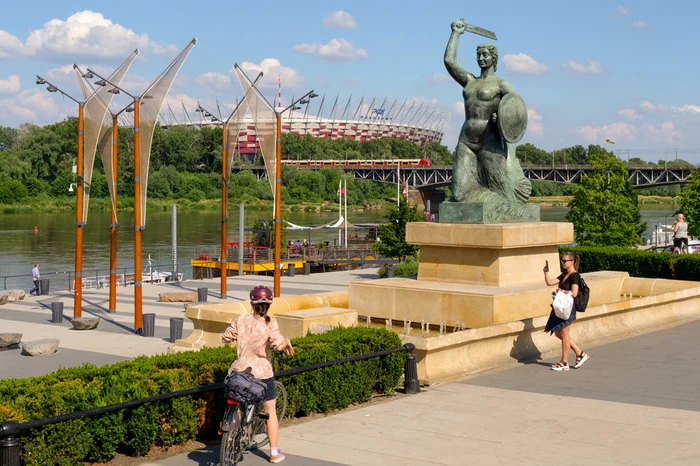
“The riverside promenade, several kilometers long, is an excellent place for walking, cycling, but also for fun evenings in the seasonal clubs open here. Along the boulevards there are gazebos with deck chairs, stone benches and state seats made of tree branches. There is also a viewpoint and a mini-beach with wicker baskets. In such a place the symbol of the river and the of Warsaw – Siren”notes the city’s website.
Balkan countries hit by population exodus: “When you can earn three times as much, why would you stay close to poverty?”
A pedestrian and bicycle bridge connects the two banks of the Vistula, and those who cross it can admire the panorama of Warsaw and the city’s landmarks.
Fast trains to Polish cities
Along with the economy and tourism, Poland can be proud of extensive investments in infrastructure, which in recent years have made its cities more and more accessible. The highway network in Poland has exceeded 5,000 kilometers, most of the sectors having been completed in the last two decades. In addition, ongoing projects target another 2,500 kilometers in the coming years, so that by 2033,
Poland to have a network of approximately 8,000 kilometers of highways, expressways and ring roads. Also, part of the railway network has been modernized, and from December 2024, fast trains — Pendolino — have been put into circulation on most national lines, reaching speeds of up to 250 kilometers per hour between Poland’s major cities.
