
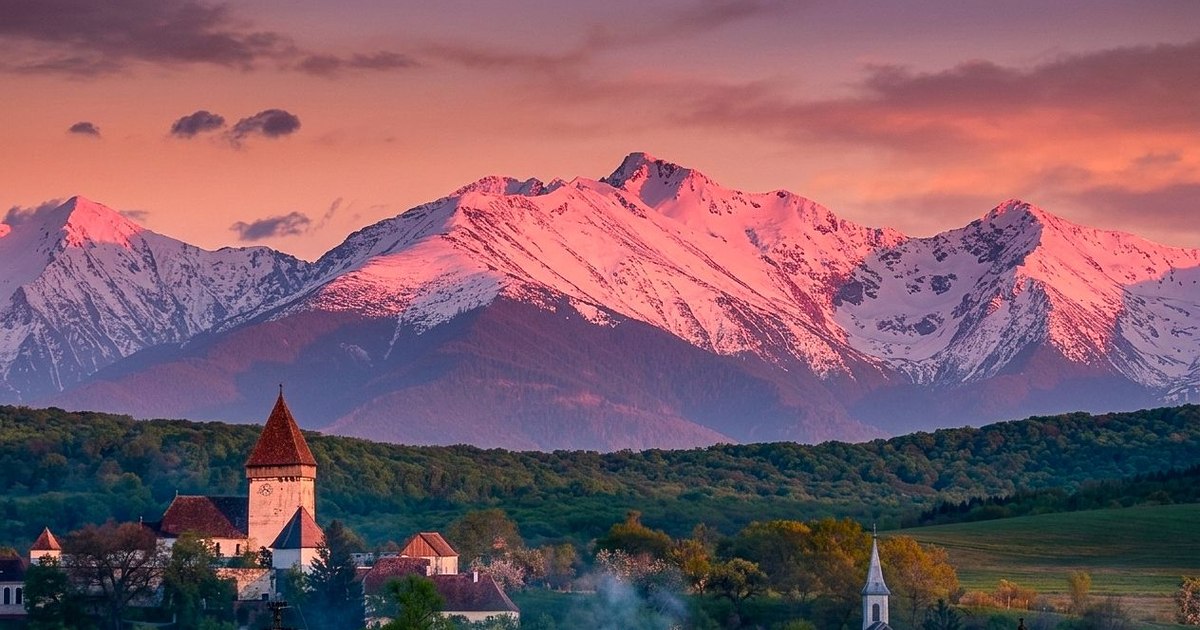
More than 200 Saxon fortified churches were built in Transylvania starting from the 12th century. After the dispersal of the Saxon communities, some ended up in the UNESCO heritage, others in the care of the descendants of the Saxons, and some remained abandoned, in ruins.
The story of the Saxons in Romania began in the 12th century, when the kings of Hungary favored the colonization of some Transylvanian regions with locals brought from the Germanic regions of the Rhine, Luxembourg and Flanders.
The story of the Saxons began in the Middle Ages
The colonists received economic, administrative and religious privileges in exchange for the defense of the kingdom’s borders.
“The exact date of the arrival of the German colonists in Transylvania is unknown, but they appear to have arrived between 1141 and 1161. It is almost certain that they did not all come at once. The Crusades, which at that time occupied every mind, may have caused these immigrations to pass almost unnoticed. The name Saxons (Saxons), as they call themselves, was used much later as a general designation, and is more than likely, from the differences of language, customs and behavior, that different colonies arrived here from different parts of their ancestral places”, looked the British writer Emily Gerard (1849–1905), settled in Transylvania in the 19th century.
The Saxons established their villages in some of the most fertile lands of Transylvania, and the privileges granted by the monarchs, as well as their discipline and organization, made their settlements prosper over time. Communities enjoyed administrative autonomy and the right to elect their own priests and judges, which was rare at the time. They had the right to own and use land and natural resources, were exempt from some taxes, and could hold fairs without paying customs.
Under such conditions, Saxon towns and villages developed in the medieval period, most around Saxon “seats”. The most important of these was Sibiu (video), the administrative center that inspired the name Siebenbürgen (in Latin Septem Castra), given by the Germans to Transylvania, recalling the seven Saxon seats from the 13th century: Sibiu, Orăștie, Sebeș, Miercurea Sibiului, Nocrich, Cincu and Rupea. In the following centuries, the medieval towns of Sighișoara, Mediaș, Șeica, Brașov and Bistrita also became Saxon seats, surrounded by numerous villages then dominated by the descendants of the first settlers.
The Saxons turned their churches into fortresses
In the more than 200 settlements where the Saxons lived, they built churches, schools and fortifications, even in places where the communities were small.
“Particular importance was attached to the defense of new settlements, starting at the latest with the Mongol invasion (1241–1242). Initially, churches were built on high ground, and later village churches were fortified with ditches and palisades. At the beginning of the 15th century, after the first Ottoman invasions, ditches and palisades were replaced by ring walls with defensive towers. Inside the fortified churches barns and rooms were built, used as shelter in times of siege”, shows the Fortified Churches Foundation, established to preserve the landscape of Transylvanian fortified churches and the cultural heritage of the Evangelical Church.
Numerous churches were equipped with defensive elements: defense areas, towers, battlements, walled portals and side entrances. Over time, the fortified churches lost their defensive utility, and some communities demolished the defensive walls to use the stone in the construction of schools, parish houses and public halls.
By the end of the 20th century, many Saxon communities had dispersed. In some settlements, their decline began as early as the medieval period. Invasions by Turks and Tatars, wars, epidemics and demographic changes made the number of Romanians, Hungarians, Danube Slavs and other populations gradually increase in some villages and towns, while the Saxon communities became more and more restricted. Their old churches, used as places of prayer, study and knowledge, but also for defense, remained testimonies of a vanished world in most villages once inhabited by the Saxons.
Eight centuries after the settlement of the Saxon settlers in the historical region of Transylvania, over 150 churches built by them have withstood the passage of time. Seven fortified churches, historical monuments, have reached the UNESCO heritage, being thus recognized for their uniqueness: Biertan (Sibiu county), Prejmer and Viscri (Brașov county), Câlnic (Alba county), Saschiz (Mureș county), Dârjiu (Harghita county) and Valea Viilor (Sibiu county).
In other localities in the region, medieval churches have been renovated and are used by the small German communities remaining in the localities. Some continue to host religious events and also serve as museums. Other fortified settlements, however, had a less happy fate: they were gradually abandoned, degraded or became simple ruins, which were not avoided by destruction.
The Last Saxons of Jidvei
More than 5,000 people live in Jidvei commune (Alba county), in the Târnavelor plateau, famous for its vineyards. Viticulture has been a traditional occupation of the locals since the medieval period, boosted by the Saxon colonization that began here in the 13th century.
Gârbova and Câlnic, Saxon villages with fairytale medieval fortresses: “The Saxons left by the hundreds and never came back”
Three medieval Saxon churches have remained in the villages of Jidvei commune, at Jidvei, Veseus and Bălcaciu, but the German community here has shrunk in recent decades.
“In the past, there were almost 1,500 Saxons in Jidvei commune. Now there are about 20 left. Most of them left immediately after 1990, to Germany, but others also migrated before the Revolution. I stayed, because I got married here, my husband being Romanian. I don’t regret not leaving, but I’m sorry that very few of those who left come back here, and of the remaining Saxons, most are elderly”. says a local woman from Jidvei, who takes care of the village’s fortified church.
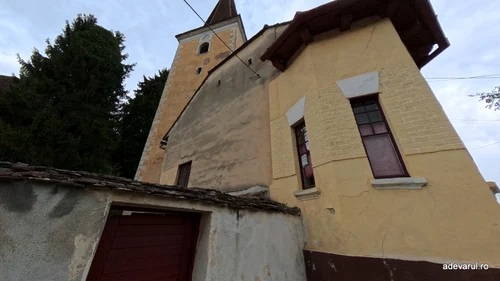
The medieval church of Jidvei has remained a landmark of the cultural heritage of the Saxons who lived on the Târnavel plateau, although services are rarely held here, and tourists pass its threshold just as rarely. Many of those who arrive in the area are attracted by Cetatea de Baltă, a 17th-century castle, restored in recent years, located on the edge of Jidvei, and by the vineyards and wineries for which the locality has become famous. Other travelers arriving in Jidvei continue their journey to the nearby cities of Blaj and Mediaș, or further, to Alba Iulia and Sibiu, which offer more tourist attractions.
The looted church from Veseus
From near the Baltă Citadel, a secondary road brings the guests of Jidvei to the village of Veseuș, owned by the well-known artist Veta Biriș.
The isolated settlement has preserved several Saxon houses, inhabited by Roma families after the Saxon community left them, but also a still imposing evangelical church. The church, built in Gothic style in 1504, was abandoned for several years, and the bells and valuables it housed were taken to different museums in Bucharest, so as not to be stolen.
“Soon, the church will completely collapse. Some villagers have stolen the electrical installations and woodwork from here, destroyed the altar and taken bricks to use. I am saddened by the fate of it and the Saxon cemetery“, says a local woman.
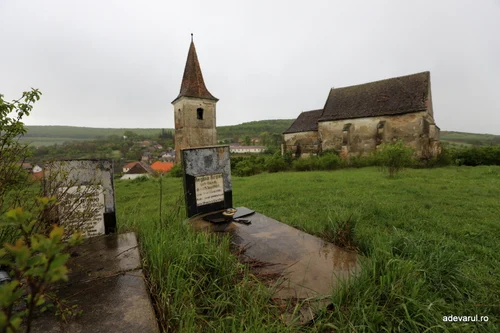
In Veseus, the Saxon community numbered over 400 people at the beginning of the last century, almost half of the village’s inhabitants, the last of them leaving the settlement in the 90s, say locals.
The strange sights of forgotten churches
Located off the beaten track of most tourists and far from the region’s main roads, many old Saxon churches remain emblems of their small settlements and delight tourists who discover them.
In the village of Păuca in Sibiu, with less than 500 inhabitants, two medieval churches attract the eyes of travelers. The oldest of them was built by the Saxons in the 13th century and has stood the test of time, even though its towers collapsed during a storm in the summer of 1910.
Saxons and Swabians, the German heritage in Romania. The things that unite and distinguish the two historical populations
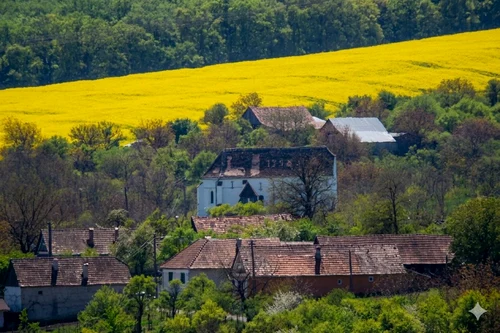
Nearby, a former Pauline monastery, built at the beginning of the 14th century, and later used as a reformed church, had a more turbulent fate. Its church was devastated several times during the Turkish invasions and left in ruins since the 20th century. For several years, it has been protected with a new roof, intended to prevent its complete destruction.
In the village of Hosman, in Sibiu, another fortified medieval church remains testimony to the region’s past. Old from the 13th century, the evangelical church is sought after by tourists for the panorama it offers, at the foot of Făgăraș.
On the bank of Mureș, in the village of Vurpăr in Vințu de Jos commune (Alba county), the old Saxon church offers a strange sight. It was built in the 13th century, but the German community in the area diminished in the following centuries, and from the 16th century the edifice was used as a reformed church.
During the Revolt of the serfs led by Horea, from the fall of 1784, the old church was consumed by mobs. Later, the floods in the Mureș Valley led to its abandonment and ruin.
“The church was a meter higher, but the lower part of the walls remained covered by the mud that arrived here following the floods of the 70s. However, many Hungarian tourists come here and are interested in it”says a local woman from Vurpăr.
On the other side of Mureș, in the vicinity of the Martinuzzi Castle, another ruined medieval church from the beginning of the 20th century has been restored in recent years, but remains closed.
