
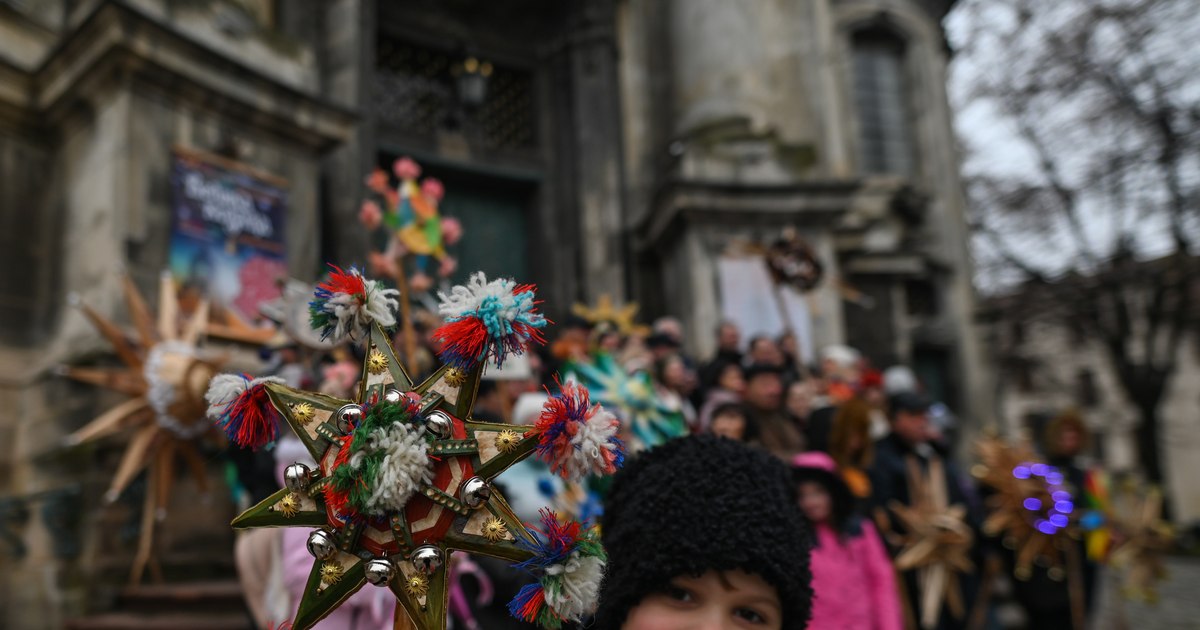
Christmas according to the old rite did not mean only carols and selected dishes on the table. In the history of the Lipovians or the Ukrainians, there were celebrations sprinkled with drama, with natural disasters, but also with magic.
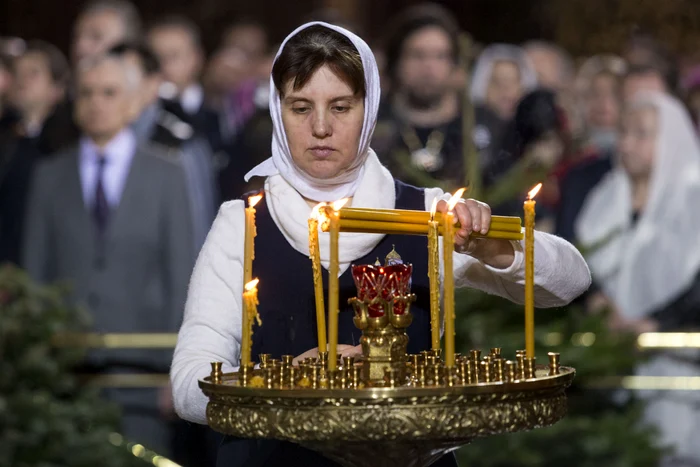
Men with long blond beards, dressed in rubashka, the Russian shirt without a collar, cinched in the middle with a belt, over which they wear the padiovka, a long coat reaching almost to the ankle, along with women with tight hair, dressed in long skirts with pleats called iubca, the wide blouse called cohta and the inevitable pois, head for the church.
It’s Christmas, January 7th. This is how they got it from their ancestors and this custom is preserved with sanctity in the communities of Lipovian Russians or Ukrainians in Romania. In the church, the men sit on one side and the women on the other, who listen to the service in the Slavonic language according to the old rite Christian-Orthodox faith. In Lipovi, usually, the separation between the sexes is done like this: in front, towards the altar, the men sit, further back, the women. In Ukrainians, as in other Orthodox, there is a left-right separation. After January 7, when Christmas is celebrated, Saint Basil the Great follows on January 14 and Epiphany on January 19.
Around Christmas, the pig is slaughtered and its meat is prepared with haladeţ, a kind of cold meats, sarmales that they call halupti, and steak. On Christmas Eve, black fasting is kept until leaving the service, around 3-4 in the afternoon, after which products without oil are eaten. On the eve of the feast, one only goes to church and fasts. In Lipovi there is only one carol, actually a religious song “Christ Rajdaetsa”, and the carolers receive dried fruits and simit from the hosts.
12 dishes in memory of the 12 apostles
The holiday table is sacred. On a white cloth, which in the world of the Lipovans represents the diapers of Jesus, the housewife puts a large, white candle, and next to it an unleavened bread. After this religious moment, the dishes begin to come, which are 12 in number, after the number of the 12 apostles. Then church songs are sung. Traditionally, the preparation of cozonacs used to be considered almost a social ritual – women from the same family, neighbors or acquaintances, gathered in one household, prepared the dough and baked it in large ovens, exchanging recipes and preparing the festive meal. In Lipovi, there is no tradition of decorating the tree, Christmas being only a religious holiday.
“On Christmas Eve, Ukrainians recreate the sequence of the ritual dinner, in which 12 fasting dishes are prepared, including sweetened wheat stew and dried fruit compote”says researcher Alexandru Chiselev, from the “Gavrilă Simion” Eco-Museum Research Institute in Tulcea, for “Weekend Adevărul”. To these are added various baked goods with hardened sauerkraut, potatoes or pumpkin. In some localities, in the past, fish-based dishes were also allowed, such as marinated mackerel, skordolea, pie with sturgeon backbone. This was preserved during the year, then boiled and served as a filling for fried corner pies. On the table tonight, all the dishes were placed at once, for plenty. A place at the table was kept free for the dead of the family.
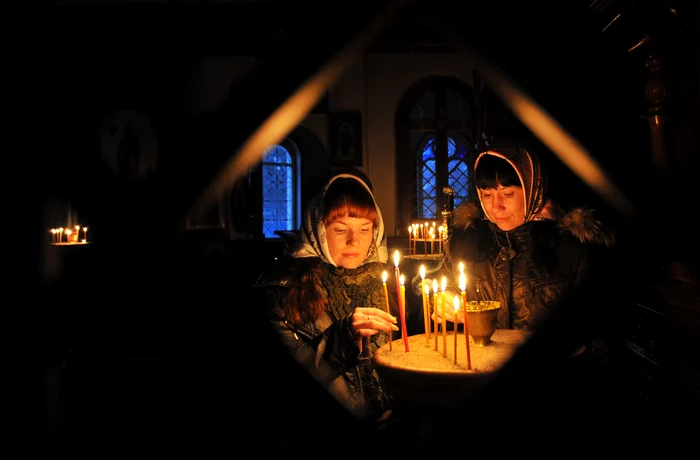
In every house there is a sacred corner, where candles and candles are lit, as well as in animal stables. The opulent table had the role of ensuring the abundance and well-being of the family for the coming year, and various household and household objects were placed under the table to “predestinate” certain qualities for the children of the family. On this occasion, a little hay was symbolically placed in the house.
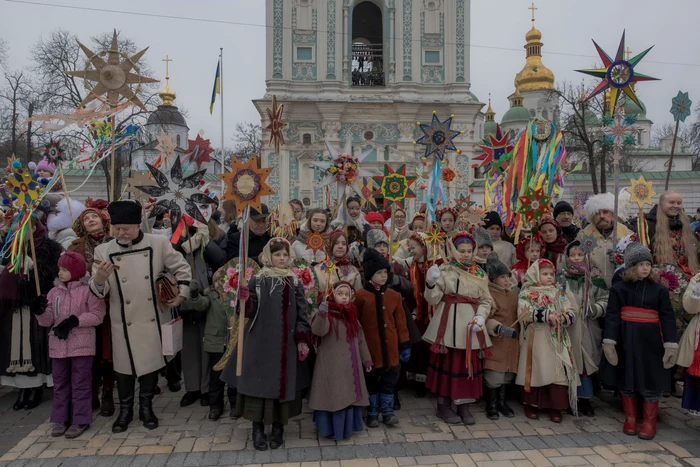
Caroling is still one of the most anticipated moments of Christmas. The groups of carolers are led by a young man, recently married, called “bereza”, who sets the route of the caroling houses, as well as the time spent in each household.
The Holy Evening of Eve
The Holy Evening on Christmas Eve represented a moment of family gathering. On this evening, in the past, straw was placed on the floors, or on the bench, symbolically recreating the stable in which Christ was born. Moreover, in the Tulcean village of Telita, it was customary to place hay under the icon, in the form of a cot, in which there was an anthropomorphic dough named Jesus. “On Christmas Eve, they made rolls and put them on the icon: on the benches or on a chair, they put straw and put the roll there, which they kept for 40 days. Then you broke the roll and gave it to the birds, to the animals. Now, at others, I saw it put on the table, they don’t put it on the icon anymore. They also made Crăciunita. It was also given to the animals”, the story of Maria Bălan, a local.
And Ana Costin remembered that in the 1960s-1970s, “the day before Eve, my mother would bake the cookies and the Christmas tree, which she would put in a nail near the icon. In the corner next to the icon, there was a small table, on which she would place some hay and put cookies with nuts and apples. At the icon, the candle was burning all the time. The cookies were divided among the carolers, but two cookies would remain until the holidays were over. After that, she would break the cookies, sprinkle them with and gave them to the animals – we had cows, pigs, birds – so that they would have an increase. Under the table by the icon, my father would put a scythe and an ax, so that the shepherds would not come and steal the milk from the cows, because the cows gave birth in the winter.”. Of course, on Christmas morning we go to the church service.
The sledges requisitioned for the rescue of souls in Vâlcov
Throughout time, Christmas was not only a celebration for the people of the Delta, especially where winter brings, in addition to its joys, also calamities, which were recorded in the press of the time. In 1938, Vâlcovul, an old Romanian land, nicknamed the “Venice of Romania”, was covered by the waters of the Danube. “The people of Lipoveni, who were celebrating Christmas, gathered, terrified, in the courtyard of the town hall and asked to be evacuated”, records the newspaper “Timpul”. In that winter, the waters overflowed over the low banks and entered all the slums of Vâlcov, through houses, through cellars and yards. “The torrents invaded the city premises, and after the waters reached the same level, they stopped and froze, so that over the entire extent of the flooded region, a huge threshold of ice, continued right inside the houses, raised the ground surface by almost half a meter from the dry land. The Russian slum and the Cahinbeica slum on the King Carol II canal, located in some depressions, were simply taken by the waters”, recounted the author of the news about the tragedy of that unforgettable winter. The city, with all its entrances and exits, was under water and, after the power plant was flooded, people were also left in the dark.
It was not the first time that the waters of the Danube wreaked havoc in the small fishing settlement on Christmas Day: “The inhabitants, mostly fishermen from Lipovi, are now celebrating Christmas. A strange coincidence has caused this year’s floods to break out on the 7th of January, as in 1931, which, for the superstitious population of the city, is an undeniable sign that great and inevitable misfortunes (fall in the price of fish, unproductive fishing) will befall it without delay. Because of the settlement of Vâlcov, floods always have catastrophic effects”, the press of the time wrote.
But the urgency was, at that time, on Christmas Day itself, to save the souls of the locals. People gathered in the courtyard of the town hall and asked to be transported to the neighboring villages. But it was not an easy job, as long as the ice sheets, pushed by the currents, piled up on top of each other and formed real dams on the 11 channels that connected the Danube to the sea. Then, the gendarmes were forced to resort to drastic measures and requisitioned sledges from the neighboring communes, Galilesti, Nerusai and Zăhniceni, to rescue the inhabitants of Vâlcov, who were threatened with drowning.
Crăciun Şerbănescu, the prefect of the county, asked the Ministry of the Navy to order the immediate dispatch of the icebreaker “Mântuirea”, which was in Sulina port, and the tugboat “Bayard” from Brăila, as well as the tugboat “Adrianopol” from Galati, for boarding and evacuating the population, to the city of Chilia. Not only the Christians from Vâlcov had a nightmare Christmas, but also those from Ismail. Because of the snow, this settlement was also isolated for four days, and communication with the train station in Bolgrad was interrupted.
Fishermen rescued after a few weeks
The miraculous rescue of some fishermen from the town of Sfântu Gheorghe, who wandered on the water for weeks until they were rescued, according to the story published in the “Dacia” newspaper in 1930, is also connected to the Christmas holiday. Leaving Sfântu Gheorghe in a fishing boat on the third day of Christmas, the fishermen set sail on a calm sea. Meanwhile, the storm broke out and their boat became a toy in the waves, and the wind pushed them farther and farther from the shore. As darkness fell, they lost all hope of ever finding shore again. And so they let themselves be carried by the waves for three days, when they also ran out of food. They ate raw fish, but if they satisfied their hunger, thirst began to torment them terribly.
After two weeks, a heavy rain saved them from certain death by filling the cask on the boat with life-giving water. But it wasn’t enough. Exhausted after all this time, they left themselves to their fate. Carried by the waves, the boat was brought to near Mamaia, where they were discovered by a boat of fishermen from Lipovi who were returning from fishing. At first, the rescuers thought that the people in the boat were dead because they did not show any signs of life. They then towed their boat from theirs and pulled it ashore. After a few hours, the rescued people came to their senses.
Christmas drama
If the end of the story of the two fishermen had a happy ending, the Christmas of 1936 was marked by a bloody passion drama in the old Botoșani. On the night of January 8, the first night of Christmas according to the old rite, in the Lipovan district of the locality, the “Dimineata” newspaper wrote, in a house on Crinului street, right at number 1, about 40 men and women had gathered to celebrate, on the first night of Christmas, the engagement of the girl Maria Ifrim, the daughter of a rich Lipovan, to the young man Serghei Aelexa. When the party was in full swing, around 2 o’clock in the morning, a young man appeared at the door of the house and without a word took out two revolvers from his pocket and pointed them at Maria Ifrim. He unloaded several shots, but the bullets missed their target. Instead, they were invited. A sister of the fiancee, Ecaterina Pangratti, was seriously injured in the abdomen and right leg. After a chase full of adventures, the police managed to arrest the criminal, who had taken refuge in a house of tolerance in Crilinor Street. At the Chestură, he declared that his name is Pavel Gheorghe Nazarie, he is 21 years old and is originally from Todireni commune, where he owns a colonial shop and several properties. A few months ago he had met Maria Ifrim with whom he fell in love. For a while, the two wrote letters. Two weeks ago, Nazarie was in Botoşani and agreed with the girl’s parents that the engagement should take place on the first day of Christmas. The day before, Nazarie came to the city for this, on which occasion he found out that Maria was engaged to someone else. Driven by jealousy, he borrowed two revolvers from a friend and went to the girl’s house with the intention of killing her. “I wanted to take revenge because he made fun of me, said Nazarie, crying. But I am a decent man”, he confessed to the authorities.
A dagger was also found on Nazarie. He stated that he intended to stab his girlfriend if the bullets did not hit. At the last moment he became emotional and could no longer continue his plan. “The condition of the woman Ecaterina Pangratti is desperate and there is no hope that she will escape with her life. The other four injured people are under the care of doctors. The criminal with the registered documents was submitted to the prosecutor’s office, where the investigations continue”, the newspaper story ends.
