
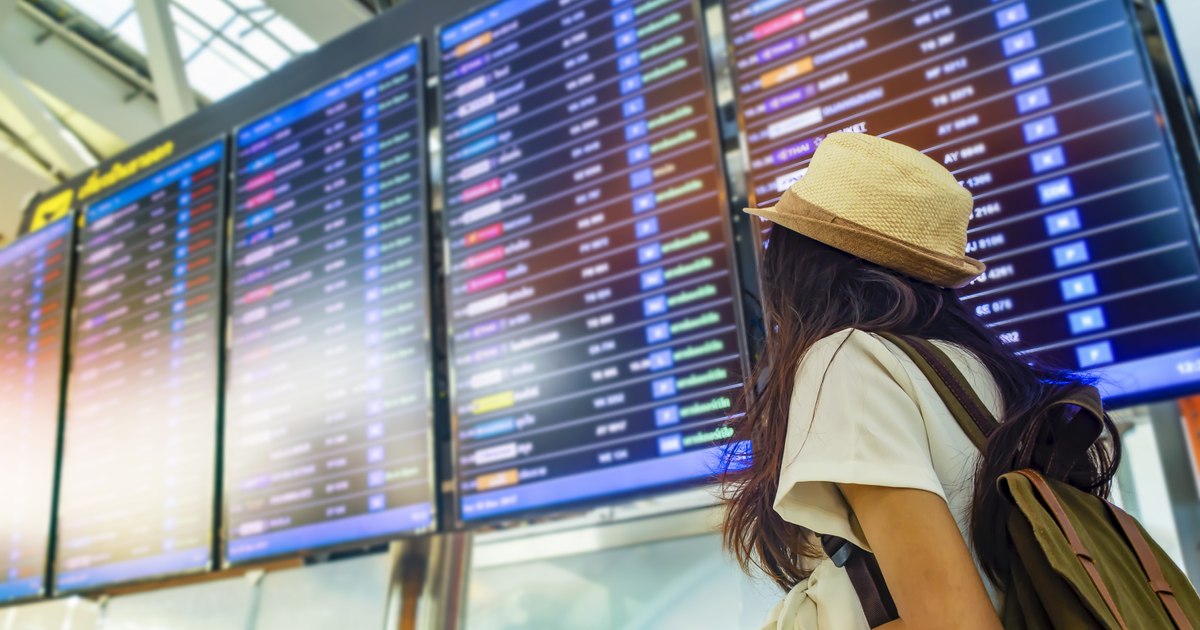
Passengers traveling by air in the European Union will benefit from new rights starting in 2027. The Council of the European Union gave the final green light on Monday to a new piece of legislation that updates the rules on the protection of air passengers, after the reform was previously approved by the European Parliament.
The new rules aim to simplify the procedures for obtaining compensation, increase the transparency of ticket prices and offer additional protection to certain categories of passengers, such as families with small children, people with disabilities or passengers with reduced mobility.
The Regulation will enter into force 20 days after publication in the Official Journal of the European Union, and effective application will begin after a one-year transition period. Thus, the new rules would apply from the middle of 2027.
Compensation for delays and cancellations remains in effect
One of the most important rights preserved by the new regulation is the possibility for passengers to claim compensation for delayed, canceled flights or for situations where the airline refuses boarding.
The value of the compensations remains unchanged and will be determined according to the flight distance:
- 250 euros for flights up to 1,500 kilometers;
- 400 euros for flights within the European Union of more than 1,500 kilometers and for journeys between 1,500 and 3,500 kilometers;
- 600 euros for flights longer than 3,500 kilometers.
For long-haul flights, the airline will be able to halve the compensation if it offers an alternative route to the final destination and the delay in arrival does not exceed four hours.
Airlines will be able to refuse the payment of compensation only in considered situations “extraordinary circumstances”such as natural disasters, wars, severe weather conditions or strikes by airport staff and air navigation services.
Claims will be processed faster
The new rules simplify the procedure by which passengers can get their money back.
Those who choose a refund instead of re-routing will receive the amount automatically, and airlines will have to provide clear information about passengers’ rights after the journey ends.
Passengers will have nine months to submit a claim for compensation, and airline operators will be required to respond within a maximum of 30 days, either by paying compensation or by explaining why the claim is rejected.
The ticket price will also include a carry-on bag
One of the most important changes concerns tariff transparency.
Airlines, intermediaries and booking platforms will have to display from the start of the purchase process the price of a ticket that also includes a carry-on allowance by default.
The measure aims to allow passengers to more easily compare the offers of different airlines, without the final price increasing later by adding additional services.
The new rules also provide for the right of passengers to carry a personal item on board free of charge, such as a small bag or a small backpack.
Airlines will continue to be able to offer cheaper tickets for passengers who choose to travel without hand luggage.
Families with children under 14 will stay together at no extra charge
The new legislation introduces clearer rules for families traveling with children.
Airlines will be required to seat anyone accompanying a child under the age of 14 in an adjacent seat without additional charges.
The same rights apply to people with disabilities or reduced mobility, as well as pregnant women.
The European Parliament argued that the measure aims to avoid situations where families are separated on the plane because they do not pay for additional seat selection services.
Did you make a fuss on the plane? You risk never being able to fly again. Airlines prepare tough measures for turbulent passengers
Passengers will no longer be penalized for “no-shows” on the outbound segment
Another important change eliminates the practice whereby a passenger could miss the return flight if he had not used the outbound leg of a return ticket.
The new rules prohibit airlines from denying boarding on the return flight simply because the passenger did not use the original flight.
Passengers will thus be able to use the return flight without additional costs.
Additional rights for people with special needs
The updated regulation strengthens the rights of disabled people and passengers with reduced mobility.
They will be entitled to assistance, flight rerouting and compensation if they miss their flight because the airport did not provide them with the necessary support to reach the boarding gate on time.
The new rules also clarify the rights of children, unaccompanied minors and pregnant passengers.
Fewer fees for simple mistakes and more digital flexibility
Passengers will no longer have to pay additional fees to correct misspellings of their names or to receive a printed version of their boarding pass if they have already checked in.
Seat belts are also mandatory for rear passengers. What exceptions are there and how much can the fines be?
Passengers will also be entitled to receive their boarding pass in digital format at the time of check-in, without the need to create a user account or download an airline app.
In addition, a person will not be denied boarding solely for using a printed version of an electronically issued boarding pass.
The reform changes the rules for millions of European passengers
The European Parliament approved the reform on July 7 with 646 votes in favor, 12 against and three abstentions, representing the most extensive update of air passenger rights in recent years.
European Parliament Transport and Tourism Committee Vice-President Virginijus Sinkevičius said the new rules aim to protect passengers without ignoring the operational realities of airlines.
“When people take a plane, their rights will not be left behind on the ground.”the rapporteur of the European Parliament for this file, Andrey Novakov, sent.
The new rules will apply to all flights departing from airports in the European Union, as well as flights arriving in the EU if operated by an airline based in the EU bloc.
