
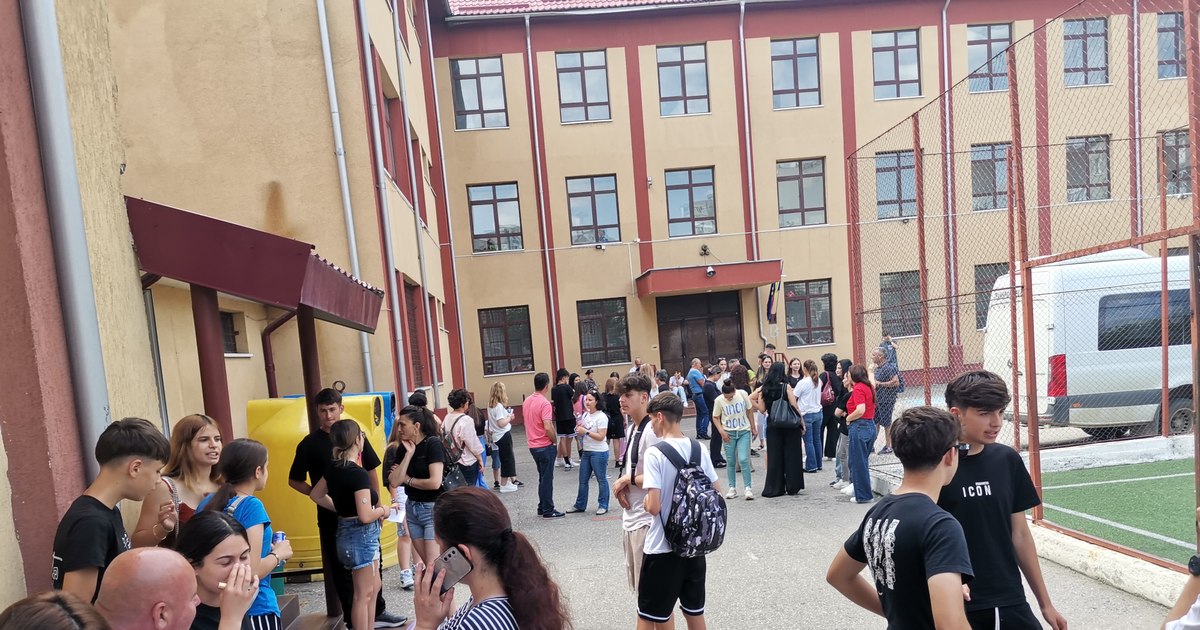
A teacher who supervised the National Assessment exam sounds an alarm about the absence, in the case of students, of educational benchmarks at home.
In her message, published on the La tablă platform, the teacher describes the way in which the students appeared for the exam and the responsibility she attributes, first of all, to the families.
The text, submitted to the editors anonymously, speaks of a deeper problem than clothing:
“Those hours spent in exam rooms say more about our society than we like to admit. Not just about the level of preparation of the students, but about how they were raised, oriented and sometimes ignored from the perspective of the 7 years at home.” says the teacher.
“When you put pencil on your eyes and the skirt is all the way down, it’s a problem of education in the family”
The teaching staff reports that many students came to the exam dressed completely inappropriate for a formal context: “Teenagers entering the exam looking like they’re going to the beach or a party”.
His message continues on the same note:
“When you put pencil on your eyes, bright eyeshadow, when you wear too much perfume in an exam, when your skirt is all the way to the bottom, when you wear slippers, then there is a problem of education in the family“.
The teacher emphasizes that the school does not ask for uniformity, but only “a modicum of contextual decency”, necessary to understand that “the exam is not a walk in the park, it is not a space of fun and it is not a scene of social validation“.
“The real problem is the lack of adult intervention”
The author insists that the students are not primarily responsible for the way they present themselves, but the adults who guide them or should guide them.
“Children reproduce what they see, what they are allowed to do. The real problem is the lack of adult intervention. Don’t parents see them leaving home, at least on exam day?”, says the teacher.
The teaching staff criticizes the tendency to put all the responsibility on the school, while the parents withdraw from their formative role:
“It’s much easier to say ‘that’s how young people are today’ than to admit that in many cases parents have given up the role of guide and replaced it with indifference or a misunderstood freedom“.
“Freedom does not mean the absence of landmarks”
The teacher points out that teenagers do not yet have the maturity necessary to distinguish between appropriate and inappropriate in all social situations.
“A 14-15-year-old doesn’t yet have the tools to distinguish between appropriate and inappropriate… That’s why parents exist. Not just to provide logistics, but to filter, to explain, to model”, the same message states
The teaching staff talks about a “educational gap in the family” when students arrive at exams without this minimal understanding of context.
“Teachers should educate everything”
Moreover, he notes with concern that society is putting more and more pressure on the school, while the family is withdrawing:
“Responsibility is increasingly pushed exclusively to the school. Teachers should ‘educate all’while the family withdraws into the idea that any intervention is a form of coercion”.
The teacher warns that the lack of landmarks does not mean freedom, but vulnerability:
“A child without landmarks becomes a confused teenager, and confusion is not freedom, but vulnerability.”
“I’m not talking about the clothes, but the message behind them”
Finally, the teacher clarifies that it is not the clothes themselves that are the problem, but what they communicate about the education received at home:
“If a child does not understand the difference between personal and institutional space, then it is not his fault. It is the adults who did not think it important to explain this difference.”
His appeal ends with a firm message to parents:
“If there is one complaint I feel more and more often, it is not towards the children. It is to parents who confuse freedom with the absence of education“.
