
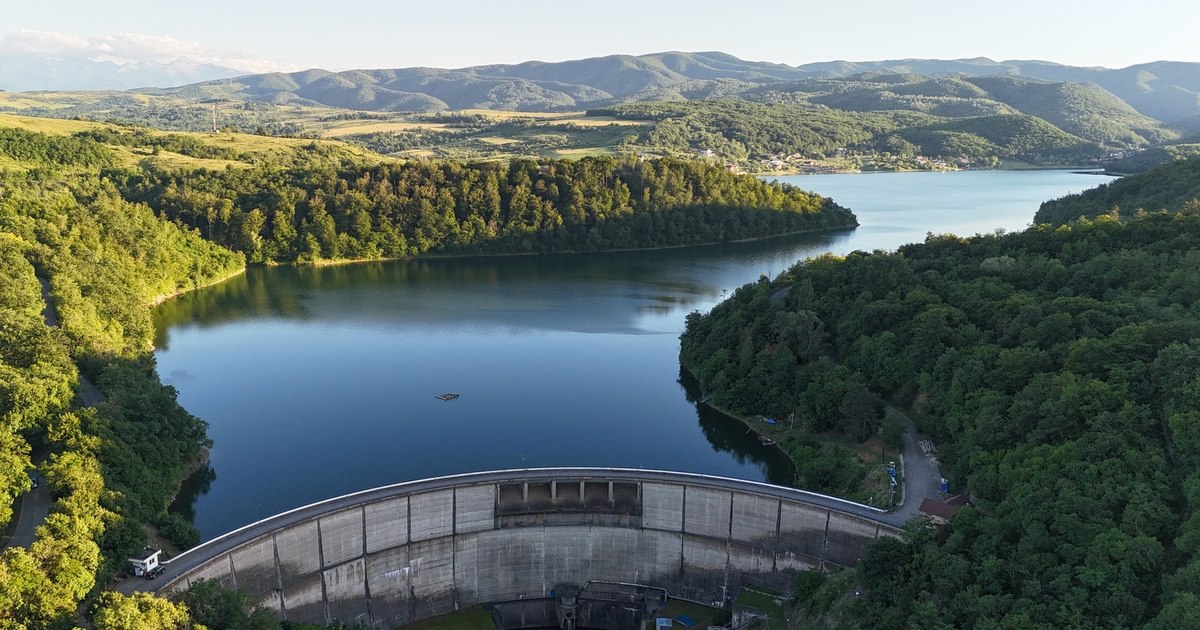
Two infrastructure investments could bring Lake Cinciș and the villages of the Forest Land and the Poiana Ruscă Mountains out of isolation. The lakeside road has entered the construction site for modernization, and the “Marble Road” will connect the counties of Timiș, Hunedoara and Caraș-Severin, through the mountains.
After more than a decade of waiting, the road to Cinciș Lake entered the construction site to be modernized. The road to the “mountain coast” had become one of the worst tourist roads in western Romania, and access to the lake was increasingly difficult, after the shores were mostly occupied by private properties.
Modern road on the shore of Lake Cinciș
For years, the road that connected Hunedoara to Lake Cinciș and Valea Cernei, in the Forest Land, was considered one of the worst roads in western Romania. The road was built in the 60s, and the passage of time has left its mark on it. In recent years, the road has been used more and more intensively by trucks transporting wood from the exploitations in the Șinutul Pădurenilor, the mountainous region in the vicinity of Hunedoara, while the number of tourists and residents passing through it has decreased.
“I’ve been coming here less and less because of the bumpy and potholed road, but mostly because it’s very hard to find places where you can go down to the water’s edge without paying or entering some private property. We can admire the lake from the hills or we have to pay fees at some campsites even to go down to the water for a few minutes”complains a tourist from Hunedoara.
The works on the water and sewerage network in the area, as well as the heavy machines that transport wood and transit the road daily, have contributed, in recent years, to the degradation of the road that goes around the left bank of the lake, then goes up to the villages on Valea Cernei and to the Poiana Ruscă Mountains, up to the border of Hunedoara and Caraș-Severin counties.
After years of waiting, Cinciș tourism is getting a new chance, through the modernization of the lakeside road, but also through the construction of a new road link that will make the area more accessible from neighboring counties.
More than 26 million lei, excluding VAT, are being invested in the modernization of 15 kilometers of the county road that connects Hunedoara to Lake Cinciș. Work on DJ 687D began with the organization of the site and covers the sector that starts from the area of the reservoir dam and ends at its “tail”, in Toplița commune, Hunedoara county.
The investment carried out by the Hunedoara County Council is financed through the “Anghel Saligny” National Investment Program and aims to modernize the road infrastructure between Teliucu Inferior, Cinciș-Cerna and Toplița, part of the route that continues to the Forest Land.
The Lake Cinciș road was built at the beginning of the 60s, together with the hydrographic development of Lake Cinciș and the construction of the Cinciș-Cerna dam.
The Marble Road, the new link to Lake Cinciș
In the coming years, a spectacular mountain road is promised as a solution for the isolation of several villages in the Poiana Ruscă Mountains, located in Timiș, Hunedoara and Caraș-Severin counties, but also as a new access route to Lake Cinciș, from the neighboring counties.
The new road will connect, across the mountains, the valleys of Begăi, from Timiș, Cernei, from Hunedoara, and Bistrei, from Caraș-Severin, and will be modernized for 56 kilometers. The project was officially launched in the fall of 2025 and is being implemented by the West Regional Development Agency, in partnership with Timiș, Caraș-Severin and Hunedoara county councils, with Timiș County Council being the project leader.
The ghost village, with ruins emerging from the water, hides a disturbing story. Why did Gheorghe Gheorghiu Dej abolish it
According to ADR West, the works are estimated at 88 million euros, approximately 450 million lei, and of this amount almost 48 million euros represent non-reimbursable funds, through the West Regional Program.
“More accessible tourist attractions for tourists, and the highway closer to the locals – these are the main benefits of the modernization of County Road 684, which will connect the counties of Caraș-Severin, Timiș and Hunedoara“, informs ADR West.
County Road 684, also called the “Marble Road”, due to the large marble quarry from Ruschița, at the foot of which it will pass, will make some of the villages in the Poiana Ruscă Mountains more accessible.
It starts from the Timișoara town of Coșava, where it intersects with DN 68A Deva – Lugoj, a few kilometers from the A1 Highway. The route plunges into the Poiana Ruscă Mountains, climbing towards the sources of the Bega River, through the villages of Tomești and Luncanii de Jos. Then it climbs to the foot of the peaks of Padeș, 1,382 meters, and Rusca, 1,355 meters, to the border of Caraș-Severin, Timiș and Hunedoara counties.
From here, the road descends towards Ruschița, past the large marble quarry of the locality, crosses the towns of Ruschița and Rusca Montană and continues to Voislova, where it intersects with DN 68 Hațeg – Caransebeș – Lugoj.
The second segment that will be modernized is DJ 684A, a forest road of about 6.2 kilometers, which goes up between the towns of Rusca Montană and Ruschița to Gura Bordului, a hamlet on the border of Hunedoara and Caraș-Severin counties. There, the route intersects with County Road 687D, which descends through the villages of Valea Cernei towards Lake Cinciș and Hunedoara.
Lake Cinciș, the “coastline” of Hunedoara
The Cinciș reservoir was established at the beginning of the 60s, with the construction of its dam. During the hydrographic development, the villages of Cinciș-Cerna, Valea Ploștii, Baia Craiului, Moara Ungurului and Ciuleni, located on the Cerna river valley, were flooded.
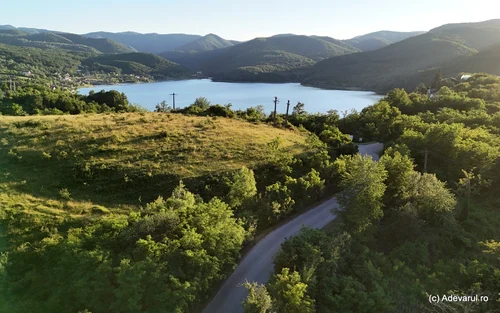
The reservoir had the role of ensuring the water supply of the steel plant and the Hunedoara municipality, and until the 90s it was one of the most popular tourist destinations in the west of the country. At first, its banks were covered with pastures, orchards and forests, and tourists could pitch their tents in numerous places.
Ruschița, the marble mountain in Banat, rediscovered with the construction of the “Marble Road”
In the 60s and 70s, the Cinciș motel, the Casa Albă tourist complex and two camping areas were built, which complemented the tourist services in the leisure area.
In the last three decades, most of the land on the southern shore of the lake has become private, including some of the old roads that went down to the former villages in the Cerna valley. The new properties were fenced off, and gradually, on the bank crossed by the road, a small resort took shape with homes, holiday homes, guesthouses, motels and campsites.
The opposite bank is occupied by the forest that stretches, since the 60s, on the territory of several former villages and hamlets gradually abandoned after the establishment of the reservoir.
In the holiday village area, access to the water was almost completely blocked on a seven-kilometer route, from the dam to the old “Maria Teresa” church, the place of formation of the reservoir.
In the area of the ruins of the former Baia Craiului village, the hearth of the village had, in the beginning, been swallowed by the waters. In recent years, however, the lake has silted up and lush vegetation has engulfed the alluvium “island”.
The ruins of the old church at the “tail” of the lake, one of the two ruined places in the former disappeared village of Baia Craiului, remained on land. Those who want to reach them on foot can do so with difficulty, through the jungle grown on the wild shore of the lake.
