
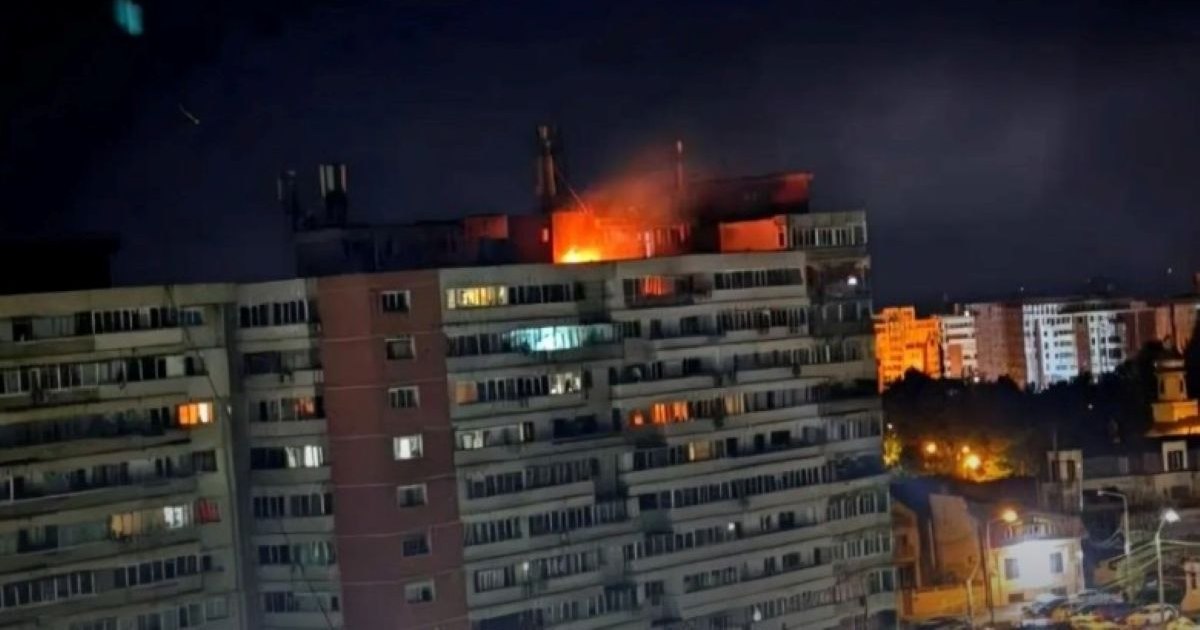
The incident in which a drone arrived on Romanian territory and crashed in Galați county brought back into discussion one of the most important consultation mechanisms within NATO: Article 4 of the North Atlantic Treaty.
The subject was invoked in the public space after several analysts and security experts estimated that Romania could request consultations with allies in the context of the risks generated by the war in Ukraine.
Unlike Article 5, which refers to collective defense in the event of an armed attack, Article 4 does not automatically entail military measures, nor does it oblige Member States to intervene.
What article 4 provides
The text of the North Atlantic Treaty is clear: “The Parties shall hold joint consultations whenever any of them considers that the territorial integrity, political independence or security of either Party is threatened.”
In other words, any NATO member state can call for consultations when it considers that its security is affected or threatened.
This does not mean that NATO goes to war, nor that collective defense is automatically triggered. But it represents a procedure of political and military consultation between the allies, which may later lead to additional defense measures, the strengthening of the military presence or other joint decisions.
What is the difference between article 4 and article 5
Article 4 refers to consultations between member states in the event of a threat to the security of an ally.
Instead, Article 5 states that “an armed attack against one or more of them (…) shall be considered an attack against all”.
This is why experts point out that the activation of Article 4 should not be confused with the triggering of the collective defense mechanism provided for in Article 5.
Why is it invoked now in the case of Romania?
The discussion arose after the incident in which a drone from the conflict zone in Ukraine arrived on Romanian territory.
Those who support the opportunity to activate Article 4 argue that the repetition of such incidents may raise problems regarding the security of Romanian airspace and the need for additional consultations with NATO allies.
A possible request from Romania would allow discussing the situation within the Alliance and evaluating the measures that could be taken to strengthen security on the eastern flank.
Article 4 was also used
Article 4 has been used several times in the history of the Alliance. After Russia’s invasion of Ukraine, Poland, Estonia, Latvia and Lithuania requested consultations within NATO regarding the impact of the conflict on the security of the eastern flank. Turkey has also repeatedly called on this mechanism in the context of the war in Syria and threats to its security on its southern border.
Currently, there is no official decision by the Romanian authorities regarding the request to activate Article 4, but the subject entered the public debate after the Galați incident and amid concerns about the security of NATO’s eastern border.
